A body for the broken law.
Frayed cloth, smoked mirrors and crooked limbs give Vorr’s wizard and three creatures their own material identity.
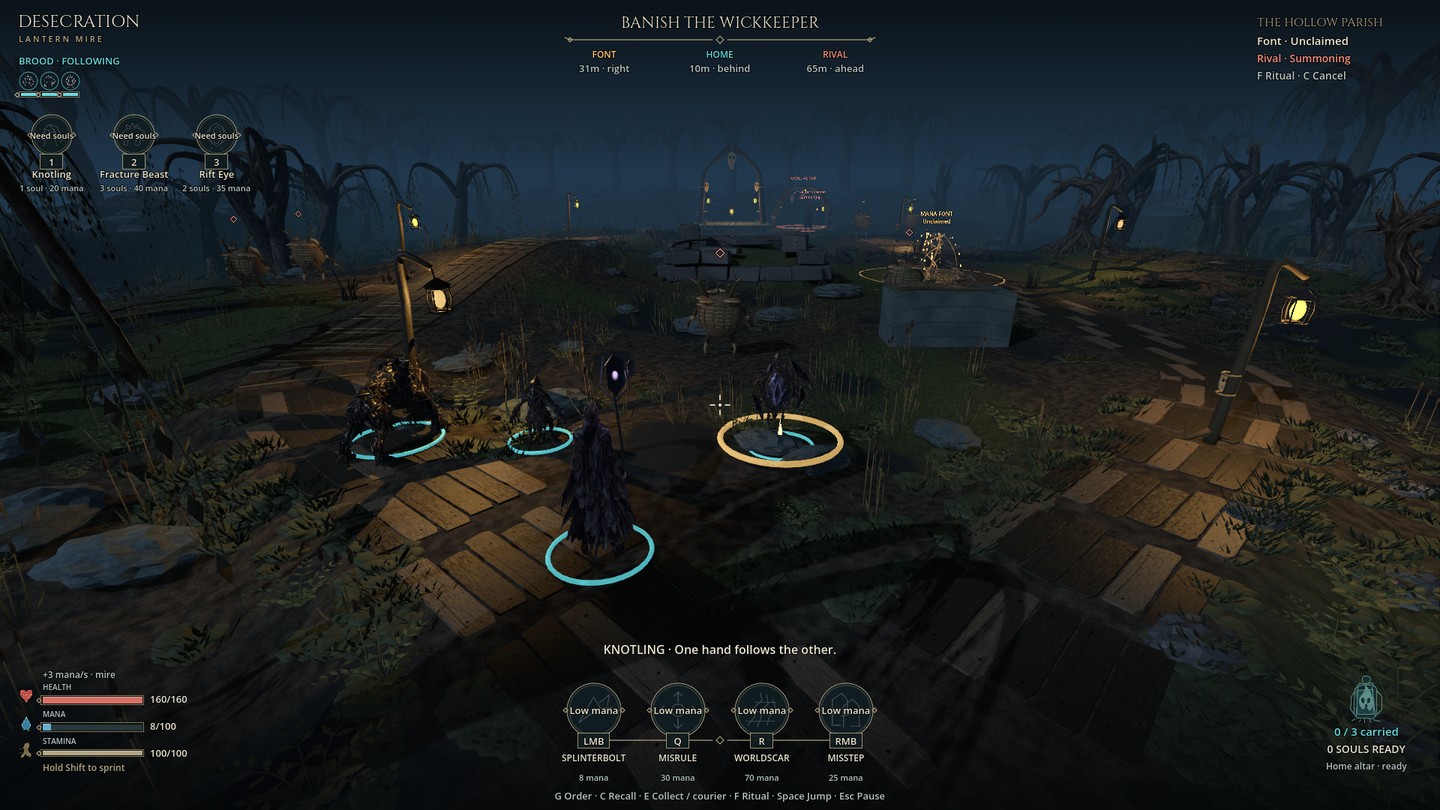
The Misbound, Knotling, Fracture Beast and Rift Eye now use prepared Meshy bodies based on our selected Wrong Reflection concept. This completes the actor upgrades across all four playable factions. Each still has its own spells, creatures and combat roles.
Four different shapes
The Misbound keeps a narrow silhouette beneath torn layers of dusky cloth and carries the original mirror staff. Knotling is a small, crooked biped with long claws and a circular frame in its chest. The Fracture Beast spreads its weight across four limbs. The Rift Eye hangs above the ground inside a cage of mirror plates and short chains.
All four bodies use standard Meshy generation. Their chipped surfaces catch the lantern light, while the dark materials respond to the arena lighting. Runtime textures are capped at 2K; the original 4K maps remain available locally.
Fitting the broken bodies
Blender preparation fits the wizard and Knotling to humanoid rigs, restores their verified material maps and smooths skin transitions. The wizard’s existing staff was fitted to the new hand, with its light attached to the moving equipment. The Beast needed its facing corrected before fitting the four feet to a local rig. The Eye keeps a separate rig for its lens, plates and hanging parts.
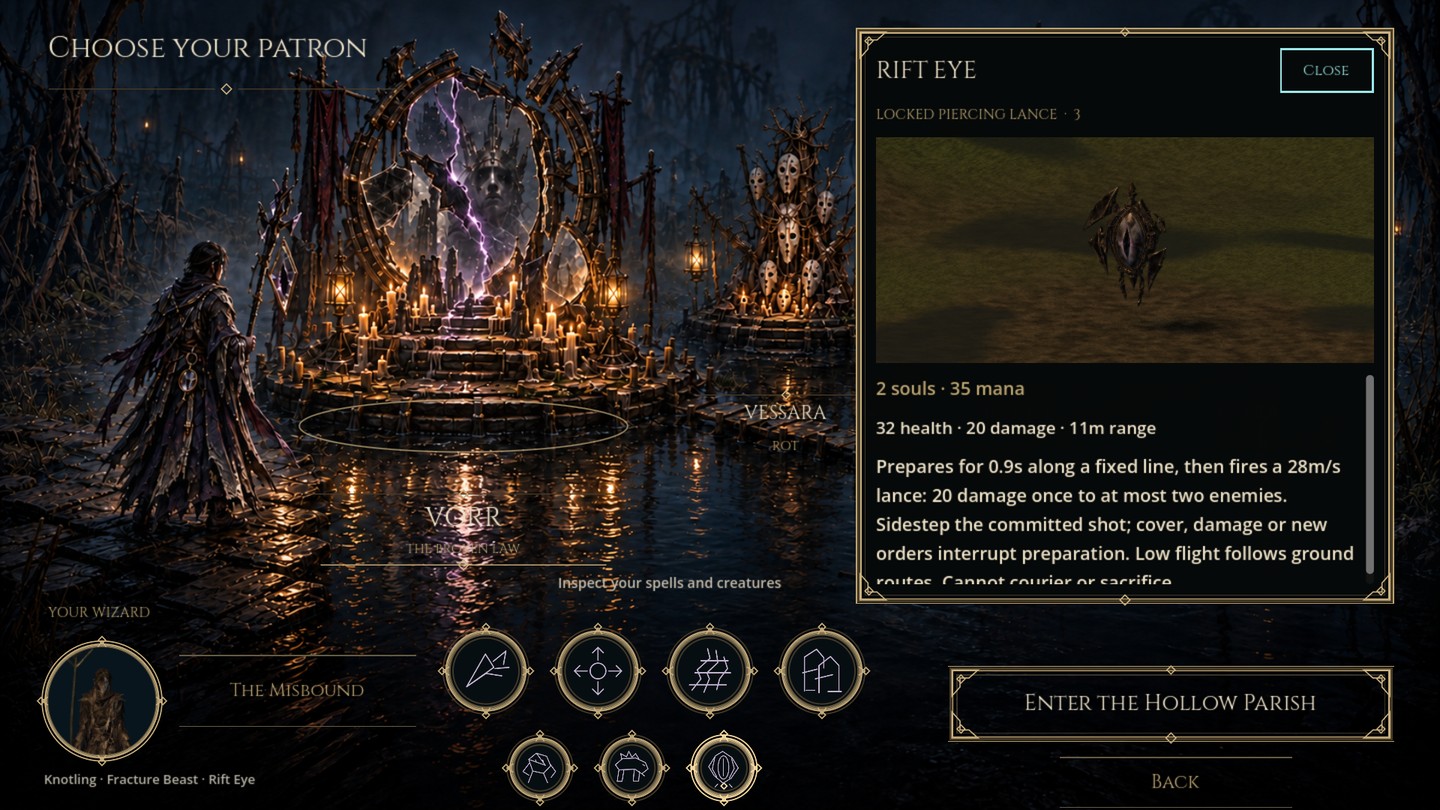
Front and back movement, attack poses and floor contact were checked before integration. The original fifteen wizard clips and nine clips per creature retain their durations. Knotling still makes two interruptible strikes and carries souls; the Beast still warns before its committed lunge; the Eye still fires along a committed piercing line.
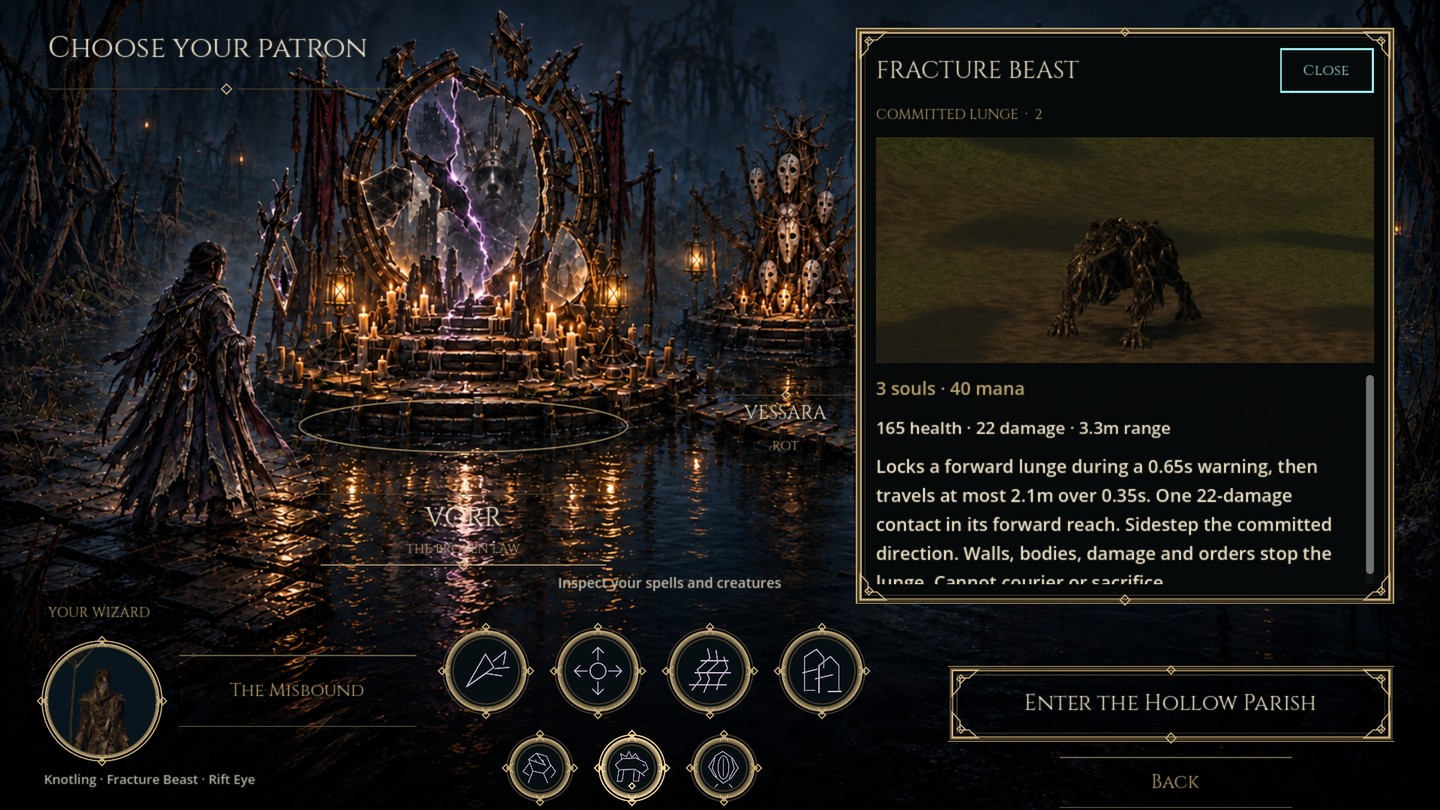
In the picker and the mire
The new bodies appear for both the player and rival, and in the three live creature inspectors. Hover descriptions, clicks, keyboard navigation, remapping and reduced motion were checked. Eighty captured motion samples cover real attacks and wizard casting at the ordinary game camera.
The native Mac app also reached the welcome screen, Vorr selection, all three creature inspectors, the match and Escape-to-pause through computer use. An active-match screenshot request timed out and recovered while paused. A human playtest is still needed to judge the feel of the movement, combat and audio.
The quality sequence completes
The source passed 810 relevant assertions including two loading image saves. The exact export passed 637 asset checks and 770 behaviour and capture assertions, with 102 saved frames. All sixteen first and repeated casts were accepted in a fresh native Mac process; its longest observed frame was 63 ms. Existing driver caches were retained, so this is one measured run rather than a guarantee against every hitch.
The Mac checkpoint and its predecessor are preserved. This finishes the approved sequence: the missing Vessara tiles, first-use spell preparation, Crimson polish, then the Vessara, Tempest and Vorr actor upgrades. Gameplay rules, terrain, audio, spell clocks and the eighteen-soul economy are unchanged in this last increment.
Vorr’s four bodies and two fitted rigs consumed 130 Meshy credits. The full campaign has used 565 of the 1,000-credit allowance, with no paid jobs pending. The next useful step is a hands-on comparison of all four factions before deciding what deserves another polish pass.