DesecrationLantern Mire

Field notes

Design, art & gameplay

Earlier field notes

Character art · Campaign guide

The ghost from the sketch.

The opening guide now uses a full 3D hooded apparition based on the supplied white ghost reference, with an empty face, flowing sleeves and fading trails.

Animation · Skinning repair

Let the boots follow the feet.

A weight repair reduces the Wickkeeper’s collapsing boots and smooths robe transitions. Adapted backward and sideways clips extend the accepted captured walk.

Animation · Wizard movement

A captured stride.

Vessara’s wizard gains Mixamo-based idle, walk and sprint motion, retargeted onto the existing rig with its staff grip and casting preserved.

Performance · Rendering

The same sparks, less work.

Animated effects update more efficiently. Sampled combat frame time falls by roughly 5–9%, with the same assets and quality settings; heavy-spell results remain mixed.

Spellcasting · Dialogue

Voices at the threshold.

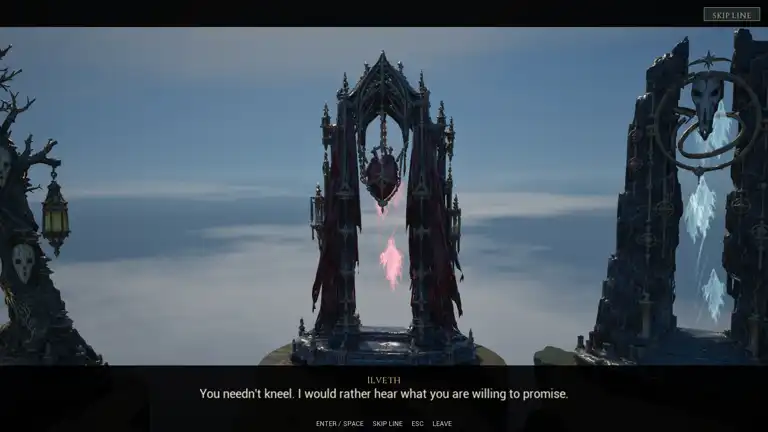
Ilveth, Veyra and Vorr gain timed staff rituals. The gods now speak, wait for a choice, and hear the wizard answer.

Camera · Limbo

A place before the gods.

God audiences now centre the wizard in a wide shot. Limbo monuments block passage, and the Mire begins clear of the altar.

Interface · Campaign

One way to read the battle.

Campaign and Enter the Mire now share the same ability row, health and mana orbs, brood panel, minimap, and settings. Leaving a match returns to the title.

Animation · Vessara

Before the spell lands.

Vessara’s larger spells now begin with a staff gesture: an extended circle, an overhead calling motion, or a raised staff planted into the ground.

Magic · Vessara

Light around the caster.

Lantern embers and pale soul wisps follow Vessara’s casting hand, climb the staff and briefly surround the wizard during larger spells.

Animation · Playtest response

The spine follows the stride.

The first motion pass left the torso too rigid. The hips now lead, the spine flexes and the chest follows through each step.

Animation · Character movement

A stride and a held spell.

The wizards shift their weight, move their arms and drive into a faster sprint. Their casting hand extends the staff and holds the release.

Art direction · Living altars

Within the arch.

The portal follows the shape of each altar. Wispy souls rise behind the carvings, with open sky still visible between them.

Campaign · Playtest fixes

The altar opens.

Souls circle the altars before a sacrifice begins. The first shrine accepts the wizard’s cargo, dialogue fits the laptop screen, and prepared gifts keep their bindings.

Campaign · Limbo refinement

A longer shadow in Limbo.

The gods tower over narrower, winding approaches. Conversation titles and choices settle into the centre of the screen.

Campaign · Complete playable loop

Six battles. One surviving patron.

The campaign now runs from the first soul to a saved ending, with later gifts, rival offers and consequences for the gods left behind.

Campaign · Patron missions

The first errands.

Each first patron choice now leads to an enemy territory, a defending wizard and a saved return to Limbo.

Campaign · Practice

Try the promise.

Before an oath, try the offered spell and creature with ordinary movement, costs and combat.

Campaign · Opening

A first soul. Four promises.

A ghost guides the first soul and summon. Beyond the first altar, four gods wait for an answer.

Army · Objectives

Two orders. Two fonts.

The brood can split into two groups, capture distant ground and keep separate orders.

Spells · Presentation

Magic with a shape.

A beating relic, a hollow figure and a branching strike give the patrons’ magic more recognisable shapes.

World · Motion

When the stones let go.

Boulders tip, logs tumble and fragments scatter as the crossing loses its support. The routes between players stay open.

World · Traversal

When the crossing falls.

A real piece of the Passes falls away, taking its dressing with it and sending ground troops around another route.

Combat feel · Environment

A clear shot in daylight.

A small aiming correction and a warmer sky make the Unreal battlefield easier to read.

Art direction · Environment

The path takes root.

Low planting, weathered logs and mossy peat bring the ground around the home altar together.

Art direction · Living altars

A place for the gods.

Four shrines become towering landmarks: ancestral roots, a beating heart, a captive storm and a broken mirror.

Art direction · Environment and magic

The ground wakes.

The detailed willow joins the multiplayer game, and Ground Remembers becomes an uneven eruption of roots, fleeting ancestors and falling peat.

Performance · Textures and loading

The same wizard, less memory.

A compact texture format reduces the wizard’s memory footprint at the same resolution. New loading measurements separate arena construction, character setup and spell preparation.

Performance · First cleanup

Less work between spells.

Finished ash stops updating, altars stop constructing unused flames, and mirror matches prepare each roster once. A current asset audit puts texture imports at the front of the next performance pass.

Environment art · Visual comparison

A willow in the right light.

One prepared willow, clearer lantern light and patches of peat and moss establish a small visual benchmark. Crowded-combat performance remains a gate before wider integration.

Competitive multiplayer · Local playtest

A second god in the mire.

Two people can now take opposing sides in the same arena, choose their factions and ready up. The first Mac multiplayer playtest keeps the finite-soul battle intact.

Opening cinematic · Sound & atmosphere

Before the first soul.

A lantern, a strange little companion and a shrine in the mist. Desecration now opens with a short film, music and a slow title reveal.

Wrong Reflection · Actor upgrade

A body for the broken law.

Frayed cloth, smoked mirrors and crooked limbs give Vorr’s wizard and three creatures their own material identity.

Drowned Tempest · Actor upgrade

Copper, stone and rain.

Weathered raincloth, copper and dark stone give the Copper Pilgrim and his three creatures a more detailed presence in the mire.

Vessara · Actor upgrade

A brood of bark and cloth.

The Wickkeeper, Pusling, Bloat Brute and Spore Moth gain detailed bodies while keeping their familiar roles and timing.

Crimson Vow · Motion and contact

When the blade lands.

Fitted weapons, quieter cloth and visible contact bring the retained Crimson bodies closer to the actions they perform.

Spellcasting · A playtest repair

Before the first spell.

A short preparation step moves spell resources and rendering work ahead of combat, with both wizards’ effects ready before the match starts.

Patron picker · A playtest repair

The first brood returns.

Pusling, Bloat Brute and Spore Moth regain their places beneath Vessara’s spells, with real prices, creature descriptions and moving previews.

Crimson Vow · Meshy and Blender

Bodies for the vow.

Layered robes, worn iron and a floating Wraith replace the first Crimson bodies. One standard/Ultra comparison establishes a practical way to use Meshy without spending the whole roster budget.

Crimson Vow · Art and presentation

A courtyard of vows.

An illuminated courtyard, painted medallions and flowing blood magic bring the presentation closer to the chosen design. The next character models begin with separate production references.

A fourth patron · Original art & combat

The wrong reflection.

Vorr and the Misbound bring fractured glass, a crooked carrier, a lunging quadruped and an Eye that commits to the place it expects you to be.

A third patron · Original art & combat

The storm beneath.

Veyra and the Copper Pilgrim bring jointed stone, copper conductors and a storm that can pull a formation together before striking it.

A second patron · Original art & combat

A heart for the brood.

Ilveth and the Vein Cantor bring piercing needles, health-for-power magic and a restorative heart to the mire. Their three creatures have their own combat roles.

Original creature art & ranged combat

Wings over the parish.

An original masked moth joins the Pusling and Brute. It hovers over the mire, prepares a slow spore shot and backs away briefly when rushed.

Creature movement & readable danger

Room to strike.

The brood finds room around its target, reacts to visible area warnings and keeps its pursuit bounded. Your direct orders still take priority.

Movement, escape & spell inspection

The space between lanterns.

A paid blink carries the wizard and collected souls to clear aimed ground. The brood follows on foot. Inspect the new spell in the patron courtyard before trying it.

Entry, patron choice & spell inspection

A god is listening.

The carved-mask welcome leads to a drowned courtyard of altars. Inspect the current spells before entering the parish: hover for a quick hint, click for a live preview.

Living creatures & encounters

The parish stirs.

The six ferals now wander around their homes, notice nearby enemies and pursue them. Escape their territory and they walk back. Each still carries one finite soul.

Creature combat & animation

Before the blow.

Puslings draw back before a swipe. Brutes gather their weight before a strike. Damage waits for contact, and the Brute gains a fixed area slam that enemies can escape.

Environment & spell reactions

The mire answers back.

A spell leaves a trace in the parish. Small willow bundles splinter, selected growth blackens, ash settles, and ripples spread where a seed reaches water.

Spells & sound

What the embers carry.

A charred seed leaves a wake of soot and embers. Carrion Bloom grows a low fungal bed. Original casting, impact and creature sounds give both a place in the mire.

Spells & visual effects

The pyre beneath your feet.

Charred roots, amber soul-fire and fleeting ancestral masks give Ground Remembers its first Lantern Pyre treatment. We tested one spell at the ordinary play camera before extending the design to the rest.

Terrain, landmarks & atmosphere

A shape beneath the mire.

Raised paths and flooded hollows give the arena real relief. A collapsed shrine replaces the central block, a larger spirit fountain circulates above the water, and three original tree shapes join the mire.

Environment & materials

Roots beside the water.

Gnarled willows, fallen wood and layered slate now frame the mana font. Worn boards, damp ground and a quieter capture marker bring the new props into the playable mire.

Meshy & Blender

A vessel for the font.

Worn stone and carved roots now surround the mana font. Our first Meshy trial combines an original image brief, a generated model, Blender cleanup and water that responds to the match.

Materials & mood

The light in the wood.

Darker ground, worn boards, a gnarled willow and a layered indigo coat bring the home altar closer to the Lantern Mire reference. This is a playable art sample to review before extending the treatment across the parish.

HUD & atmosphere

Back to the first sketch.

Slim health bars, carved spell glyphs and a small soul lantern bring the interface back toward the original concept. Beyond the causeways, the trees disappear into the mire.

Performance & release

A longer walk through the mire.

The parish has had a longer run: ordinary play, sixteen-creature combat and a separate twenty-four-agent procession. The Mac checkpoint is checked, archived and ready for the next visual pass.

Sound & accessibility

Make yourself at home.

Wood knocks, soul chimes and altar bells give the mire a voice. Short brood captions, larger text and saved controls make the duel easier to settle into.

Environment art

Paths through the parish.

Worn boards trace the two flanks. Cattails, ferns and bent willows surround the camps, while warm lanterns lead toward the ancestor shrine.

Creature art

The heavy and the feral.

The Bloat Brute gets root fists and a broad carved face. Out in the camps, six feral Puslings carry the same family resemblance beneath an overgrown crown.

Art & animation

A body for the Wickkeeper.

A carved mask, a coat held together with flax, and a crooked lantern staff. Both wizards now belong to the same strange parish as their creatures.

Gameplay

Current state of gameplay.

A complete duel against the Wickkeeper: raise a brood, fight over souls and mana, then defend the sacrifice that wins the match.

Original designs

Three paths into the mire.

Before the first playable, we explored three worlds: Rot Baroque, Ashen Cathedral and the Lantern Mire we chose to build.

Art & animation

A face for the mire.

Wicker ribs. A wooden mask. A soul in its basket. The Pusling takes its first steps out of the prototype.

The game we’re making

Lead a strange little army through the Lantern Mire. Recover fallen souls, rebuild your brood, and protect a sacrifice at the rival’s altar.

Desecration is an action-strategy game inspired by the original Sacrifice. These are our notes from building it: the decisions, the experiments, and how it feels to play.