Bodies for the vow.
Layered robes, worn iron and a floating Wraith replace the first Crimson bodies. One standard/Ultra comparison establishes a practical way to use Meshy without spending the whole roster budget.
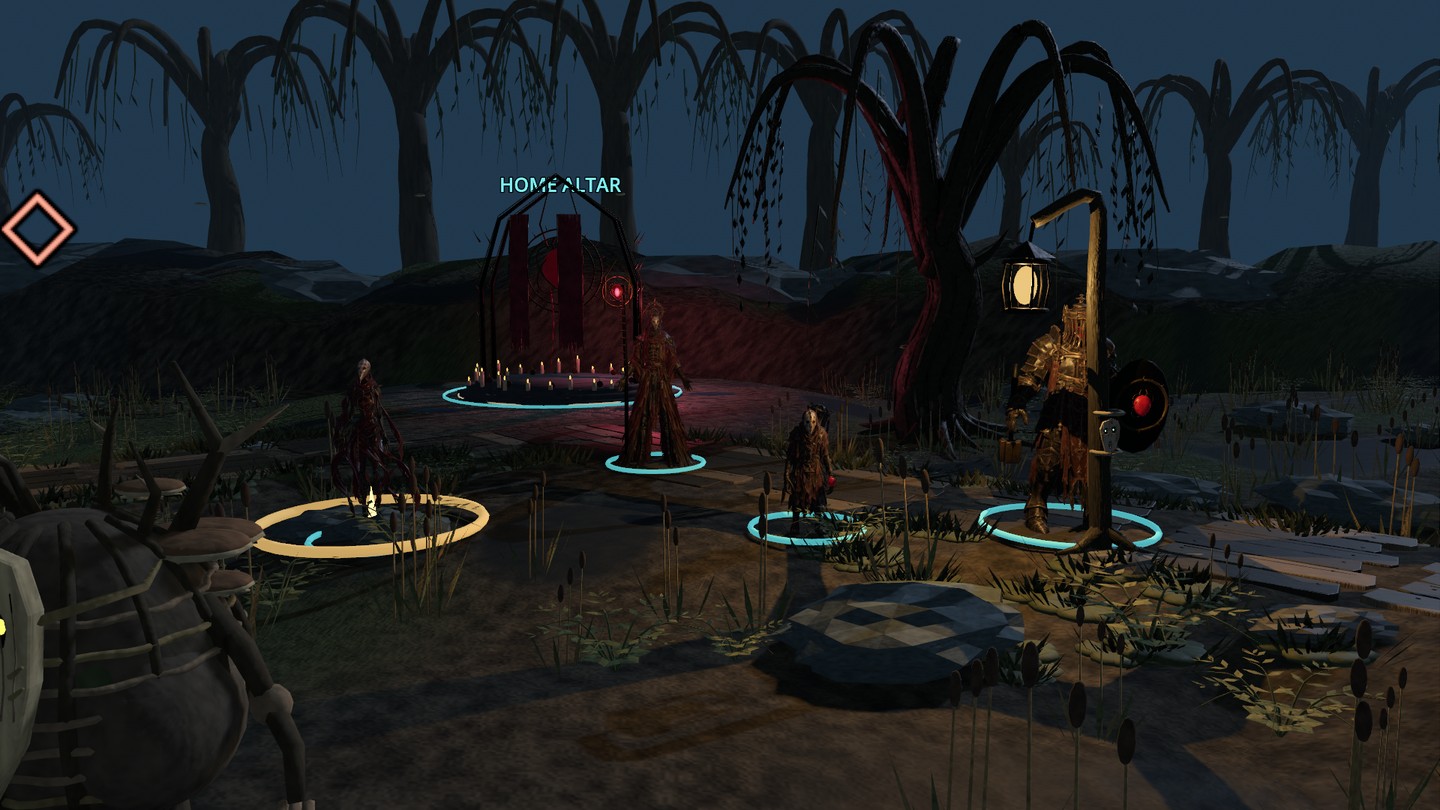
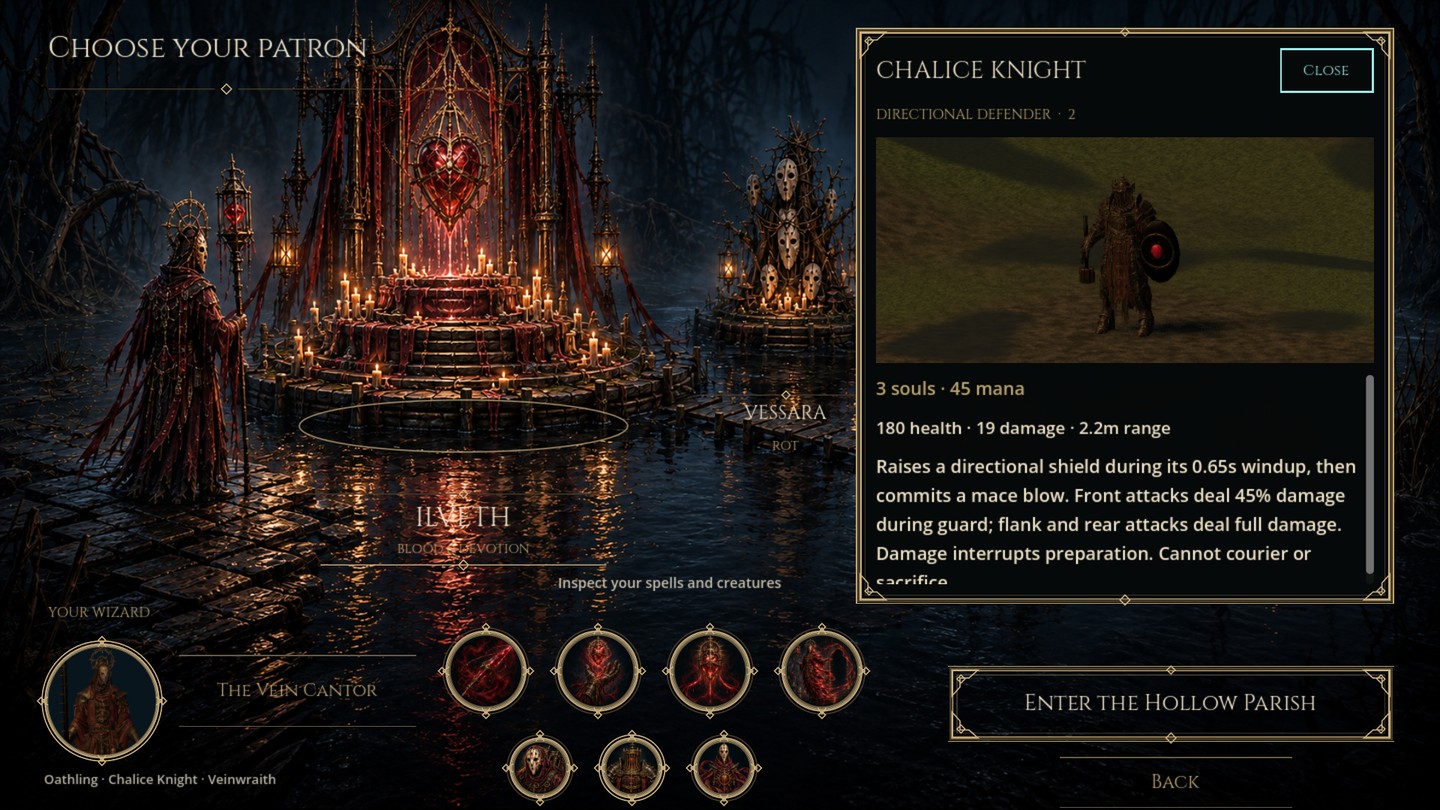
The previous iteration brought the courtyard and blood magic closer to the chosen painting. This one follows the production references into four moving game characters: the Vein Cantor, Oathling, Chalice Knight and Veinwraith. Meshy supplied the starting bodies and rigs; Blender and Godot work made them usable in the existing game.
The same brood, a different surface
The original bodies established the roles: a tall masked caster, a small carrier, a shield-bearing heavy and a ranged spirit. Their broad shapes worked as a first playable, but the smooth surfaces and simple cloth left a large gap beside the illustrated designs.
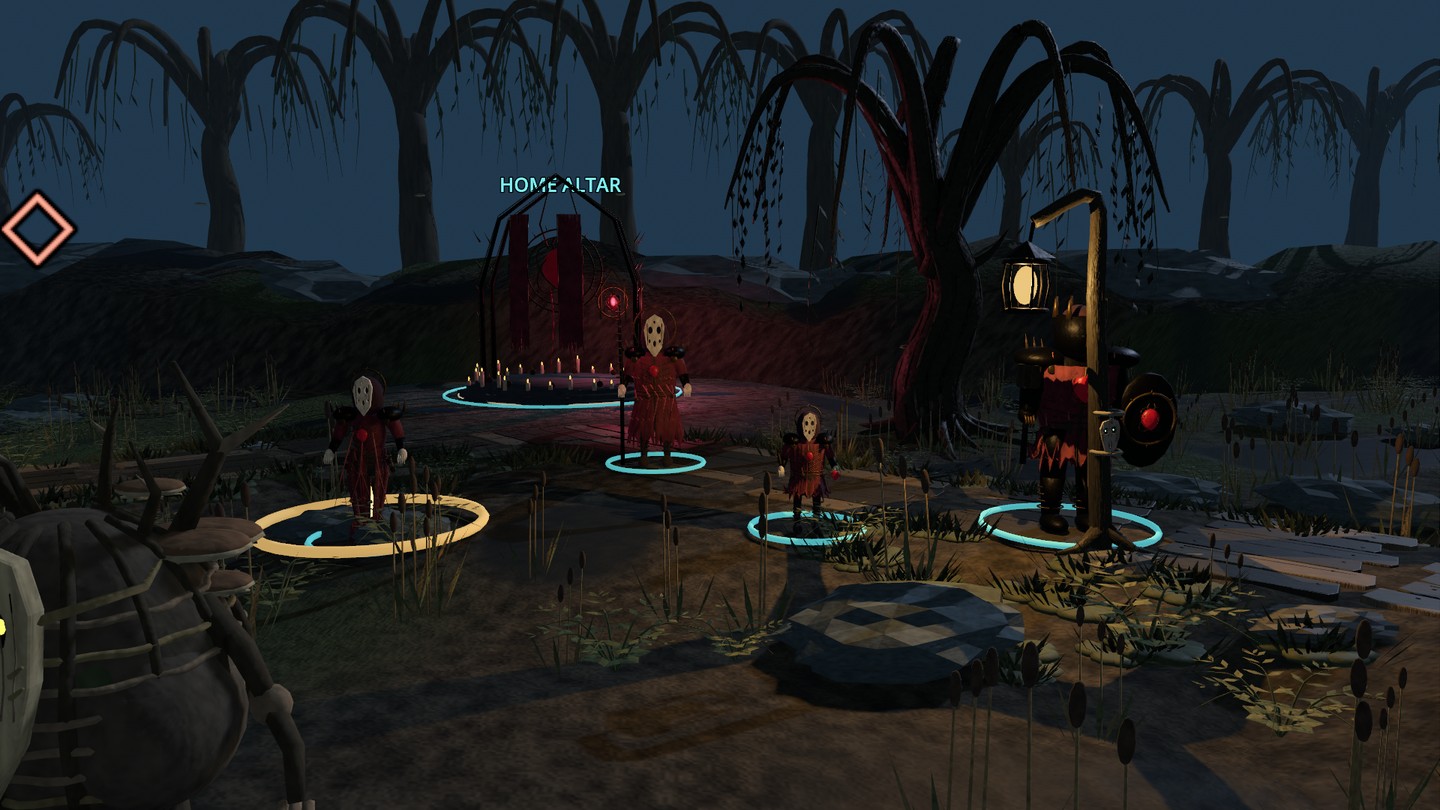
The replacements add actual robe layers, damaged edges, straps, armour plates and more specific faces. Each silhouette still serves the same role. The wizard remains playable and available as a random main rival; both sides summon the same new minion models.
A useful standard baseline
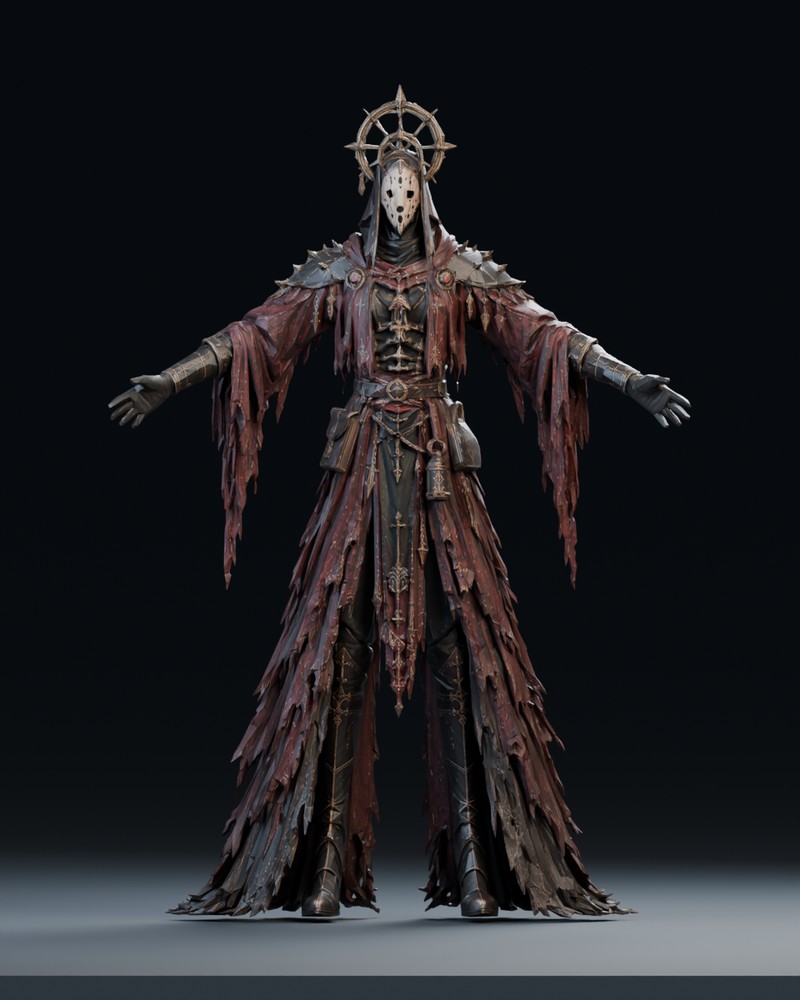
Shaun wanted the budget to leave room for every faction, so we compared the same Vein Cantor reference in Meshy 7 standard and Ultra before committing the rest. Both used the same requested triangle target and texture resolution, then received matched front, back and angled Blender review views.
The standard result already recovered much of the costume: a perforated mask, worn burgundy cloth, gilt fastenings and a recognisable halo. Its textured generation cost 30 credits. It was a useful baseline, rather than a discarded failure.
One Ultra wizard, three standard minions
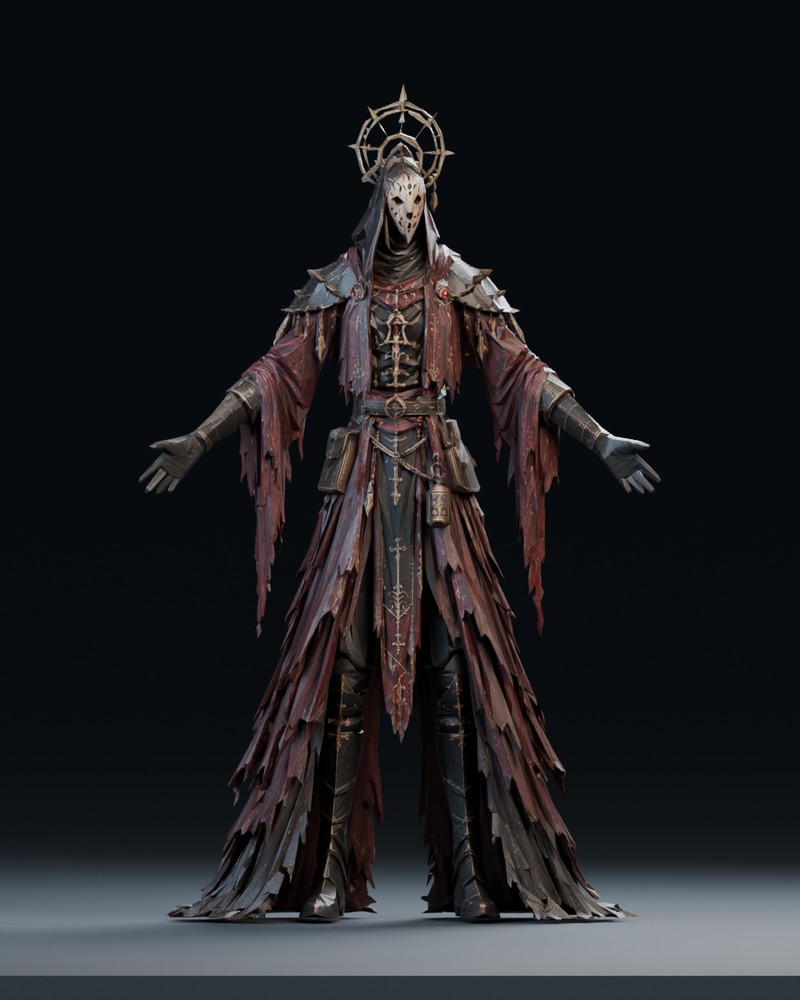
For this pair, the Ultra mask, shoulder plates and costume fastenings read more clearly. We retained it for the wizard. Its generation cost 35 credits, five more than standard. One pair cannot establish that Ultra will always win, especially for a different creature shape.
The Oathling, Chalice Knight and Veinwraith therefore used standard generation. Five completed image jobs and four automatic rigs consumed 175 credits in total, leaving 825 within the agreed 1,000-credit campaign cap. The other factions and optional altar have not been generated in this pass.
What the download did not finish
The generated bodies still needed metre scale, consistent facing, cleaned duplicate vertices and deliberate skin weights. The wizard robe needed to follow the body without stretching with every leg movement. A section of the Oathling waist had been attached to its forearm. Boot contact and the Wraith’s suspended motion also needed local attention.
These rigged downloads had another problem: their proper surface maps were missing and the body colour had become emissive. That made them look flat under the swamp lights. Their texture coordinates matched the original generated meshes, so we restored the original normal, roughness and metal maps without paying for new textures.
The existing staff, dagger and heart, shield and mace were fitted to the new rigs. Game textures are capped at 2K while the original 4K downloads remain available. Existing attack and spell timings are preserved; detailed fingers and cloth still need human scrutiny in motion.
The magic moves with the new bodies

The original blood-thread and ritual-heart effects from the previous pass remain around the new brood. Covenant pulses, the Wraith siphon and the wizard’s casting sockets continue to use the game’s existing rules. Meshy has not replaced the spell effects or changed their range.
Mana and health payments, damage, healing, collisions, sounds and the eighteen-soul economy are preserved. This makes the next playtest a useful comparison of character readability and motion within familiar combat.
Ready to judge in play
Affected source checks and checks against the final Mac export passed, including materials, animation poses, both wizard teams, combat, economy, full-body inspection and picker transitions. Native Godot captures, standalone startup, signature and archive checks accompany the playable. The complete previous build and original sources remain preserved.
Chrome access worked for setup, but the Mac locked again before native Blender and Godot computer-use review. Engine rendering and synthetic input are separate from a hands-on playtest. Human art, audio and control judgement, physical Intel and Windows execution, and notarization remain unverified.
The next useful step is Shaun’s Crimson playtest: cast while running, inspect the hands and robe, watch melee contacts and check whether the three minions remain distinct at normal camera distance. That feedback should set the standard before spending on the next faction.