Three paths into the mire.
Before the first playable, we explored three worlds: Rot Baroque, Ashen Cathedral and the Lantern Mire we chose to build.
This is a look back at our original visual exploration. These three images were generated with AI on 6 September 2026 to explore the atmosphere, creatures and battlefield. They are concept art: the characters, scenery and interfaces pictured here are visual proposals, not screenshots of the playable game.
The idea underneath
The same game idea runs through all three directions: a wizard inside the battle, commanding a small, strange army. Fallen souls are worth recovering, couriers need protecting, and an altar ritual creates a vulnerable moment to defend.
The concepts explore how that could look at a third-person camera distance. Broad creature silhouettes, visible paths, readable magic and an uncanny sense of humour were part of the brief from the start.
01 / Rot Baroque
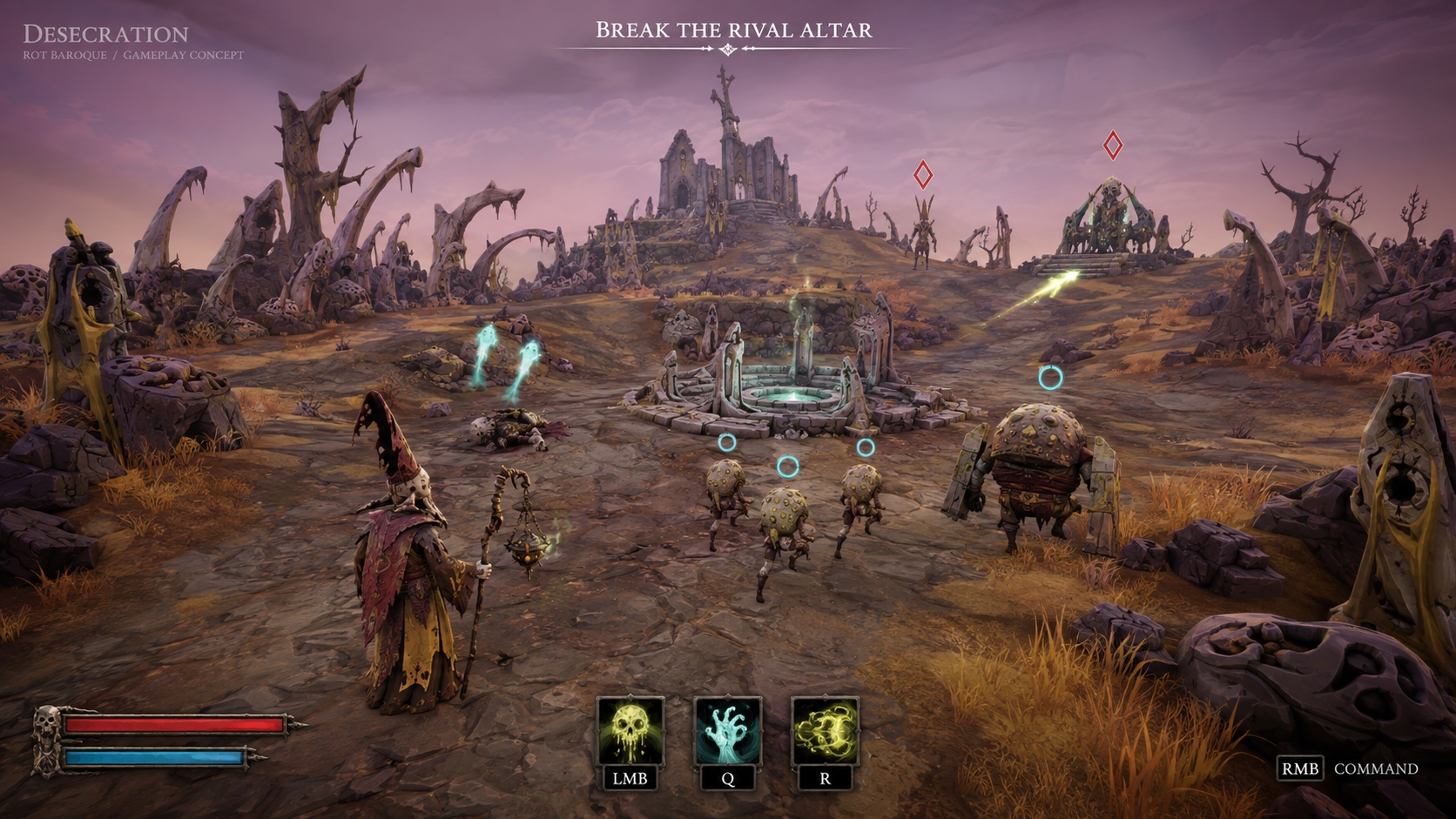
Ochre ground, a mauve sky, ruined chapels and twisted bone arches give this direction its warmth and decay. The wizard’s crooked silhouette leads a little army toward the hilltop altar.
The proposed materials were painted wood, worn ceramic and ragged cloth. Small cyan souls and restrained lime magic punctuate the autumnal landscape.
02 / Ashen Cathedral
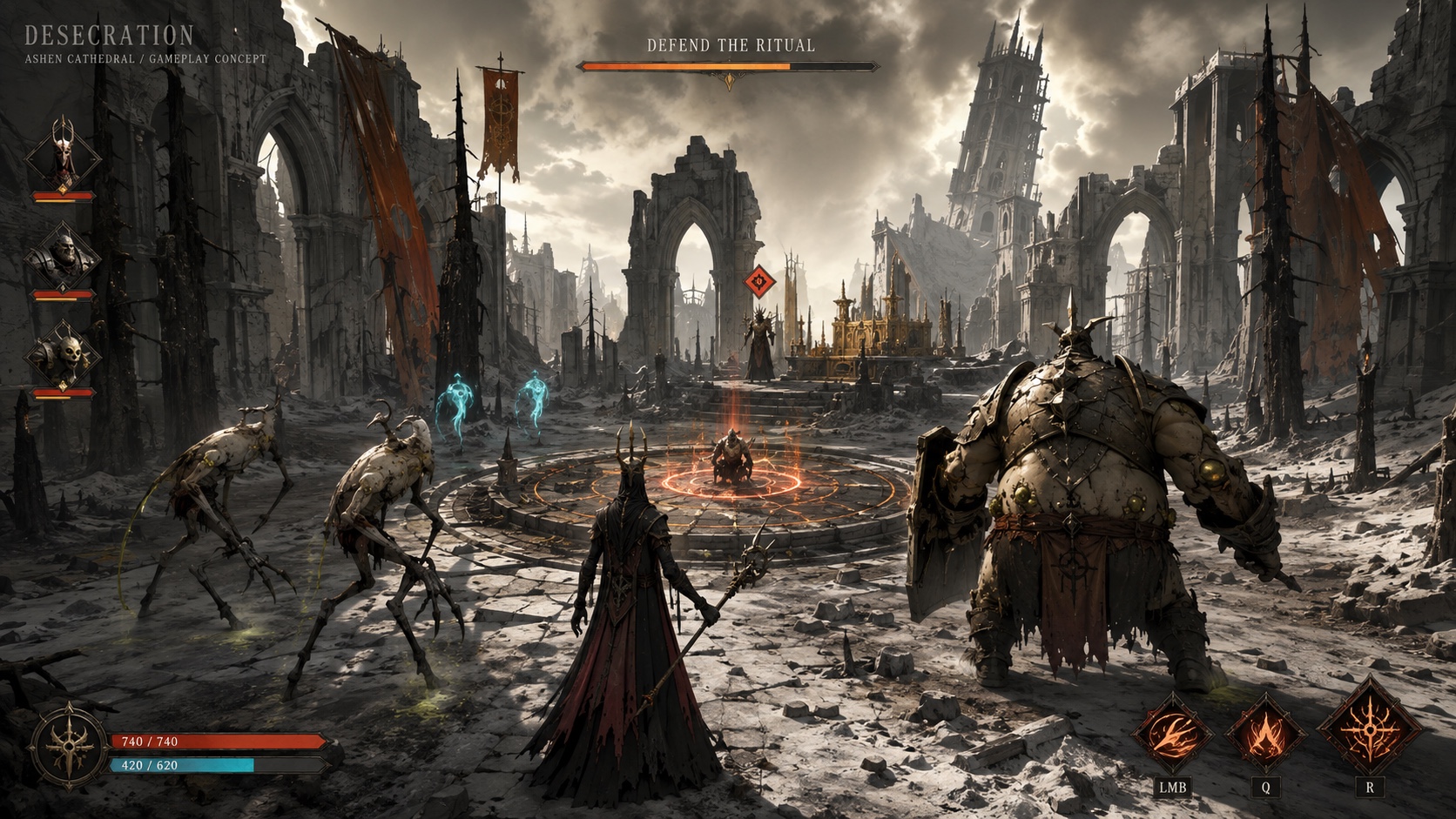
Ashen Cathedral takes the battle into monumental ruins. Grey stone, pale ash, rust-coloured banners and a crooked bell tower give the ritual a more severe setting.
The image centres on defending a sacrifice, with a large armoured creature close to the wizard and the opposing altar framed by broken architecture. It explores a heavier, more architectural version of the same game.
03 / Lantern Mire — selected
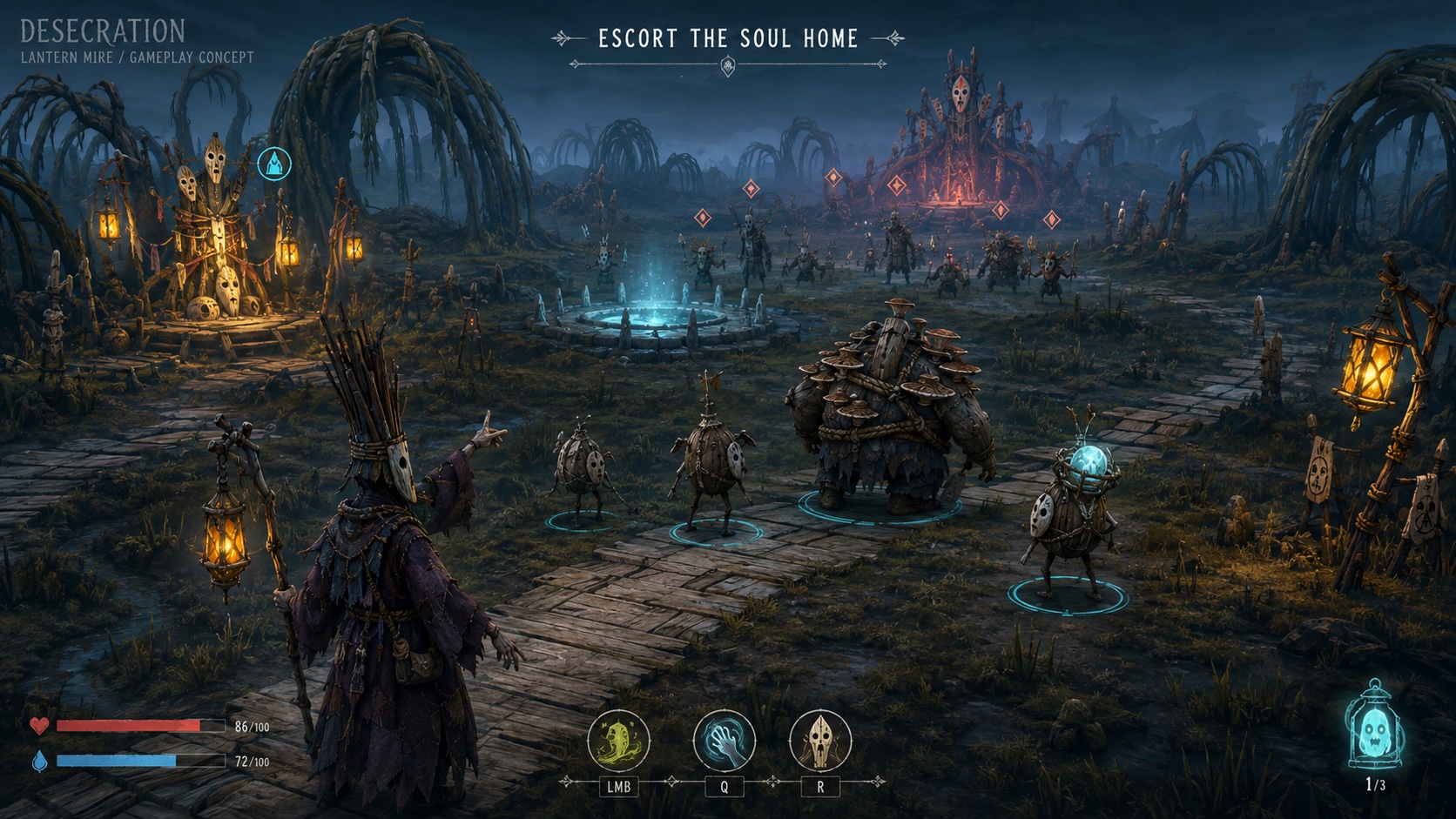
Lantern Mire was option three, and the direction we chose. Its blue-grey peat moor is threaded with pale causeways, bent willow arches and pools of amber lantern light. Painted masks, wicker, rope and shelf fungus supply the character.
The concept puts soul retrieval at the heart of the scene: one small creature carries a glowing soul while the rest of the brood holds the field. That image gives the recovery loop a visible place in the world.
Those materials are already finding their way into the first art sample: the Pusling’s carved mask and woven basket, the root arch at home, the hanging lanterns and the carried soul glow.
From concept to play
The concepts set a visual target. The current Godot build has its own working Pusling, altar kit, animations and effects; the previous field note shows actual captures of that first art sample.
The wider landscape, wizard, Brute and lighting still need further art work. As we iterate, the journal will show how the playable game develops toward the chosen direction, and where playtesting changes the plan.