A first soul. Four promises.
A ghost guides the first soul and summon. Beyond the first altar, four gods wait for an answer.
The campaign now begins with a small, playable lesson: recover one soul, give it a body, fight beside it and claim a font. The ghost is helpful enough to follow, and evasive enough to make that help uncomfortable. This opening candidate continues through Limbo and a saved first oath. The patron missions and finale remain in development.
One soul first
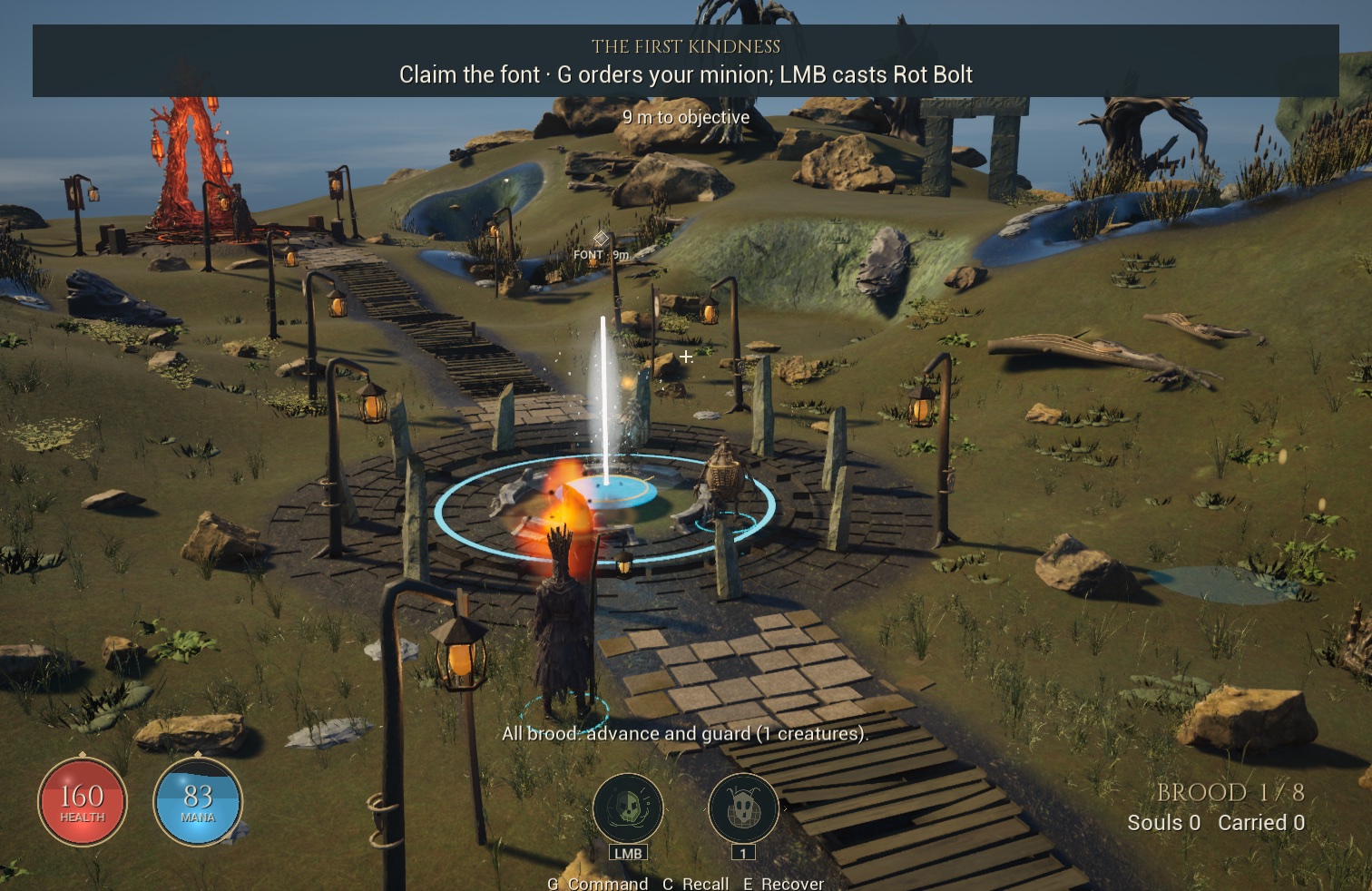
The opening starts unpledged. The wizard recovers a soul, pays to raise a Pusling and uses Rot Bolt while ordering the creature into the clearing. The first guardian leaves a foreign soul. Its ownership changes at a separate small shrine; the nearby font restores mana. Keeping those places distinct makes the lesson explain the actual game.
A second summon leads to Keeper Pell. Defeating him is only half the task. One unladen Pusling must enter his altar ring and survive the twelve-second ritual. The sacrifice consumes its soul, and the surviving soul is accounted for when the wizard enters Limbo. No duplicate rescue souls are added.
Listen before promising
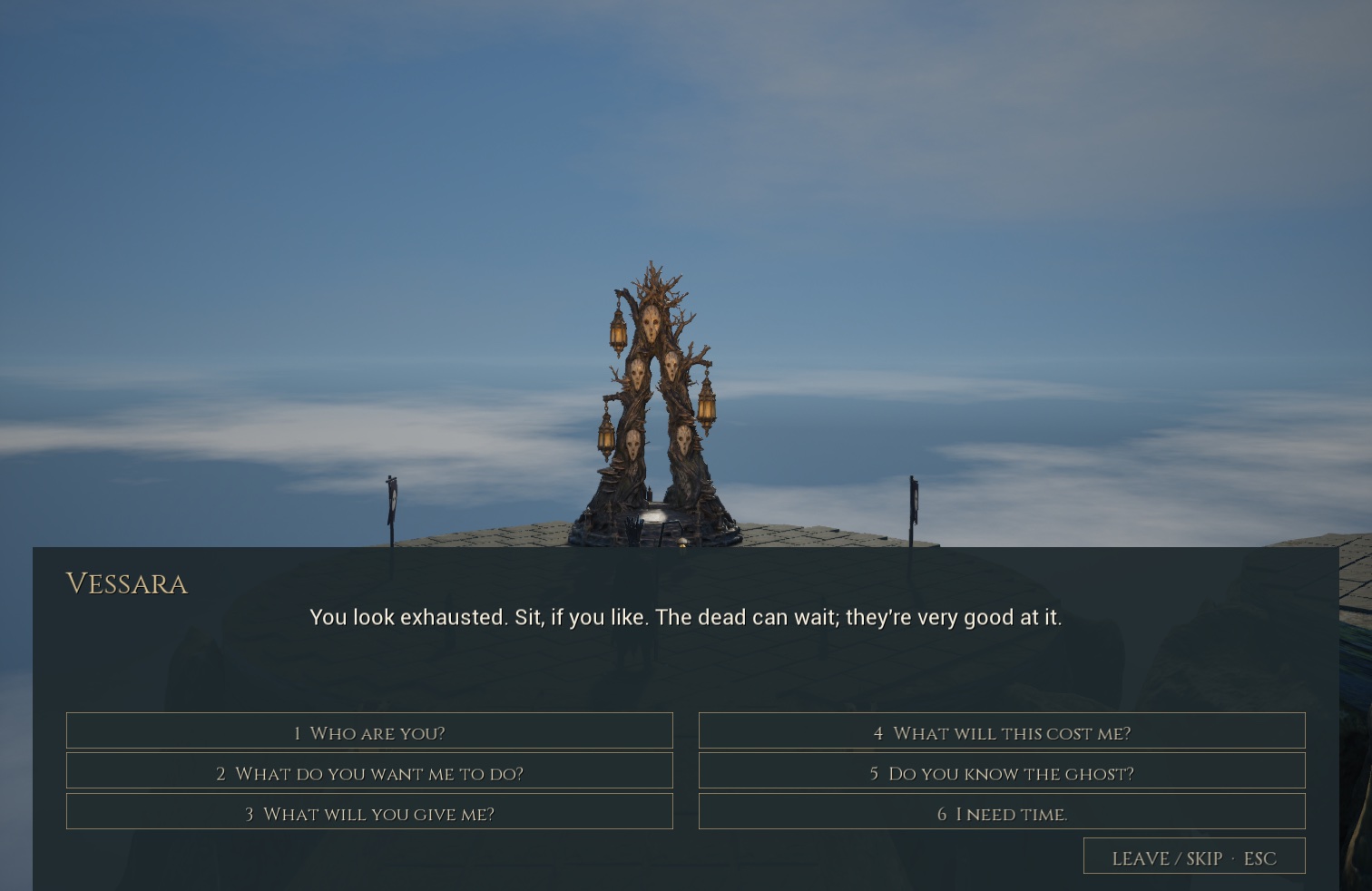
Limbo has four connected courts and no combat HUD during exploration. Vessara, Ilveth, Veyra and Vorr speak through their existing monuments. Each first audience covers identity, the proposed mission, the reward, its cost and suspicions about the ghost. Returning, backing out or skipping a line does not silently make a promise.
An offered spell opens the actual spell demonstration and returns to the same conversation. The summon card currently inspects its model. Hands-on practice and summon combat demonstrations are the next increment; this build does not claim them.
The revised Vessara greeting sets the tone: practical warmth, with death treated as ordinary work. Dialogue is currently subtitled. Final voice performances have not been produced.
An explicit oath
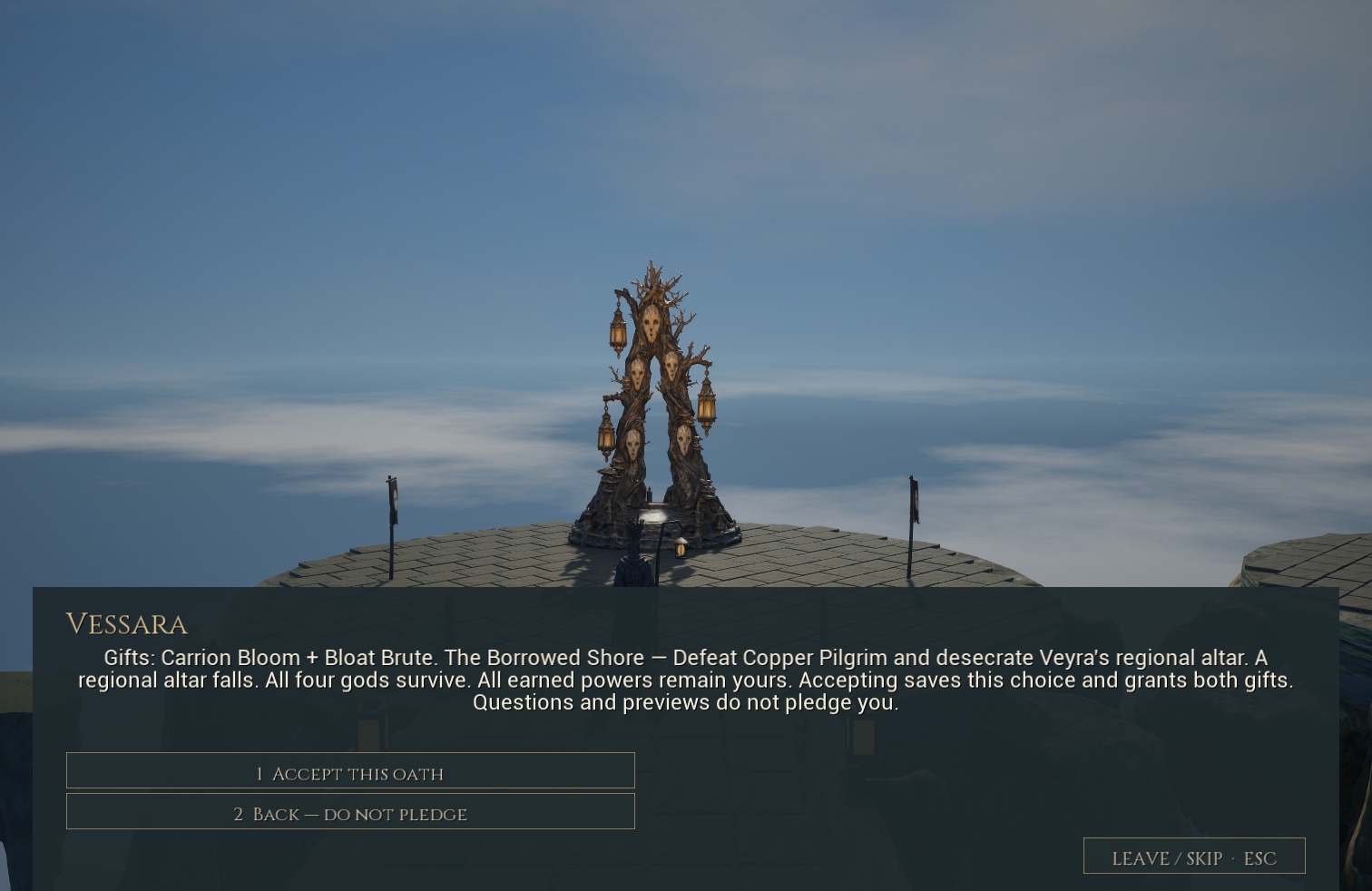
The review names the spell and creature, the opposing wizard and the altar to be broken. Accepting records the choice and grants the pair once. Reloading or accepting again does not duplicate rewards. The opening candidate then remains in Limbo; departure into the first patron mission is still to come.
Campaign checkpoints are separate from skirmish settings. They retain the objective, bodies, soul holders, font ownership, cooldowns, squad assignments and dialogue history. Writes are verified before replacing the active checkpoint, with a previous valid checkpoint retained for recovery. An interrupted ritual restarts safely instead of resuming partway through a sacrifice.
Checked in the app
The separate Mac app passed 67 campaign behaviour checks, 205 existing Mire checks, 237 Passes checks and 27 scripted native-input checks. An uninterrupted driver completed the tutorial with normal navigation, paid summons, real bolts, orders, recovery and ritual timing, then walked to every Limbo court and saved an oath. These are automated checks, not human playtest acceptance.
The corrected packaged route took about eighty simulated seconds with dialogue skipped. That is a test duration, not the intended reading or exploration pace. The first packaged runner used a positional map argument that Shipping ignored; those mislabeled results were discarded and rerun with isolated map configuration.
The Mac was locked during desktop inspection, so direct desktop interaction remains unverified. The images here are staged in-game captures from the exact package. Earlier skirmish and multiplayer apps remain preserved. Cross-city multiplayer acceptance and the existing collapse hitch are separate unresolved work.
Next: try the promise
The next increment lends the offered spell and summon in a separate practice court, using ordinary movement and combat costs. Returning to Limbo must discard the trial without changing the real reserve or allegiance. After that come the four patron errands, retained mixed loadouts, later bargains and elimination battles, and the final confrontation.