Back to the first sketch.
Slim health bars, carved spell glyphs and a small soul lantern bring the interface back toward the original concept. Beyond the causeways, the trees disappear into the mire.
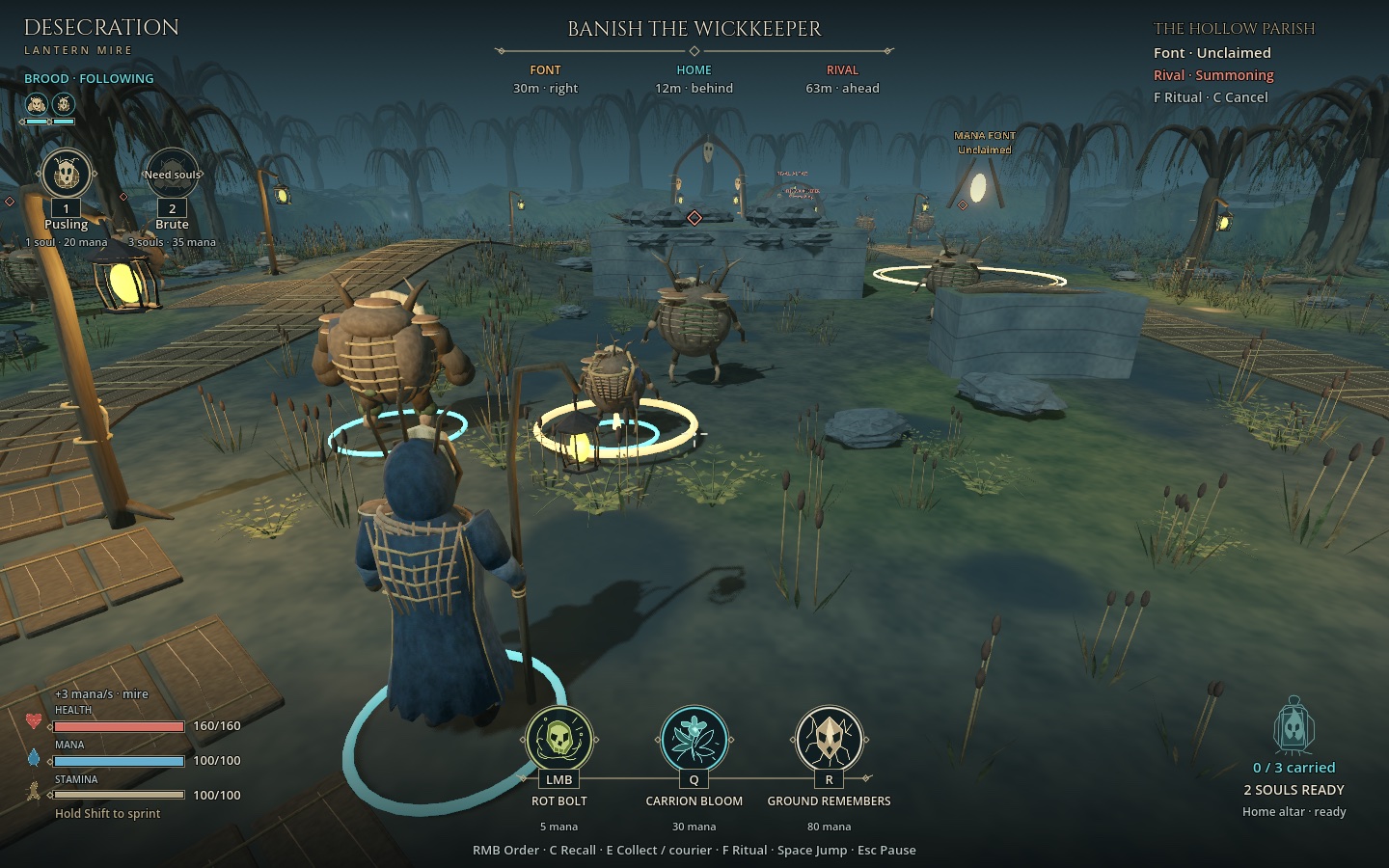
With the Mac performance pass wrapped, Shaun asked for the game interface to look more like the first Lantern Mire image. The new HUD returns information to its corners and gives the three spells their own symbols. Low marsh mist and a softer distant tree line complete this visual pass.
A place for each action
Health, blue mana and stamina sit at the lower left. Rot Bolt has a sickly skull, Carrion Bloom a flowering root, and Ground Remembers a carved ancestor mask. Codex authored nine editable vector glyphs for the spells, summons, vitals and carried-soul lantern, with fine ornament drawn directly in Godot.
The circles still show spell names, costs and chosen keys. Cooldowns fill their rims and display the remaining time. Low mana, missing souls and a returning wizard each have an explicit state. Available souls and carried cargo remain separate, and brood portraits retain their small health bars.
Title lettering uses the freely licensed Cinzel typeface, with its license included in the Mac delivery. Body text remains the existing Godot font. The original concept guides the arrangement; the playable game keeps its established controls and rules.
Quiet until it matters
Carrying a foreign soul changes the objective to escort it home. An attack on the home altar takes priority, raising a clear warning and sacrifice progress panel. The centre aim point stays open during ordinary play, and optional brood captions yield to interaction feedback.
The layout continues to support the saved 100–140% interface size and remapped keyboard or mouse controls. Verification exercised long spell key names at the larger setting, alongside real paid casts, collection, death and restart.
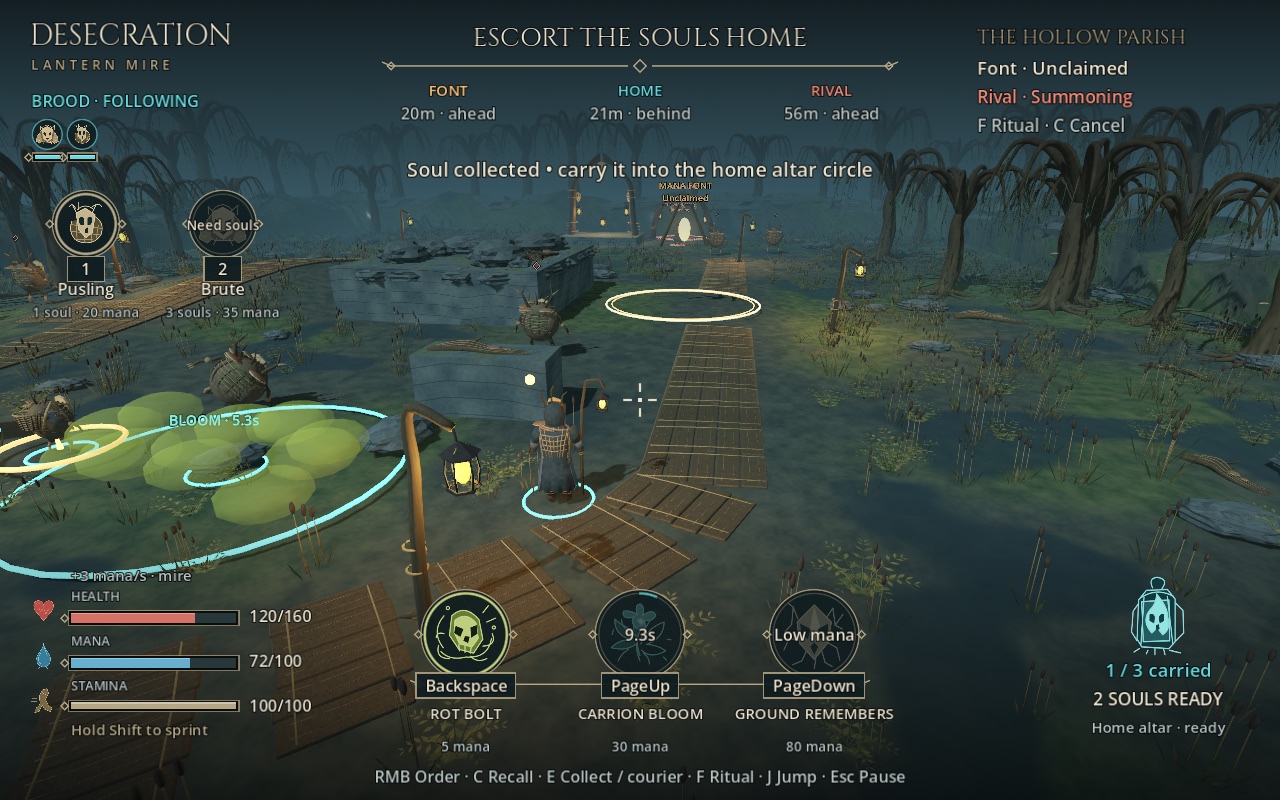
Mist around the fight
The distant arena fades into blue-grey fog beyond the immediate fight. Six low pockets of mist drift along the marsh edges, away from the broad causeways and objectives. They share one shader and slow down to a stop when the match pauses.
A clear region follows the wizard so that nearby combat stays visible. The terrain, saved collision, navigation, spell reach and resource rules remain unchanged. This adds atmosphere to the existing parish without moving its routes.
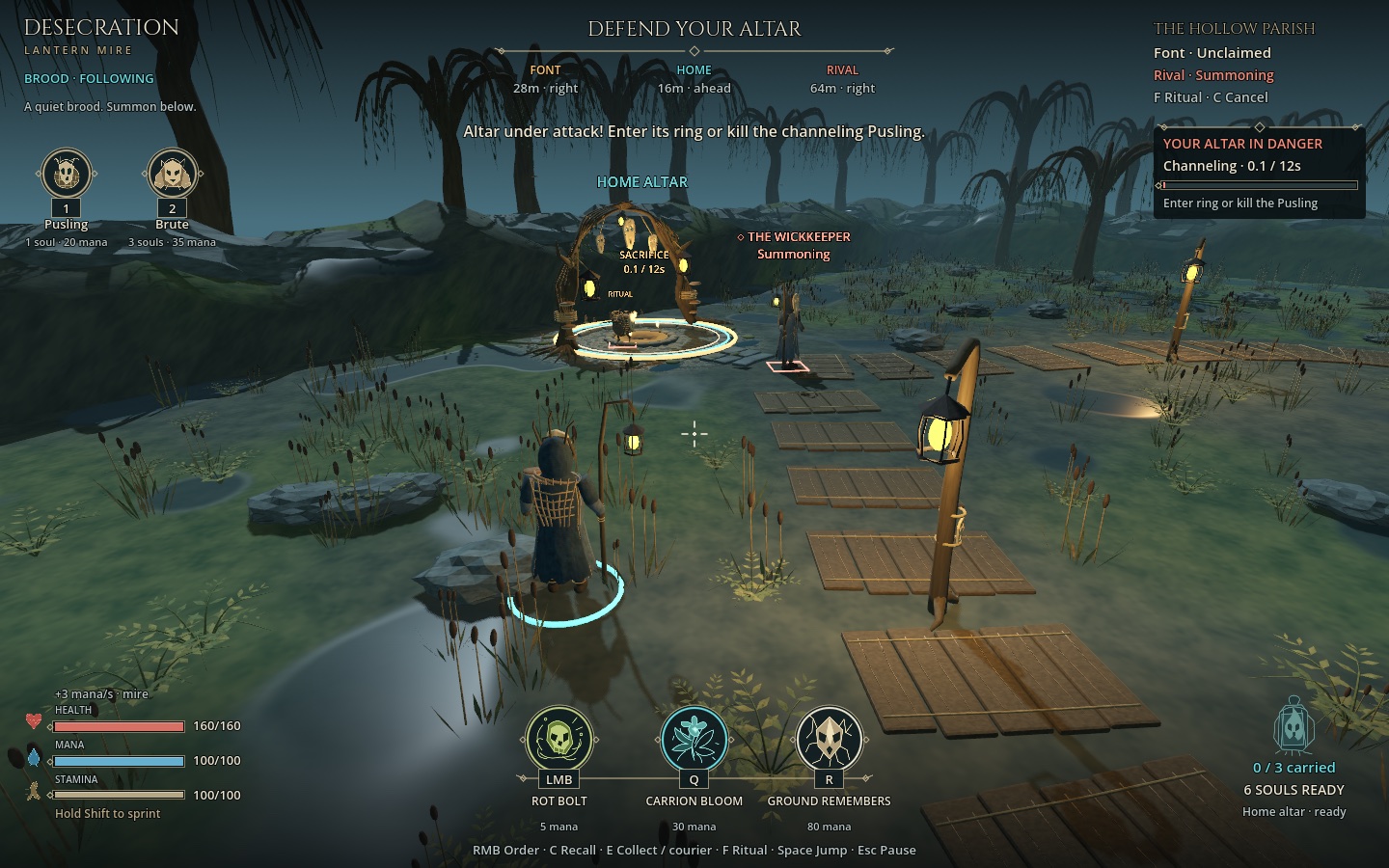
Ready for hands-on play
The final game passed 719 regression checks and ten audio-file checks. Its pack passed 126 asset and exclusion checks, 46 HUD and atmosphere checks, and a short twenty-check crowded-render probe. Standalone startup, signature and archive checks passed. After the Mac was unlocked, Codex inspected the actual app, opened settings and controls, restarted the match and left it paused for playtesting. The verified archive and its predecessor are preserved.
The preceding Mac checkpoint is preserved. The next step is Shaun’s hands-on review of the complete slice: whether the new interface reads comfortably, the fog feels right and the duel still feels good to play. Windows, physical Intel execution and subjective art or audio acceptance remain separate from the checks completed on this Mac.