A face for the mire.
Wicker ribs. A wooden mask. A soul in its basket. The Pusling takes its first steps out of the prototype.
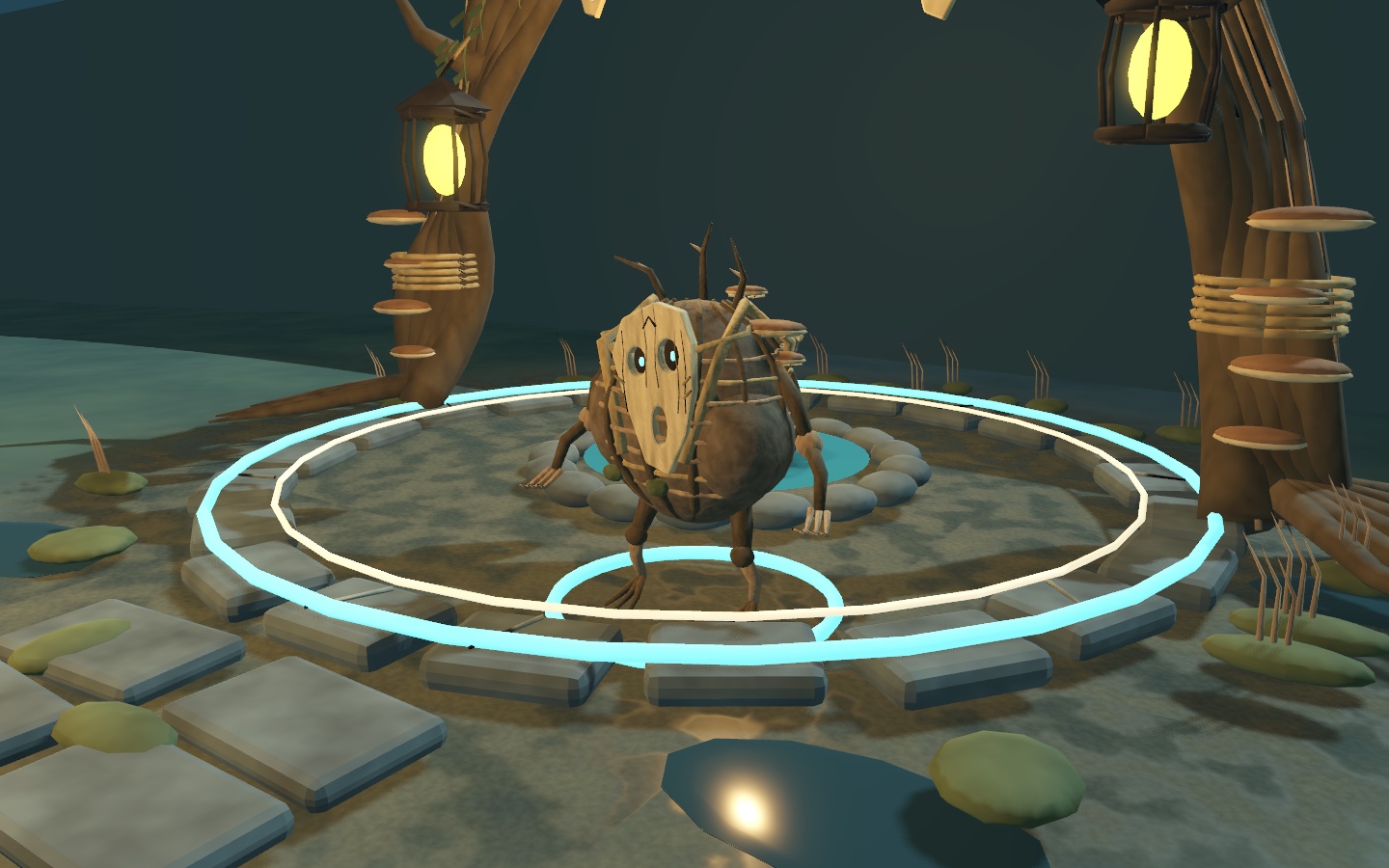
We have a duel that can be won and lost. This iteration gives part of that duel its own character: an original Pusling, a root-and-lantern altar, and the magic that connects them. It is our first art sample inside the playable game.
Building it from scratch in Blender
We had talked about finding ready-made assets online. Shaun wanted to see how far we could take our own designs, so we gave Codex access to Blender and asked it to build the first Lantern Mire art sample from scratch.
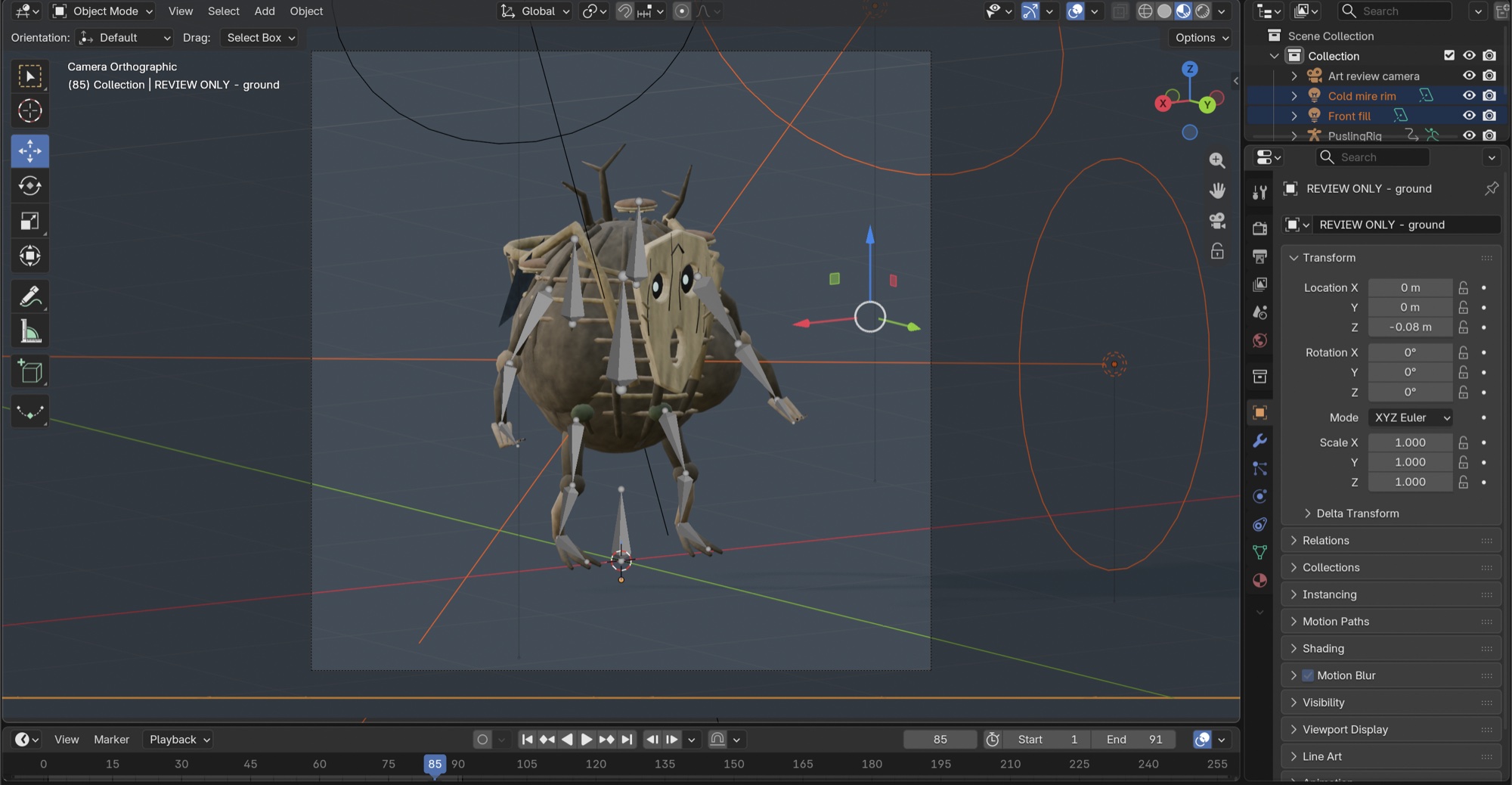
The Pusling’s geometry, materials, textures, skeleton and seven animation clips were created for this game. Codex wrote a Blender Python script to construct and bake the asset, then used computer use to open the editable scene and inspect the textured model, its rig and animation playback. The Blender files remain editable as we develop the creature further.
A creature made for carrying
The Pusling is a swollen bundle of peat held together with wicker and cord. A carved wooden mask gives it a face; twig limbs, shelf fungus and a hollow basket make its silhouette a little stranger. It should look as though it belongs to this place.
The model was built and rigged in Blender, then brought into Godot. It now has seven animations: summon, idle, scuttle, swipe, hit, death and ritual. They follow the events already happening in the match, so the new movement preserves the combat timing we have been playing with.
A soul in the basket
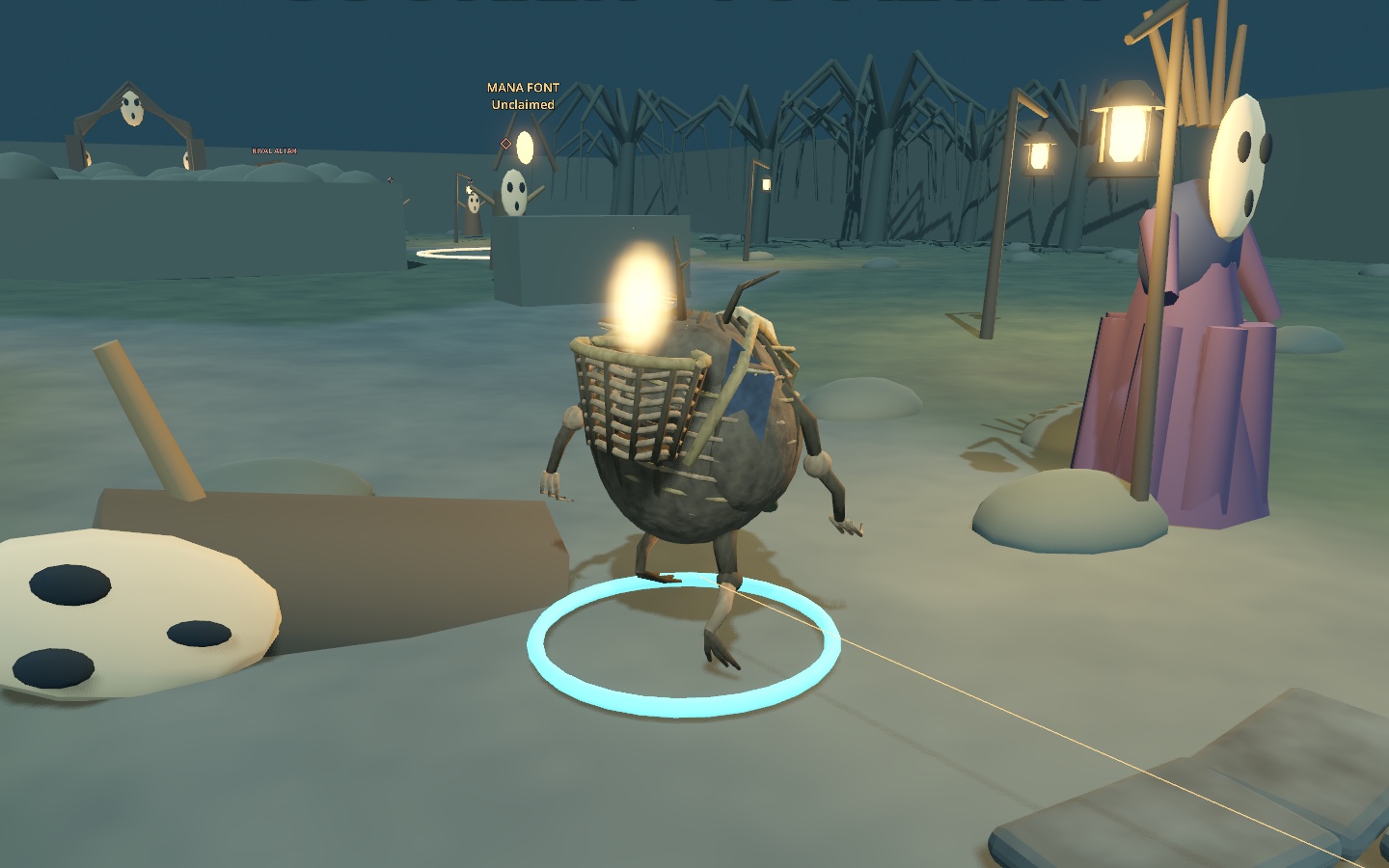
The basket has a practical job. Send a Pusling to retrieve a foreign soul and the glow travels above its back, attached to the moving rig. It disappears when the creature reaches home and deposits its cargo.
That small detail makes the recovery loop visible. You can follow something valuable across the battlefield, and understand why protecting the courier matters. If it dies, both its own soul and the soul it was carrying still fall to the ground.
An altar with a pulse
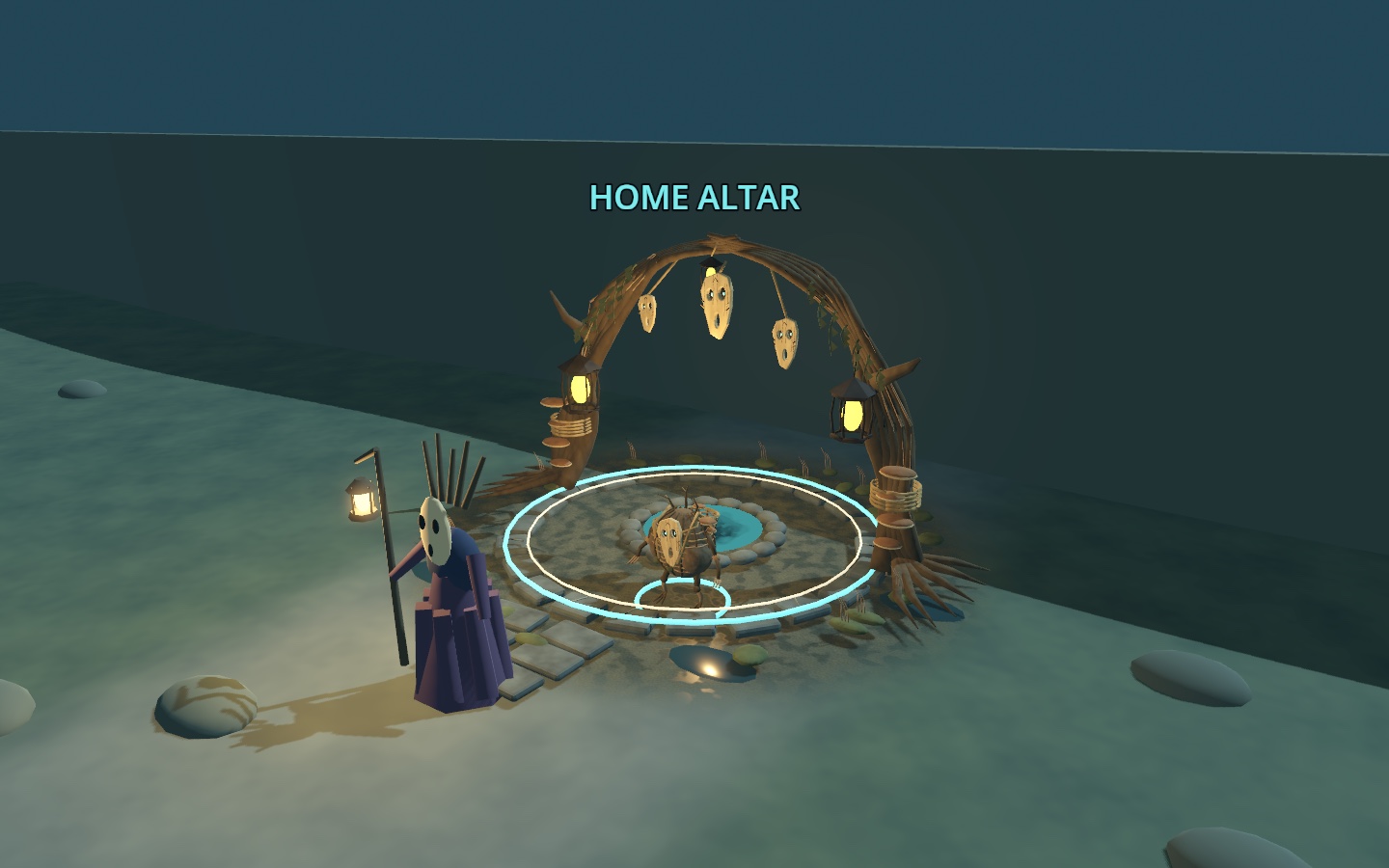
Both homes now use an original altar kit: bundled roots, hanging masks, warm lanterns, worn stone and shallow water. The roots sit outside the existing walkable ring, leaving room for the brood to gather.
The altar’s light follows its role in the match. It rests, purifies recovered souls, responds to a channelled sacrifice, signals interruption, then falls dark when banished. The circle and diamond markers still distinguish the two sides.
Selected Binbun CC0 shader components provide foundations for the flames, soul wisps, portal, projectile and hit effects. They have been adapted to our palette and pause with the game. In a crowded fight, the hit flashes are kept short and small enough to see the creatures beneath them.
The duel stays intact
This iteration changes how the game looks and communicates. The rules of the duel stay consistent with the previous playable:
- Eighteen souls remain accounted for across both armies and the battlefield.
- Recovered foreign souls still take three seconds to purify at home.
- A protected twelve-second sacrifice consumes one Pusling and its soul to banish the rival altar.
- Movement, collisions, attack damage and creature costs are unchanged.
The check pass covered the existing gameplay and the new art integration, including paid summons, combat, death, courier deposits, purification, interrupted rituals and a completed sacrifice. We also checked pause and restart, and staged a sixteen-creature fight to judge readability.
Next in the mire
The first question is how this feels in play: can we read the Pusling’s movement, spot the carried soul, and follow a ritual through the fight? That feedback will shape the next art pass.
The wizard, Brute, neutral husks and wider arena still use their earlier study art. Authored sound, broader accessibility work and sustained performance checks also remain ahead. For now, this small corner of the mire gives us a concrete visual standard to build on.