Paths through the parish.
Worn boards trace the two flanks. Cattails, ferns and bent willows surround the camps, while warm lanterns lead toward the ancestor shrine.
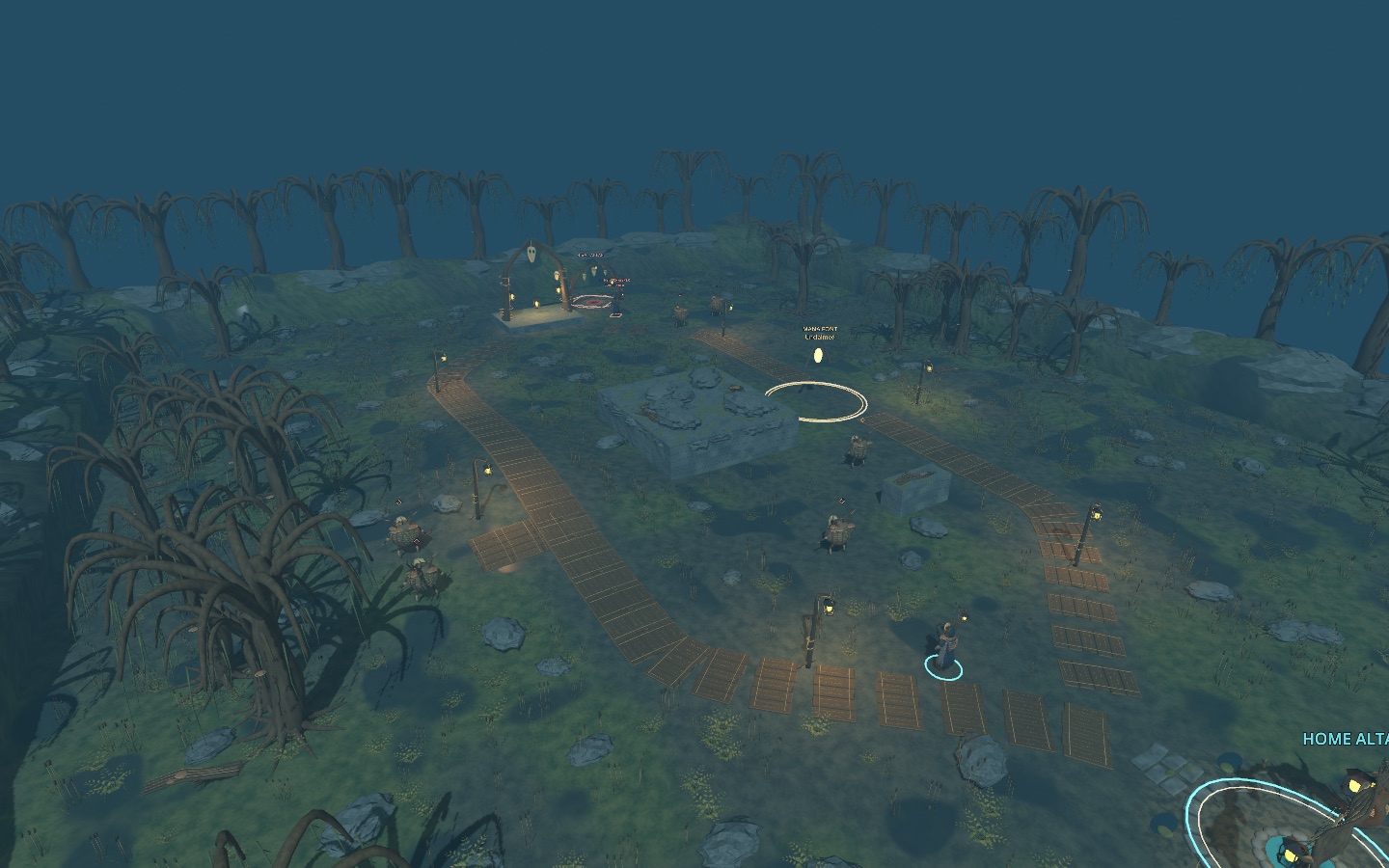
The characters now have a parish around them. This iteration brings the existing arena into the Lantern Mire material family: wet peat, moss, split roots, weathered stone and timber held together with flax. The two altar areas, soul camps and mana font stay in their familiar places.
Eight pieces of the parish
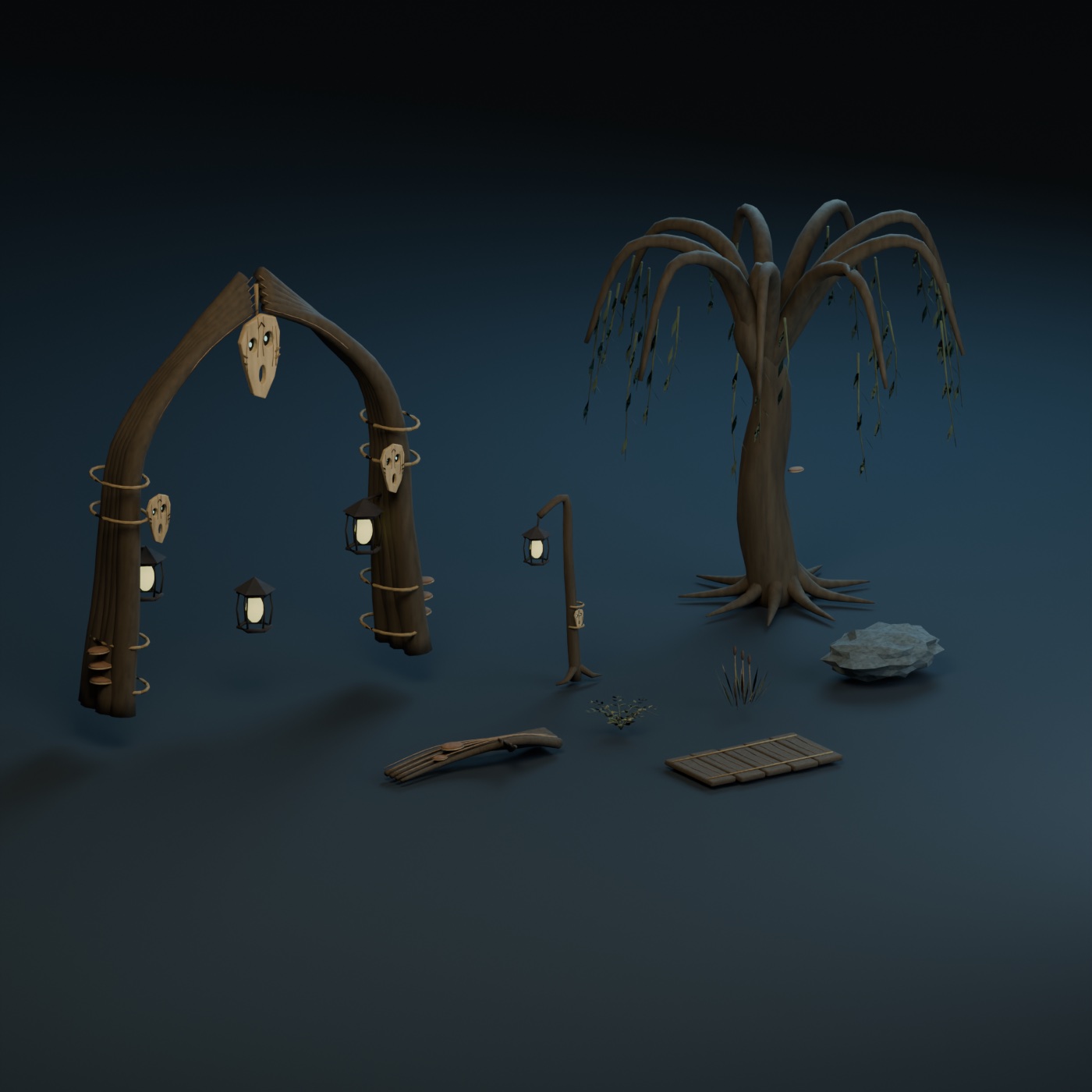
Codex authored an original eight-piece kit in Blender: a curved willow, masked shrine, crooked lantern post, slate boulder, fallen roots, reeds, fern and tied plank section. The meshes and baked surfaces share the same willow, fungus and warm lantern language as the creatures and altars.
The editable source was opened through computer use to inspect the textured kit. Godot places repeated pieces in spatial batches, leaving clear ground around objectives, camps and the player start. The willow leaves, reeds and ferns move with a restrained breeze that freezes when the game pauses.
Keep the fight readable
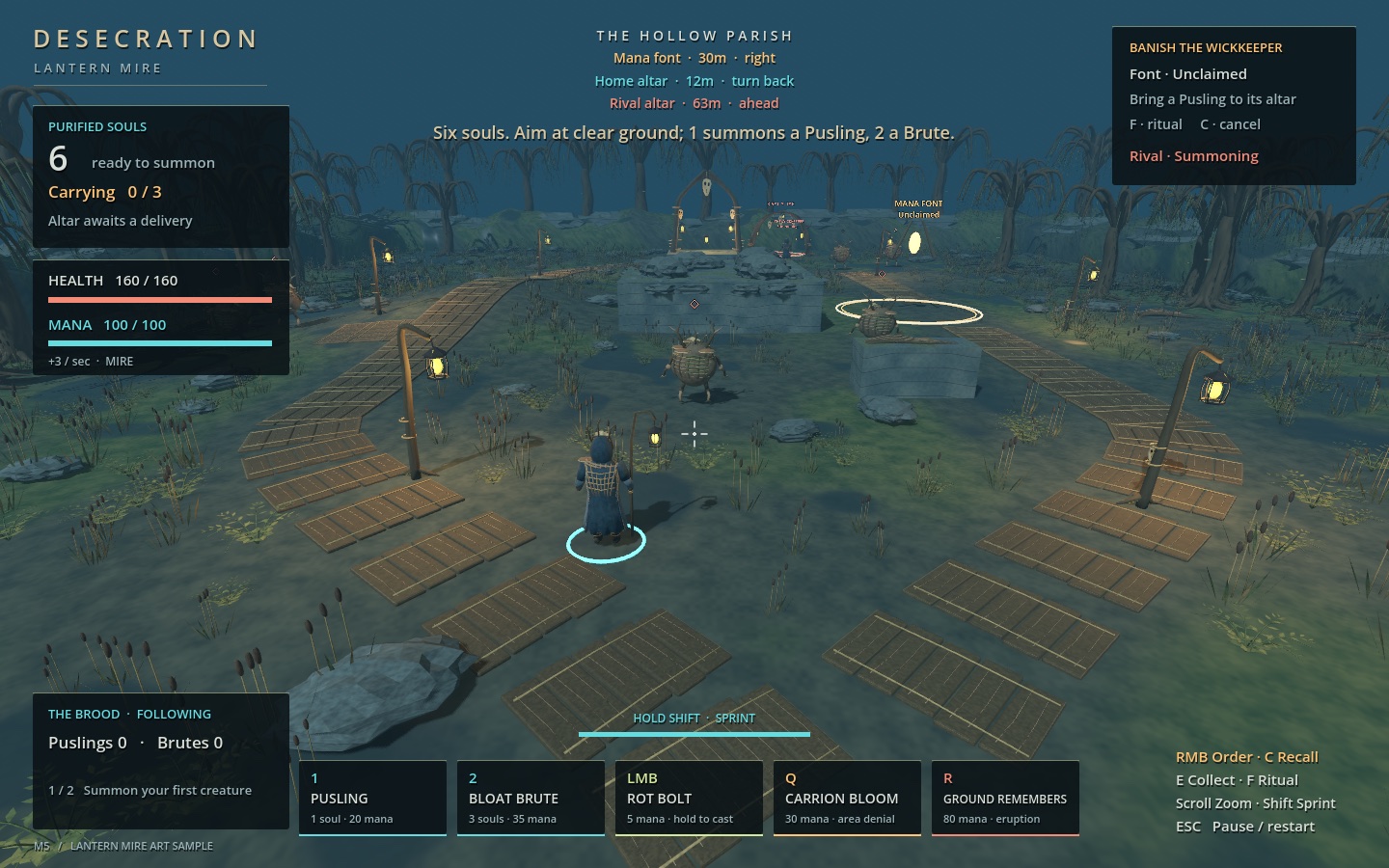
The causeways describe the broad routes around the central cover. Short plants sit away from those approaches; the font and altar rings remain open. Irregular peat banks replace the straight boundary-wall surfaces, and the northern shrine carries carved ancestor masks above its lanterns.
The saved collision and navigation data are unchanged. The decorative boards, plants and fallen roots add no obstacles. Native regression checks sent the existing eight-creature formation around both flanks, checked the ridge and cover camera interactions, and exercised recovery, rival combat, sacrifice and restart.
Another playable checkpoint
The full regression passed 552 checks, followed by 31 focused arena checks after the final presentation corrections. The exported app passed its asset inspection, standalone startup, signature and archive checks. Computer use confirmed the new scene and a paid Brute summon, then pause and replay. The preceding playable build is preserved.
Grouping the scenery removes many individually submitted decorative meshes. Sustained frame-time measurements remain part of the final release pass; this art checkpoint is not a claim of sustained sixty-frame performance.
Next are authored sound and text barks, persisted accessibility settings and full control remapping. Then come the sustained performance and stress checks. Human judgement of the art and combat feel, plus genuine Windows and Intel testing, remain separate from these Mac checks.