The wrong reflection.
Vorr and the Misbound bring fractured glass, a crooked carrier, a lunging quadruped and an Eye that commits to the place it expects you to be.
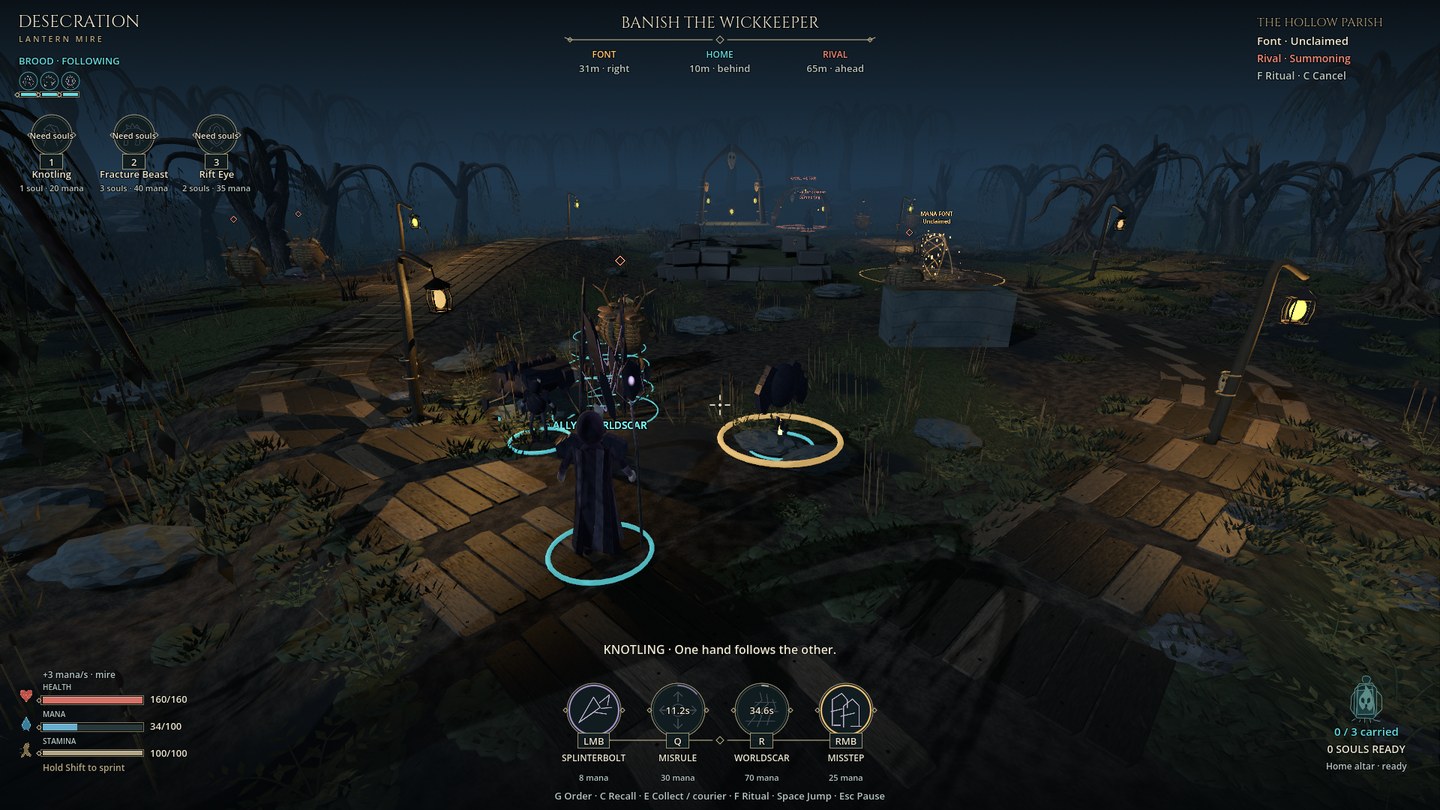
The final pairing in Shaun's three-part request is The Wrong Reflection. Crimson Vow, Drowned Tempest and Vorr now join the original Lantern Mire faction as complete playable choices and possible main rivals. This last kit is built around readable disruptions and attacks that can miss.
Chaos with a direction
Splinterbolt deals sixteen damage on its first hostile contact, then breaks into three shards in fixed forward directions. Each further body can take only one five-damage fan hit. The original victim is excluded, the shards cannot split again, and solid cover stops every flight.
Misrule warns a five-metre circle before pushing enemies outward. It moves their actual bodies for a short burst, with a 2.4-metre travel cap. Walls, occupied space and navigable ground constrain the movement. Carried souls and orders stay intact.
Worldscar marks five small circles extending away from the caster. After a one-second warning, ruptures follow along the line. Each deals twenty-four damage, with at most two contacts on any victim. Cover clips the line and a sideways move escapes it. Misstep retains the familiar paid teleport with a briefly displaced outline.
One hand, four feet, one eye

The Knotling is a small crooked carrier with two short glass blades. It strikes with one hand, then the other. Damage, a new order, lost reach or cover can interrupt the second strike. It also walks the faction's soul courier routes and performs altar sacrifices.
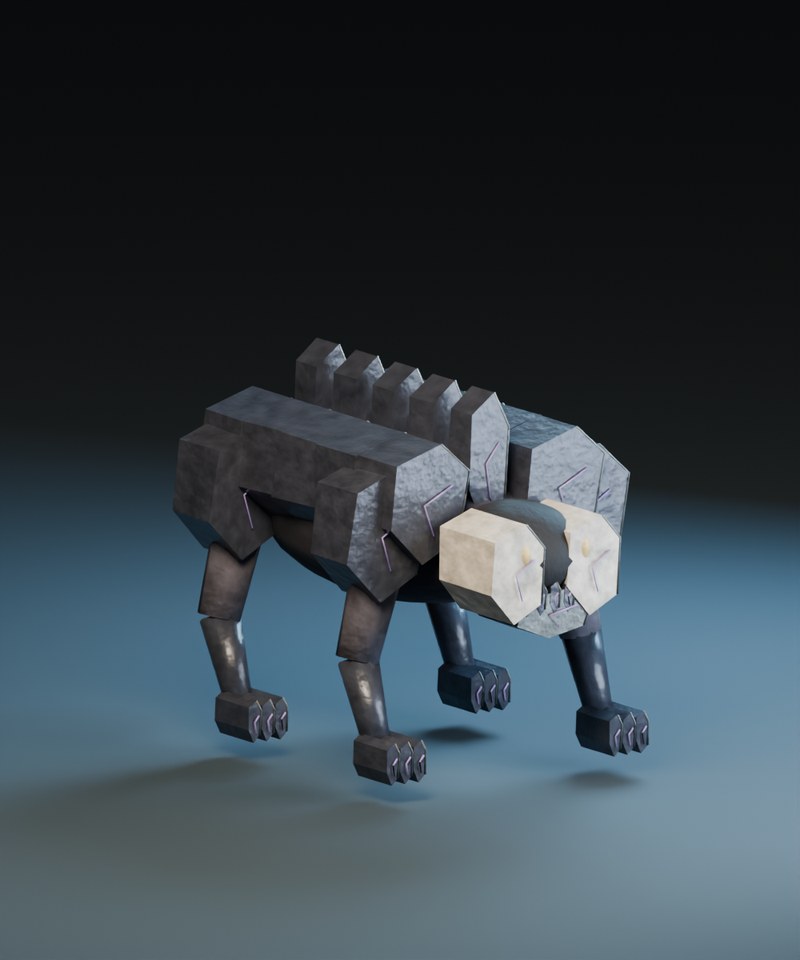
Fracture Beast is a low quadruped with a fractured jaw and separate shoulder plates. Its preparation locks a direction, then it lunges through the world for one close contact. A sidestep can make it miss; walls, bodies, damage and new orders interrupt its travel.
Rift Eye is a compact floating lens with hinged mirror plates. It displays its firing line before committing a lance that can pierce two bodies. It cannot home after a moving target. Its low flight uses the existing ground routes, keeping it vulnerable to the rest of the combat system.
The face that no longer lines up
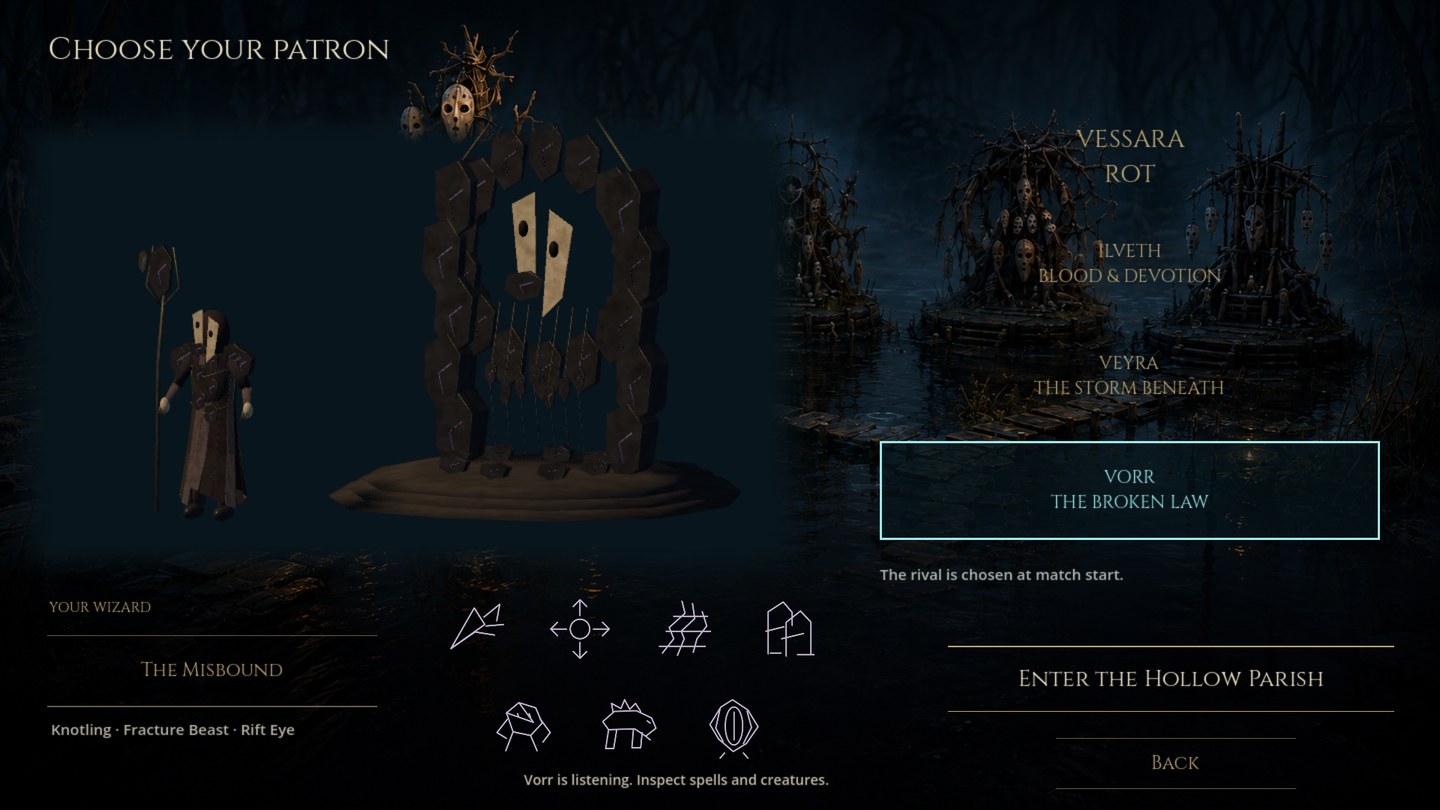
We built the Misbound, three creatures, shrine and spell shard from original geometry in Blender. The wizard wears folded cloth and chipped mirror plates; Vorr's shrine holds two displaced halves of a pale face inside a broken aureole. Each asset has original colour, grain, emission and material maps. Technical rigging and baking helpers were reused; no external mesh generation was needed for this faction.
The first material proof became too black under the game lighting, so we preserved it and gave the new glass more diffuse response. Small bounded panes sample an offset of the current rendered view to suggest misplaced reflections. They are a stylized distortion, not physically accurate mirrors. The warning geometry remains readable without that layer.
Seven original glyphs, six synthesized sound cues and short text barks complete this first version. The painted concept remains a visual ambition; the images here show the actual stylized implementation.
Four choices on either side
The fourth courtyard slot is now available. Selecting Vorr shows the actual Misbound and shrine, with four spell inspectors and three creature inspectors. The HUD follows the chosen kit and the saved control mappings.
A fresh match chooses one main rival from all four patrons, including mirror matches. Restart keeps that pairing. The sixteen player-versus-rival combinations retain the same two sides, eighteen souls and altar victory rules.
The differences are now playable: Vessara's rot and area denial, Ilveth's health payments and restoration, Veyra's inward pull and storm strike, and Vorr's outward pressure and committed fractures. Each has its own three creatures and their attack behaviour.
The sequence is ready for a playtest
The source and exported-game checks cover real payment, shard limits, cover, warned timing, interruption, physical movement, courier journeys, purification and finite death souls. Previous faction, combat, camp, recovery, menu and control checks were rerun. The final Mac build and each preceding checkpoint are saved.
The Mac remained locked to computer use. Native Godot rendering, engine-input fixtures and standalone executable startup were checked separately; they do not replace a human playtest. Human art, sound and balance judgement, physical Intel and Windows execution, and notarization remain unverified.
This completes the requested three-patron sequence. Next is Shaun's hands-on comparison of the four kits: whether each feels distinct, which attacks are readable, and where balance or presentation needs another pass.