The altar opens.
Souls circle the altars before a sacrifice begins. The first shrine accepts the wizard’s cargo, dialogue fits the laptop screen, and prepared gifts keep their bindings.
The latest campaign playtest exposed several breaks between what the game promised and what the player could see or do. This pass makes the first soul offering work from the wizard’s hands, gives the existing altar monuments a constantly moving portal, and repairs dialogue bounds, hill aiming and gift preparation.
The soul reaches the altar
Picking up the foreign soul yourself should not strand the opening lesson. Wizard and minion cargo now use the same delivery rule: enter the glowing home ring, or press E at its approach. Each soul enters the existing purification process exactly once.
The first shrine is larger and closer to its approach. A visible delivery ring, revised objective text and a nearby prompt explain where to bring the soul. The opening regression includes carrying it, saving, reloading and offering it.
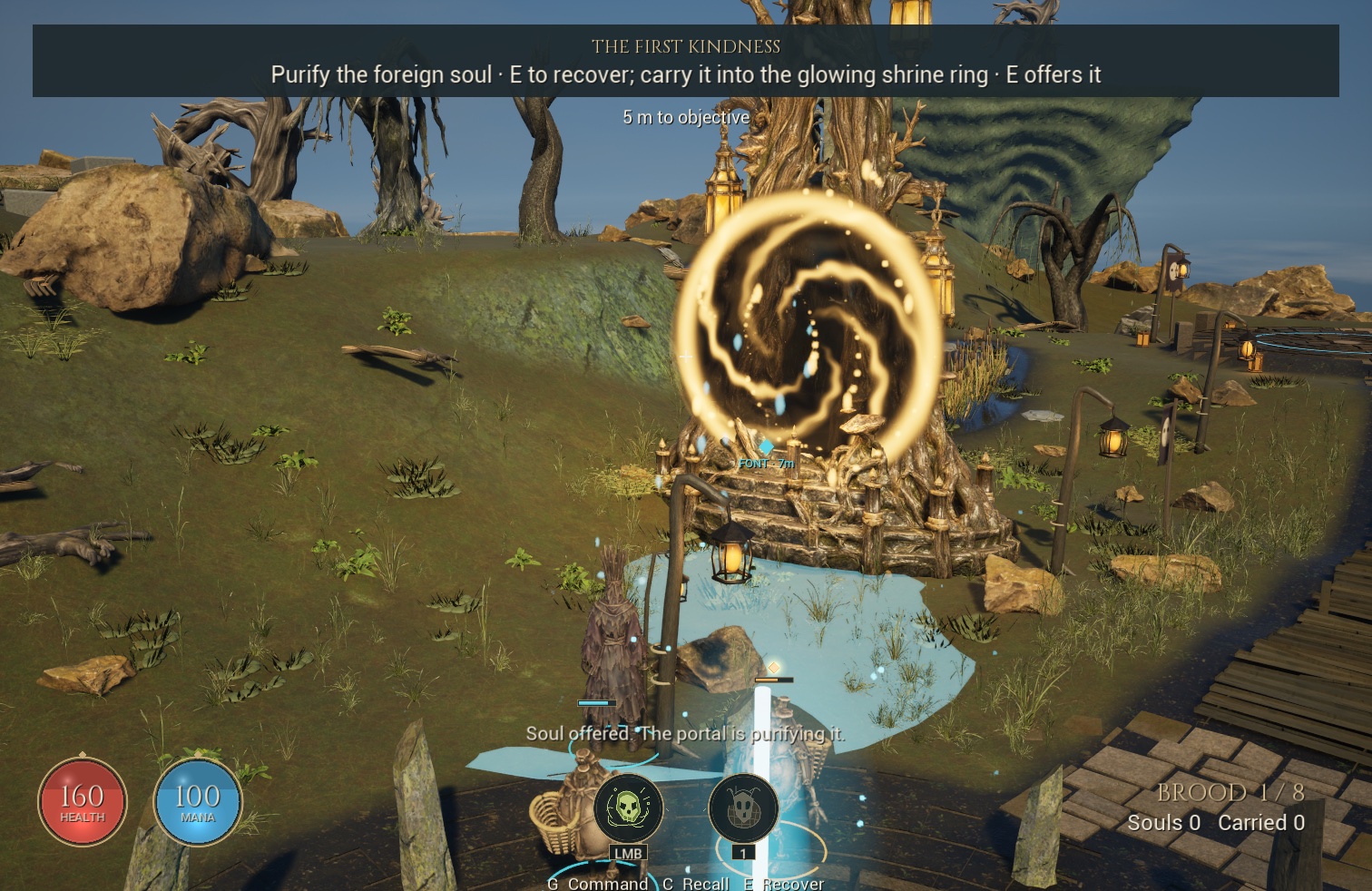
A doorway that never sleeps
The existing monuments remain. A new procedural dark vortex, soft rotating rings and orbiting soul trails give each living altar continuous movement. The Limbo gates are larger, so the audience court reads as a place where something is waiting.
Purification accelerates the motion, raises a soul whirlwind and swells the light. A hostile minion sacrifice turns the portal red, makes it tremble and adds nearby camera rumble. Spatial ambience and ritual cues accompany the changes; camera shake still respects the player’s setting.
The effects use original shader work and the project’s existing models and sounds. No new paid image or mesh generation was needed.
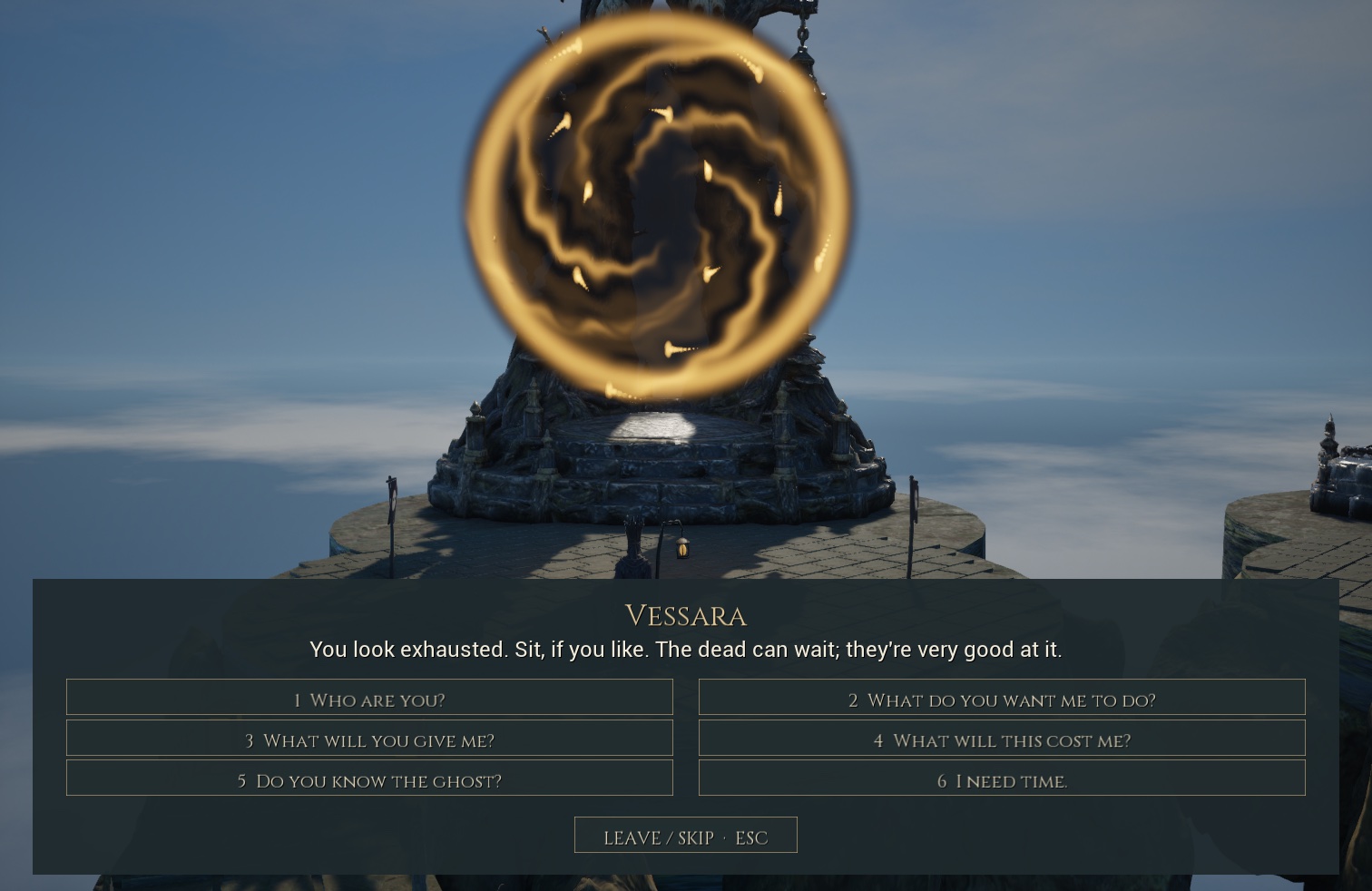
Keep the choices on screen
Conversation panels now measure wrapped speech and the number of choice rows before placing their footer. Oversized content scales to keep the controls inside the viewport.
The exact app was checked at 1280 × 720, 1440 × 900 and the laptop’s 1512 × 982 fullscreen viewport, including 160% subtitles and a staged sixteen-choice menu. A requested 1080p window was clamped by the desktop, so it does not count as a separate 1080p verification.
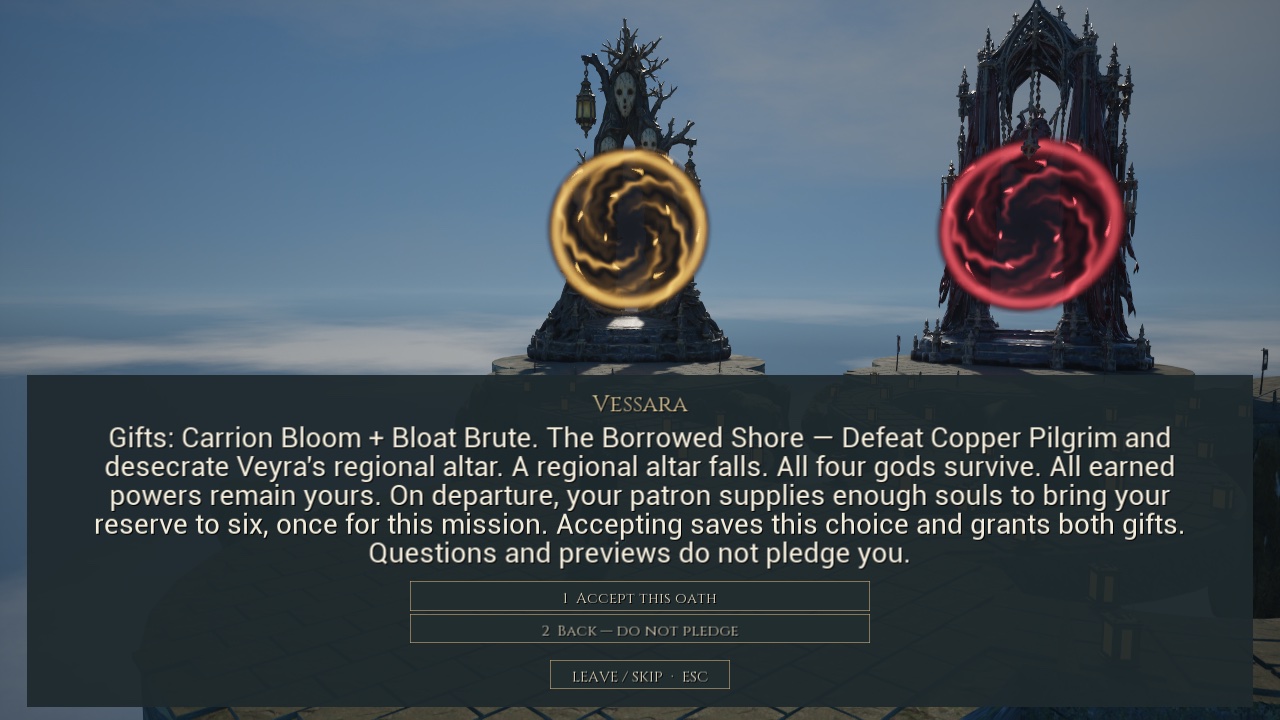
Aim uphill. Keep what you earned.
Rot Bolt now traces from the actual reticle ray, keeps a distant convergence point when aimed into the sky and allows a higher upward camera angle. Friendly minions crossing the reticle no longer pull the bolt target onto their bodies. Cover still blocks shots; support and squad commands can still target allies.
Preparing an already equipped gift used to silently move its slot. It now stays on the same key. Preparation shows the binding, and larger in-game cards show earned abilities, summons, costs and cooldowns.
Complete reward deletion was not reproduced. The native input check did reproduce the relevant route: prepare, close, reopen, save and reload, depart, then use the earned spell and minion through Q and 2. All of those checks pass in the packaged app.
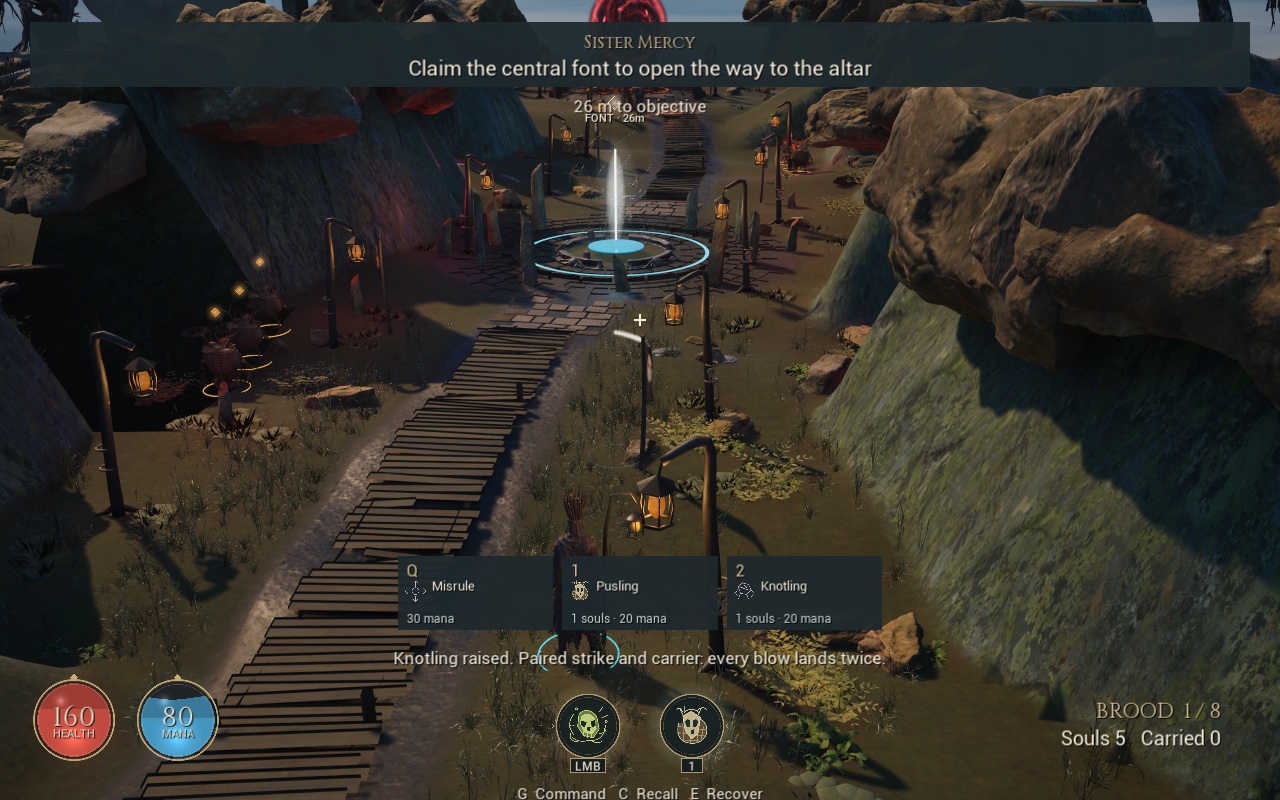
Checked, with the next playtest still ahead
The separate Mac candidate passes 902 rule and native-input assertions. A separate uninterrupted automated opening journey completes combat, wizard-carried soul purification, the enemy ritual, four Limbo court approaches and a saved first oath. These are engine checks and staged captures, not a claim of human acceptance.
On the current machine, that rendered journey averaged 24.74 ms per frame in the tutorial and 18.34 ms in Limbo, with a 108.57 ms peak. A separate portal capture run included screenshot readback and higher hitches. This is not a locked 60 FPS claim or a measured before-and-after improvement.
Next comes another laptop pass for aiming, sound balance and the intensity of sacrifice. After that, the most useful campaign work is encounter escalation and pacing through a complete human run, followed by patron-specific audio and voices and targeted hitch profiling. New campaign scope can wait until that core journey feels right.