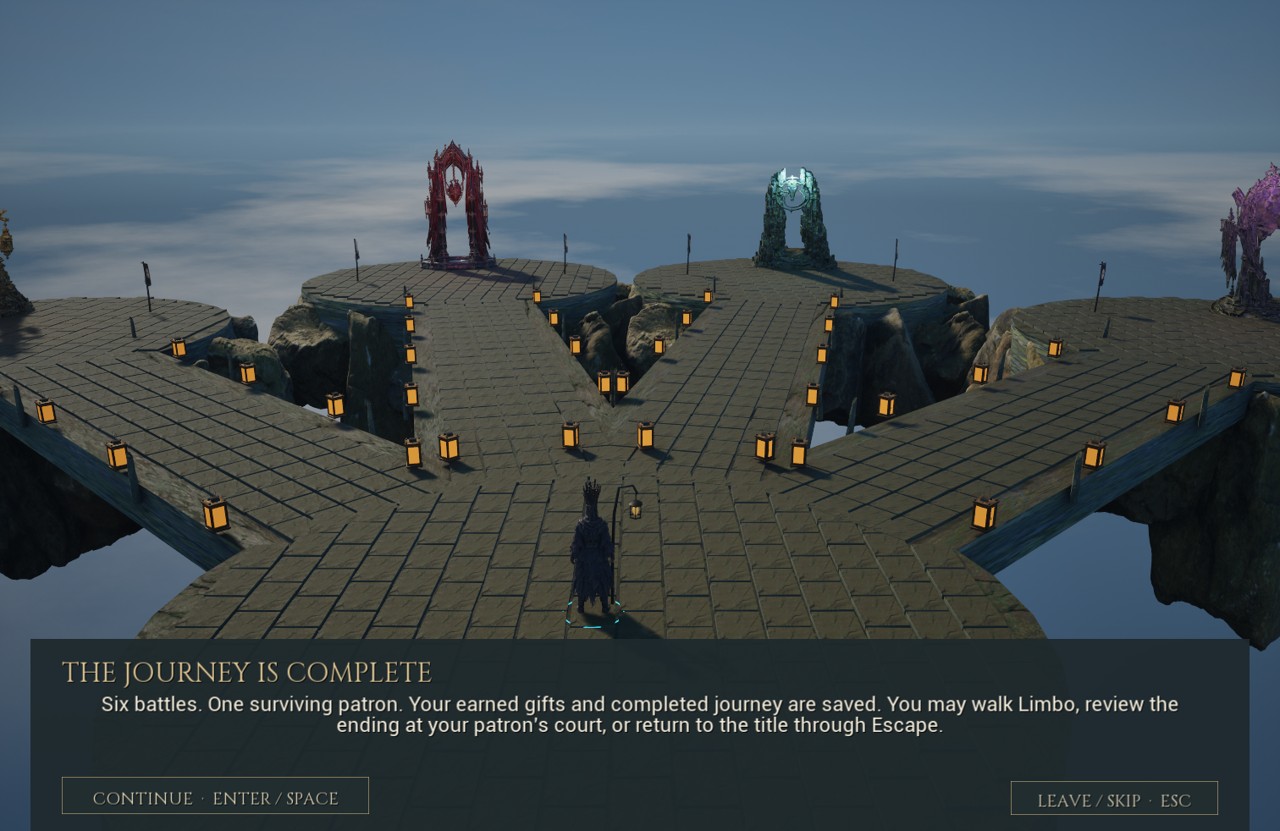
Six battles. One surviving patron.
The campaign now runs from the first soul to a saved ending, with later gifts, rival offers and consequences for the gods left behind.
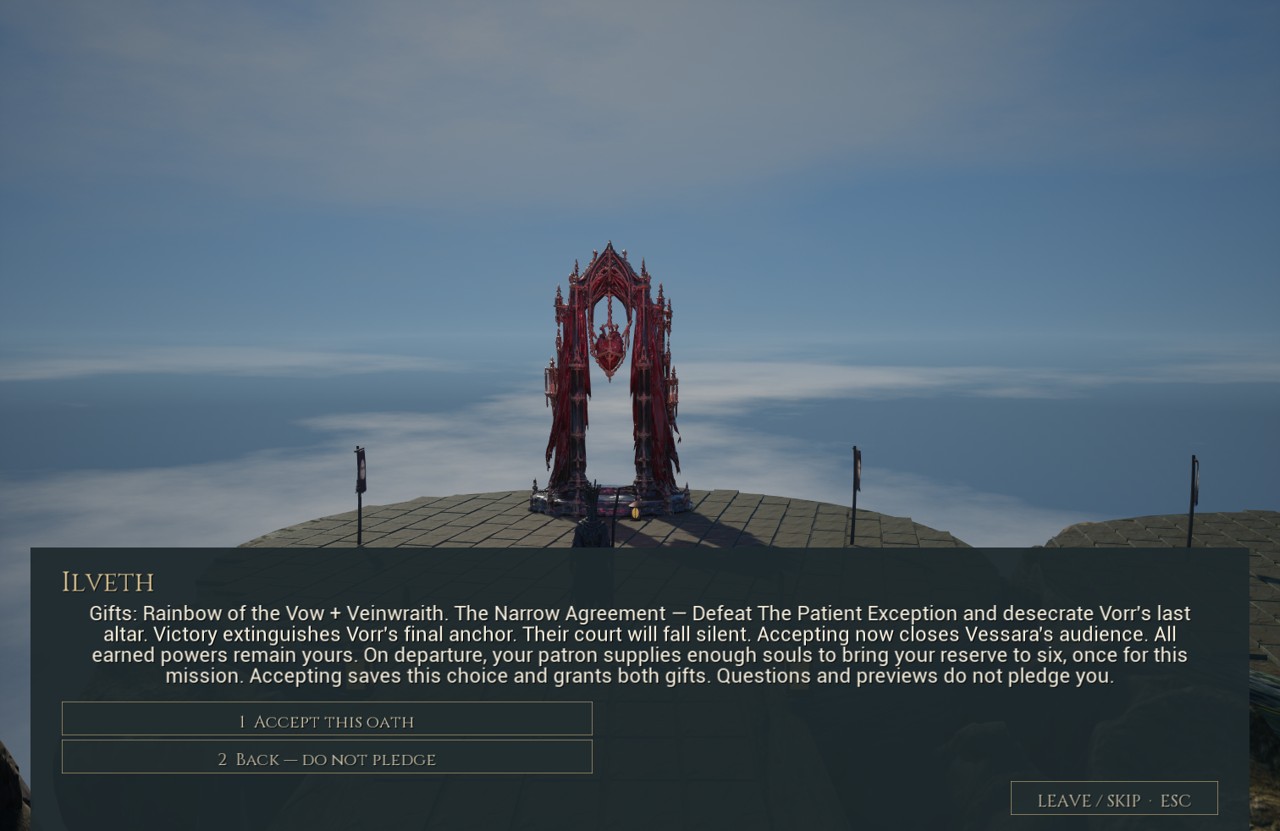
The first errands established the bargain. The later battles now make it consequential. Three final anchors can fall, a former patron can close its audience, and the wizard keeps every earned power while deciding which god to trust next.
Promises become harder to leave
A regional altar weakens its god. A declared last anchor extinguishes that god and leaves its court silent. Audience closure is a different consequence: a god may refuse another bargain while still opposing you in the world. The oath review says which consequence is at stake before the choice is saved.
Later missions add flank fonts, separate squads holding objectives and a final counterattack during the ritual. They reuse the existing territories with changed objectives. The campaign has six battles; it has not quietly become a collection of larger empty maps.
A face behind the argument
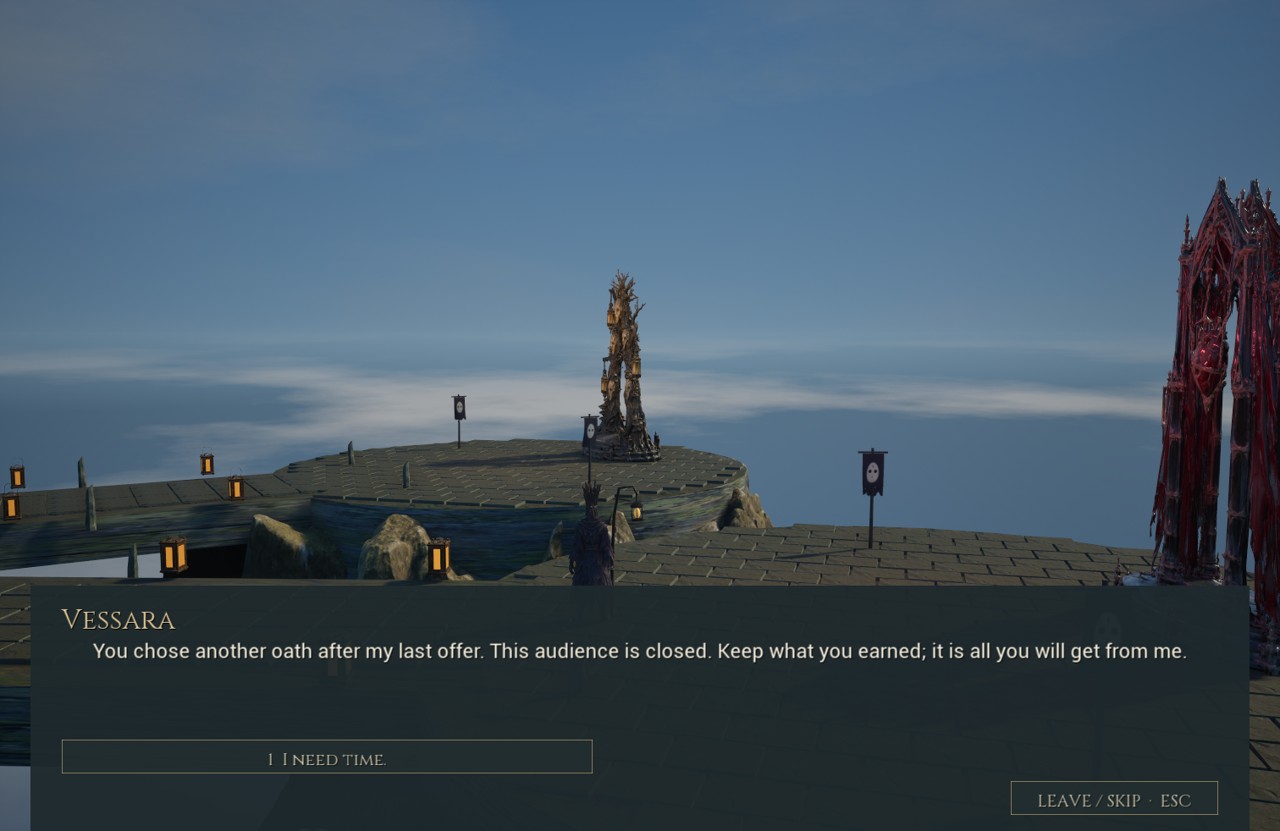
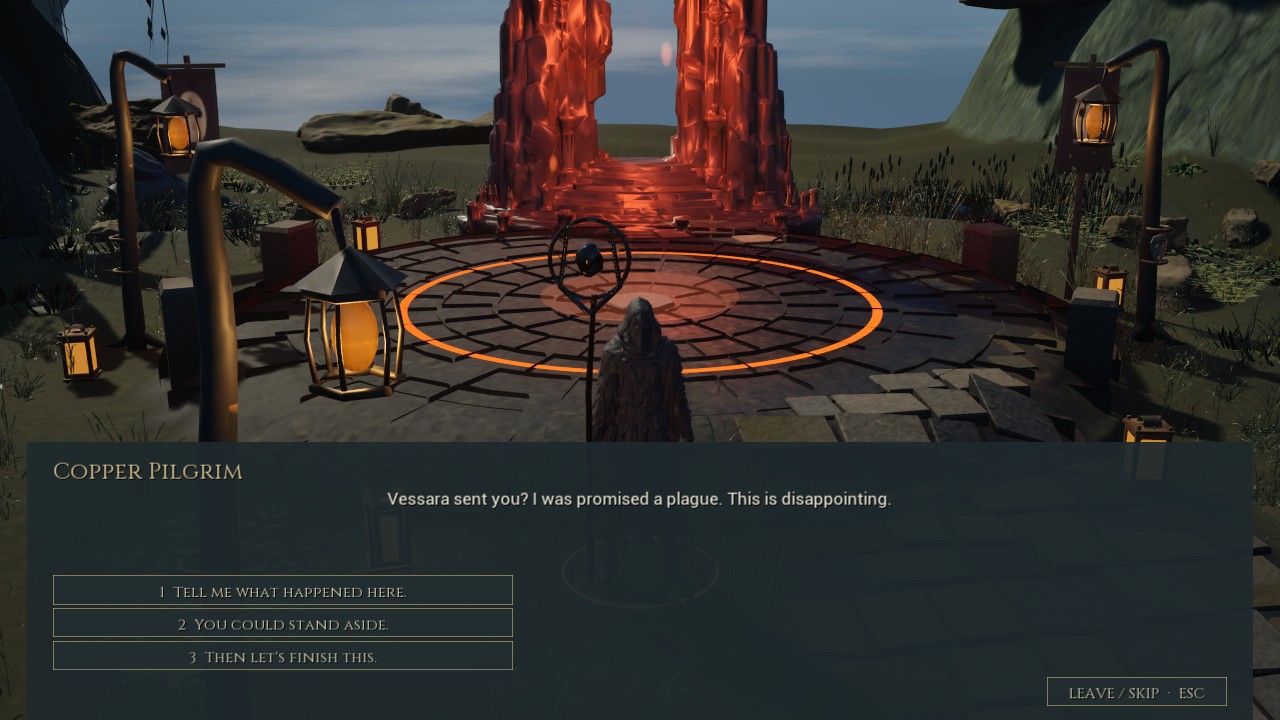
The defending wizards answer the actual accusation made by the chosen patron. Their motives are part of the encounter: burial rights, inherited vows, coastal service and people trying to leave old bargains behind. Optional replies let the player question that account before fighting.
The recorded playthrough caught an introduction where a lantern partly hid the speaker. The final camera uses the clear central approach and keeps the wizard visible above the conversation panel.
The gifts remain yours
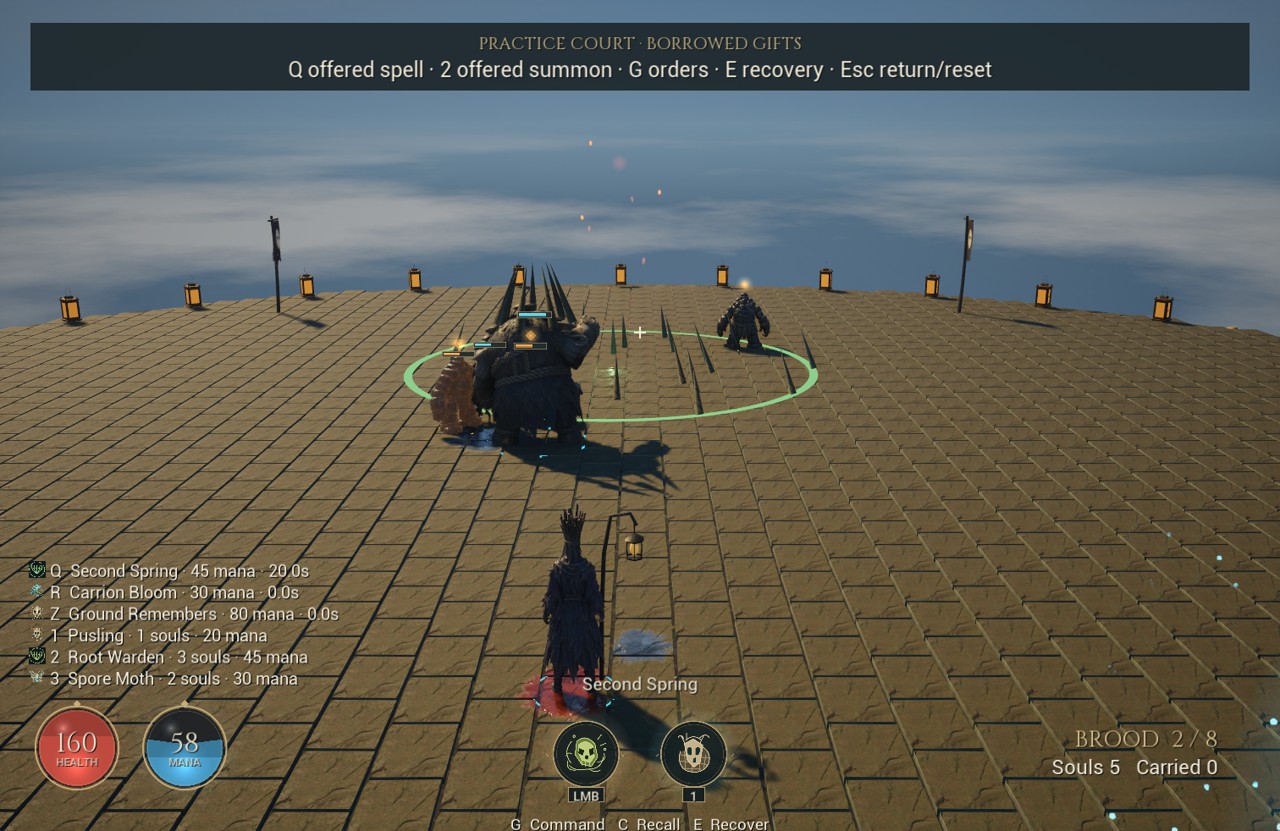
All sixteen offer pairs are implemented. Four late powers add a rooting field, blood-paid healing, shelter from projectiles and an exchange of places with an ally. Each has its own cost, valid targets and cooldown. Reversal checks both landing positions before moving either body; a refused cast spends nothing.
Five new creature variants have different jobs: the Grave Tender retrieves existing friendly souls, Root Warden binds a struck enemy, Bell Confessor clears nearby slows, Tide Marshal knocks a victim back with a visible projectile, and Witness steps sideways before committing to melee. Their locally authored silhouettes use the existing rigs and animations. They are not five newly commissioned character models.
The learned collection survives switching. The equipped kit remains bounded to three spells and three summons, with the basic ritual carrier retained. Offered gifts can still be tried temporarily before accepting.
From the first soul to the saved ending
The release checks cover 908 gameplay and native-input assertions. Both a loyal campaign and a switching campaign reached the saved ending without a retry. Separate finale journeys passed with the basic kit and with Ilveth’s gifts. The final camera-polish app repeats the rule, input and local host/join/rematch checks; its full measured journey is recorded below. The two-process network cases run on both existing skirmish maps.
The route enumeration covers all 64 legal routes to an ending and 132 choices. That is distinct from playing every branch: full combat journeys exercise selected loyal and switching paths. Behavioural tests use isolated fixtures to check failures, interruptions and saved state. None of these runs is presented as a human playtest.
The final app also finished the complete measured campaign without a retry. On this Apple M5 Mac at 1280×720 High, mean frame times were 24 ms in traversal, 27 ms in combat and 19 ms in the finale. The worst combat-labelled frame was 478 ms, with loading included; its cause has not been profiled. A separate staged Mire test with repeated Ground Remembers averaged 31 ms, with a 201 ms worst frame. That fixture resets resources and includes three captures. These samples establish neither a constant 60 FPS nor performance on another Mac.
Ending spoilers — the final encounter
The guide from the first soul becomes the final opponent. Recognisable Limbo courts become binding sites around the exposed centre. Two fonts and protected rituals undo the outer bindings; only then can the Usher be defeated and its spirit bound at the centre.
Three carriers are needed across the encounter. Phase checkpoints and ordinary soul recovery let the player recover from loss or interruption. The completed save returns to Limbo with the earned gifts intact, and the surviving patron has a final response.
What this candidate is
This is a complete playable single-player campaign candidate, with subtitled dialogue. Final voice performances remain outstanding; the voices, comic timing and dramatic delivery still need a separately approved production method. No paid assets or voice service were used in this implementation.
The Mac remained locked during final inspection. Engine-native input and captured rendering were checked, but direct desktop play and human judgement of humour, pacing and feel remain separate. Local two-process network regression does not establish a session between cities. Campaign co-op, Windows/Intel testing and the older falling-crossing hitch remain outside this campaign delivery.
The earlier campaign and multiplayer apps are preserved for comparison. The public journal contains the story of the work and reviewed captures; the game and its source have not been publicly distributed.