The light in the wood.
Darker ground, worn boards, a gnarled willow and a layered indigo coat bring the home altar closer to the Lantern Mire reference. This is a playable art sample to review before extending the treatment across the parish.
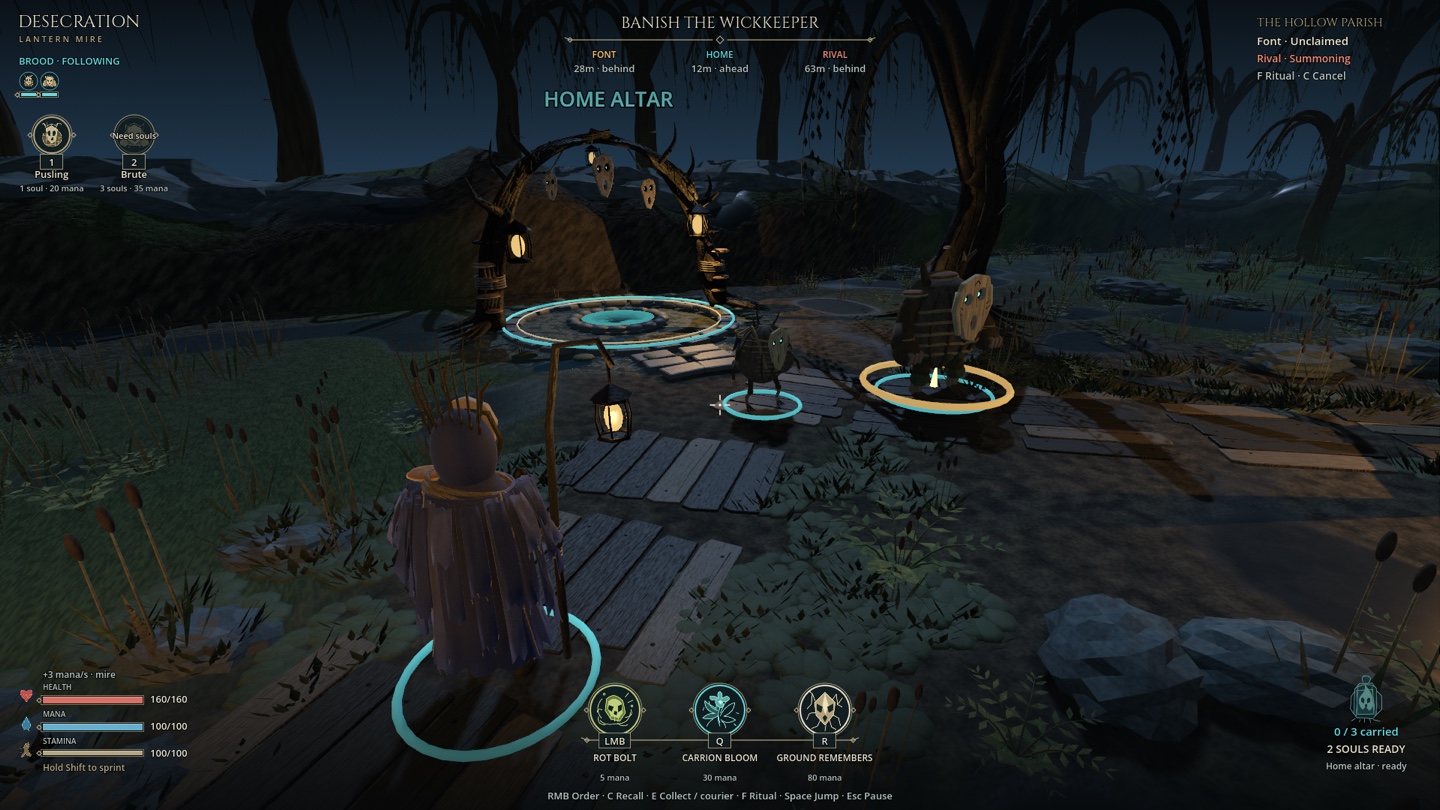
Shaun wanted more than a darker screen: the original design has grain, age, shadow and lanterns that feel ominous. We chose one stretch of the existing home-altar approach to test those qualities together. The complete duel remains playable around it.
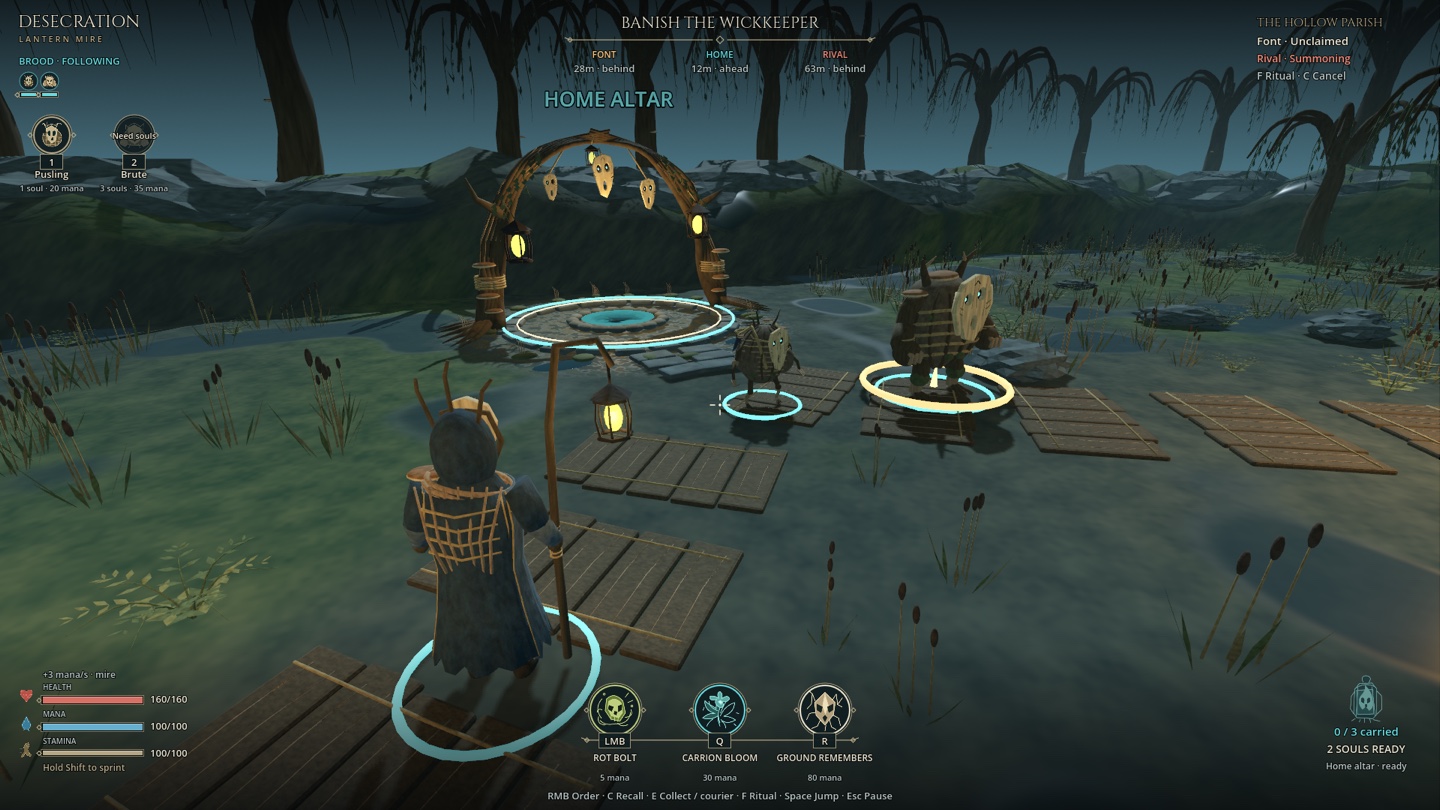
The same place, before
This is the preceding 0.5.6 build from the same player position, camera and 1080p viewport. Its broad lighting and simpler surfaces made the scene easier to read, but left much of the ground and wood feeling smooth.
The benchmark concentrates amber light around the home altar and one wayside lantern. Two local lights cast shadows, while colder ambient light keeps character edges readable. Distant fog stays beyond the immediate fight, and team markers and the existing HUD keep their established shapes.
Surfaces with a purpose
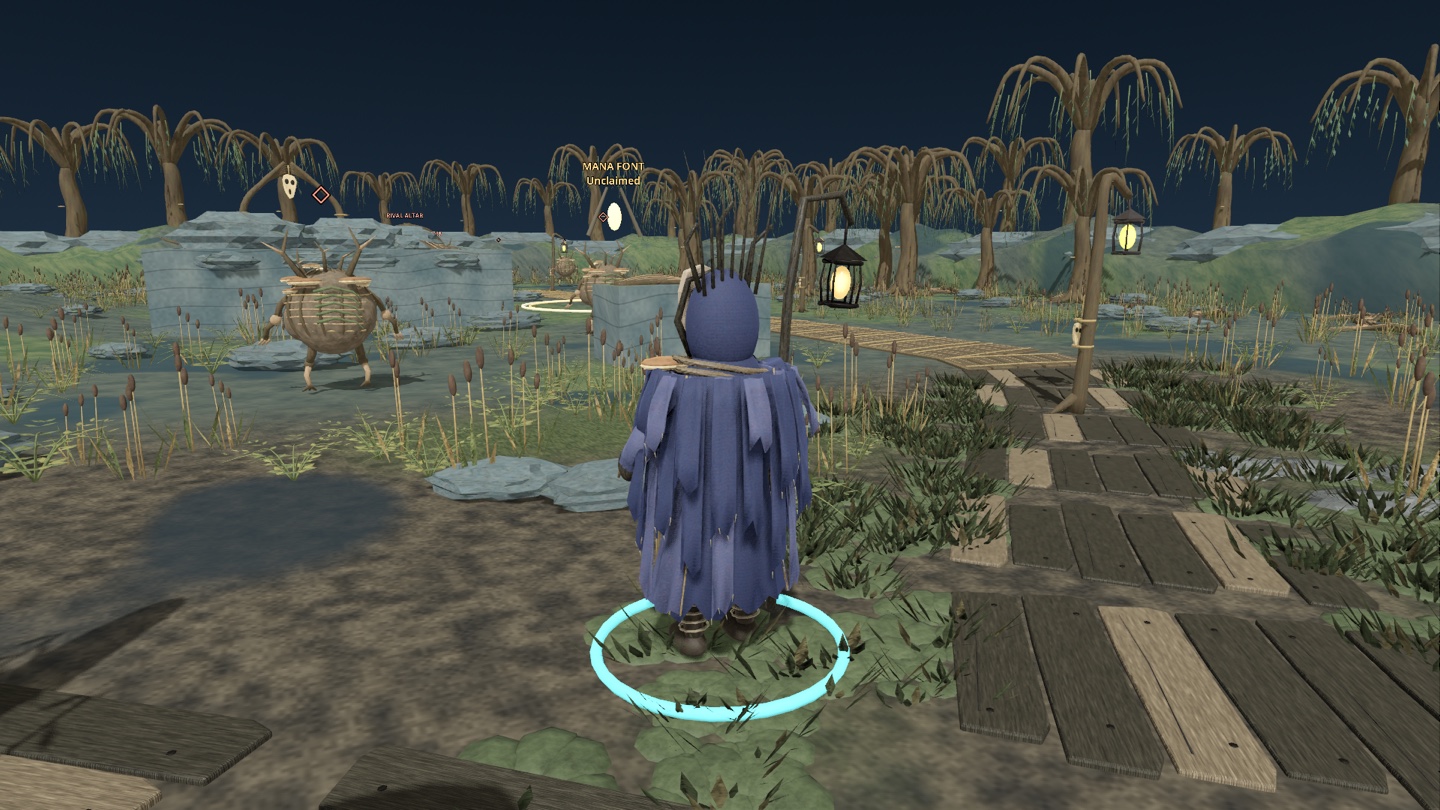
Codex authored the new geometry and surfaces in Blender: bark grain follows roots, boards have worn corners and nail heads, cloth has weave and frayed layers, and iron catches light differently from moss or stone. The wizard retains its original rig and fifteen animation clips on both sides of the duel.
The Blender work now exports varied roughness, occlusion and metal response alongside colour and normals. Godot checks those imported channels, including the foliage material that also drives wind. The editable source geometry, material graphs and UVs remain separate from the game export.
A small kit supplies one prominent willow, the home altar, a lantern post, three board variants, clumped sedge and stones. Shallow ground relief and wet patches sit on the original terrain. This iteration uses original authored assets and synthesized ambience; the previously credited effects remain in use.
A place that keeps breathing
A quiet swamp-air loop sits beneath sparse water, old-wood and lantern sounds near home. Actionable warnings lower the ambience. The existing volume and mute controls govern the mix, and pausing freezes the loop, local sounds and foliage movement together.
The wizard’s cloth and lantern still follow the existing in-place animation system. Walking, sprinting, jumping, spell contact and death or return timings have not changed. The new decoration leaves the saved collision, navigation and clear routes intact.
A benchmark to play
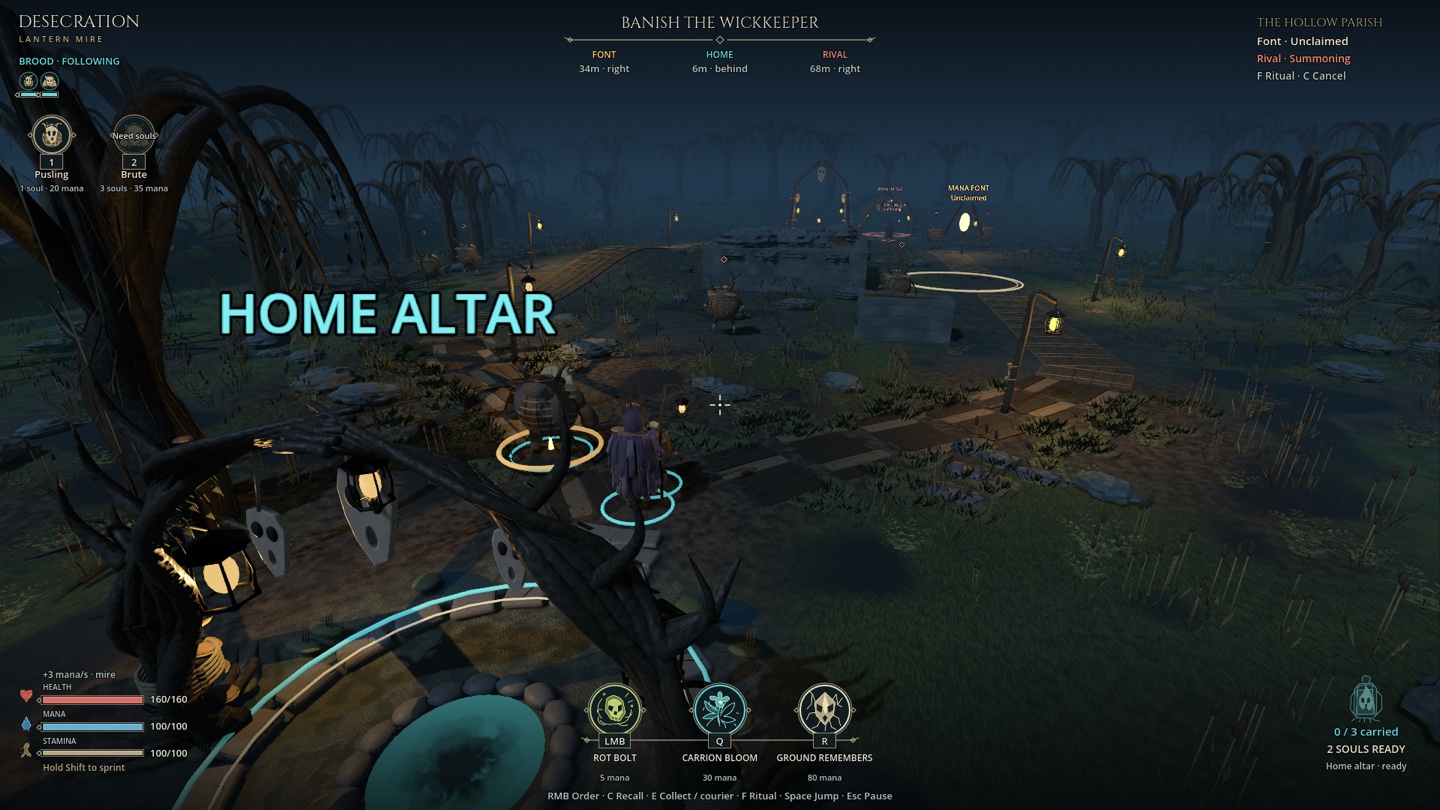
The complete source passed 802 regression assertions and fourteen audio-file checks. The exported pack passed its asset, material, HUD and soul-return checks, followed by signature and archive verification. Computer use exercised paid summons, Bloom, scroll zoom, settings, pause, restart and a real rival altar attack in the app. Movement and soul-return contracts were also checked by scripted native fixtures; unassisted combat feel still needs a human playtest.
In matched twelve-second 1080p crowd samples on this Apple M5 Mac, the preceding build’s 95th-percentile frame interval was 13.4 milliseconds and the new sample’s was 14.7. That is a modest rendering cost while remaining inside a 16.7-millisecond target at that percentile. This short comparison does not establish sustained performance or performance on other machines.
There is still a substantial gap to the original concept’s sculpted detail and density. The wider tree line, cliffs, mana font, rival shrine and creatures need further work; close views also expose the sample’s stylized shapes and simple vegetation. This delivery establishes a better material and lighting basis, rather than claiming the whole arena is finished.
The next decision is Shaun’s hands-on judgement of the darkness, movement, surfaces and sound. After that review, the environment kit can spread across the arena and the creatures can receive their own refinement. Windows, physical Intel execution and subjective art or audio acceptance are not claimed by the Mac checks.