A shape beneath the mire.
Raised paths and flooded hollows give the arena real relief. A collapsed shrine replaces the central block, a larger spirit fountain circulates above the water, and three original tree shapes join the mire.
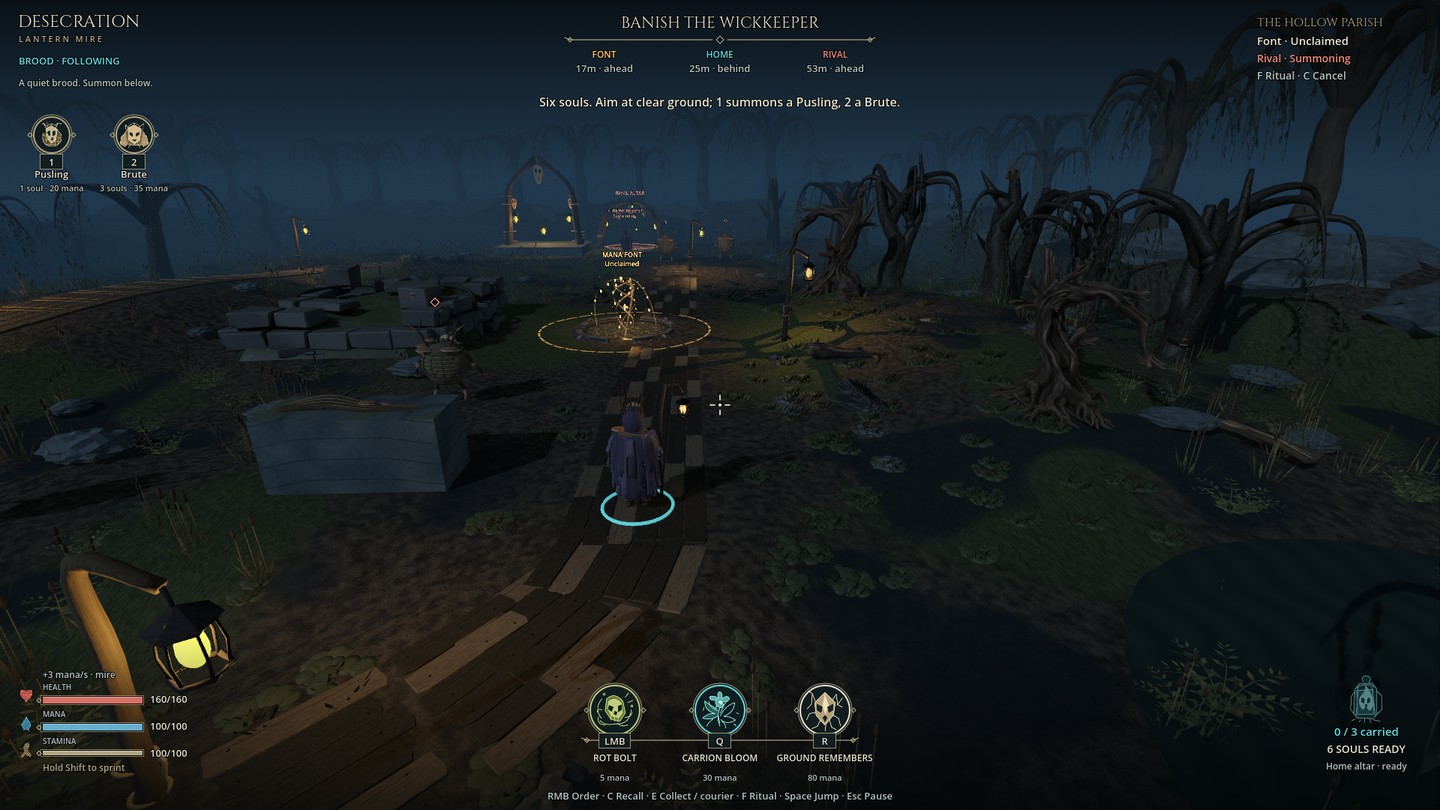
Shaun’s review of the last build found the next useful work: the ground still felt flat, the central cover looked like a box, and the font needed the presence of a spiritual fountain. We took those together as one pass through the existing arena, using our own Blender work alongside the supplied Meshy props.
Where we started
The earlier pass brought Meshy bark and stone into one font approach. This time the surface underneath needed to change. The central obstruction had a useful tactical purpose, splitting two flanks, but little sense of what it had once been.
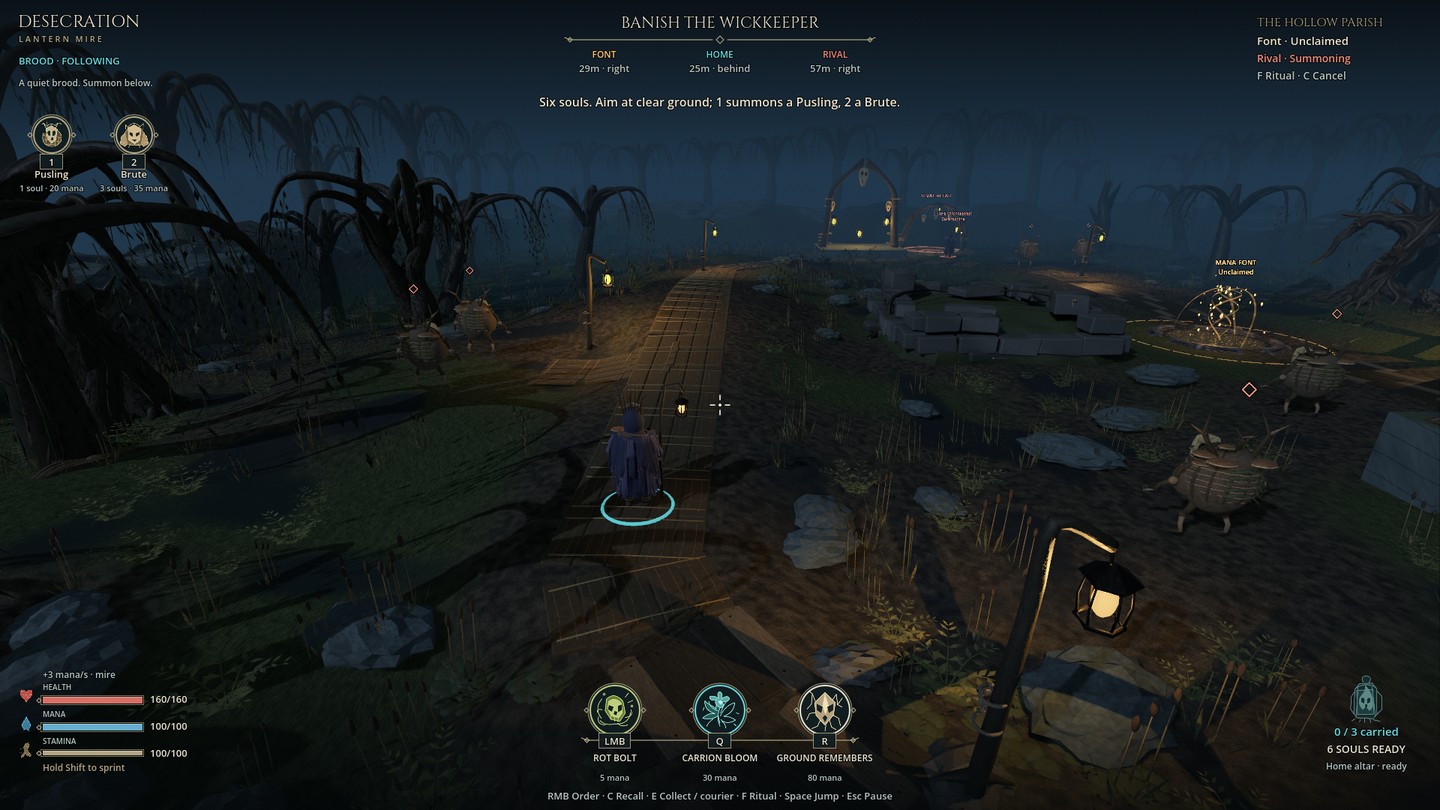
The new version keeps that cover role and the same objective locations across the map. Its silhouette is now a collapsed shrine foundation: displaced stone courses, a buried core, roots, fallen masonry and small votive fragments. Collision follows the surviving solid structure. The two broad routes still pass around it.
Walk the shape
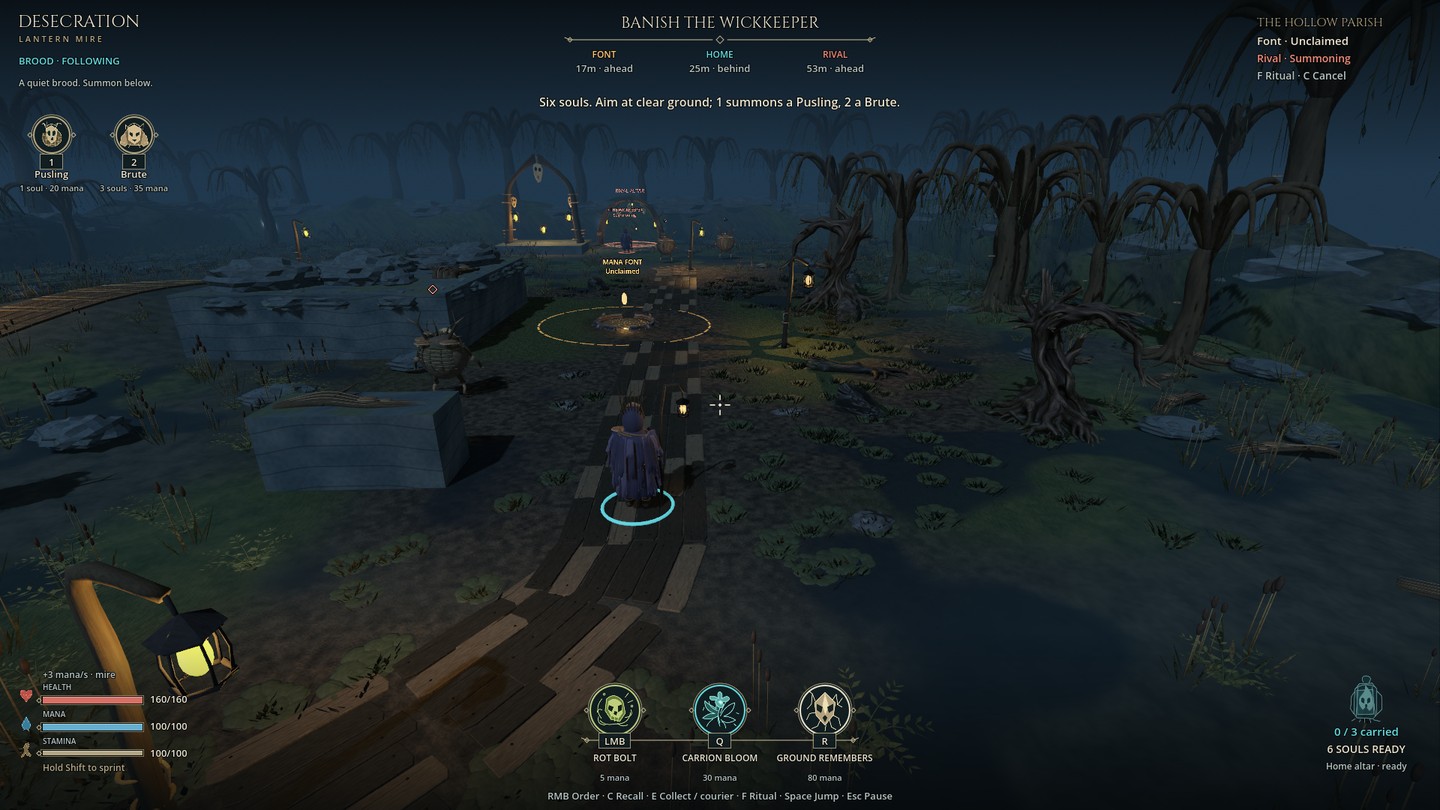
The arena now has raised peat banks, connected causeways and shallow flooded depressions. A saved grid of 7,007 height samples drives the visible mesh, physical ground and placement of actors and scenery. Boards follow the grades, roots meet the banks, and the water sits level inside the low ground.
We deliberately rebuilt navigation with the original slope, step and creature-clearance limits. Starts, altars, the font and camp approaches have stable clearings. Puslings and Brutes can use both flanks without a required jump. The shallow hollows remain ordinary walkable ground; this pass adds no swimming or terrain penalties.
This is a physical map change. The footprint, objective positions and gameplay rules remain, while local grades and sightlines change with the landform.
Water that returns

The existing Meshy surround is now about 5.6 metres across. Original Godot effects send three thin streams upward in spirals, curl them outward and return droplets to the basin. Some become small soul-like motes. Ripples, a little basin mist and a quiet spatial layer of our original well-water sound give it movement and presence.
The fountain still belongs to the same game: a four-metre capture boundary, four seconds to capture, and eight mana per second within eight metres when owned. Living enemies contest it, and colour plus explicit text retain the ownership cues. Actors can cross the centre and bolts can pass through the circulation.
Water, drops, light and sound follow the paused match and reset together. The sound uses the saved volume control, so muting the game also mutes the fountain.
A family of trees
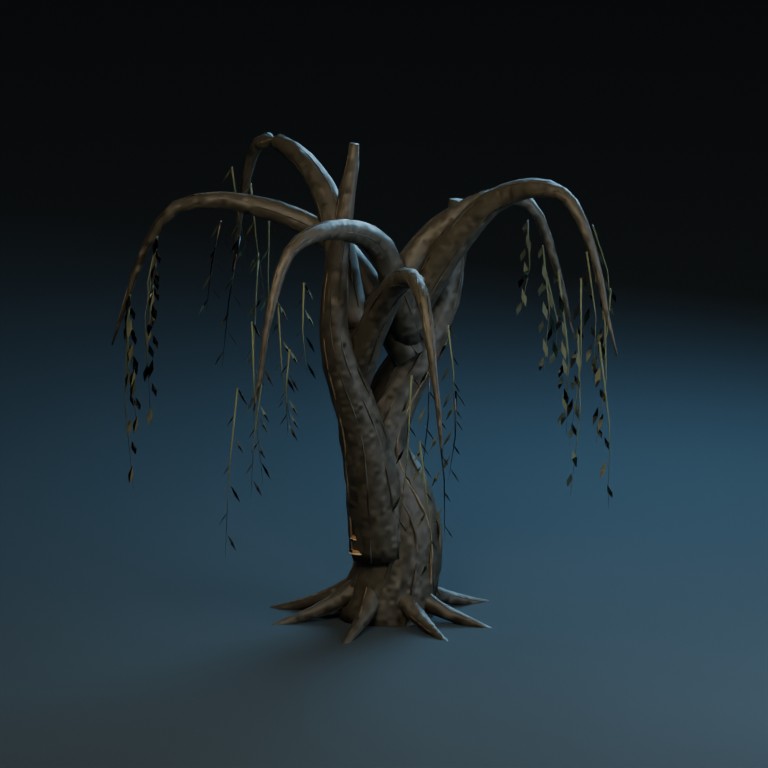
Codex authored three more tree shapes in Blender: a leaning willow, a split willow and a broken snag. They have different trunks, crowns and proportions. Twenty-five nearby placements use that family, alongside the two existing Meshy stumps. Simpler original trees remain in the distant fog.
The new trees keep editable sources, baked bark and roughness maps, and modest movement in their hanging growth. Front, back and root views were inspected before the meshes were placed on the new ground. The supplied Meshy models and all earlier Blender sources are retained.
A lower moon angle, damp material joins and peat grain across the arena tie the scene together. A final camera review caught white glare on some wet ground near home; reducing those highlights kept the dampness without letting it dominate the view.
Ready for another walk
The final game passed 896 regression assertions and checks on fourteen original audio files. The exact export passed asset-exclusion, terrain, tree, fountain and uphill/downhill-shot checks. Real controllers traversed the flanks, carried souls home, crossed the font and handled jump, sprint, camera cover and respawn. Native computer use also checked the app, settings, paid Pusling and Bloom, zoom, restart and pause.
A short sixteen-creature combat sample at 1080p measured a 14.35-millisecond 95th-percentile frame interval for the new build, versus 12.69 before. The new sample had no frames above 33.34 milliseconds; the earlier build had four. These are two twelve-second samples after warmup, with the crowd settled into melee. They do not establish sustained performance or explain every hitch.
The Mac build, captures and full predecessor are saved. The delivered app is ready for Shaun’s playtest. The useful next check is a walk around both flanks, a fight near the new cover and a capture at the fountain.
This gives the parish a clearer shape and more meaningful landmarks. Coarse masonry, repeated distant silhouettes and character surfaces still leave a substantial gap from the painted concept. Human art, audio and combat judgement, physical Intel and Windows testing remain outstanding.