A second god in the mire.
Two people can now take opposing sides in the same arena, choose their factions and ready up. The first Mac multiplayer playtest keeps the finite-soul battle intact.
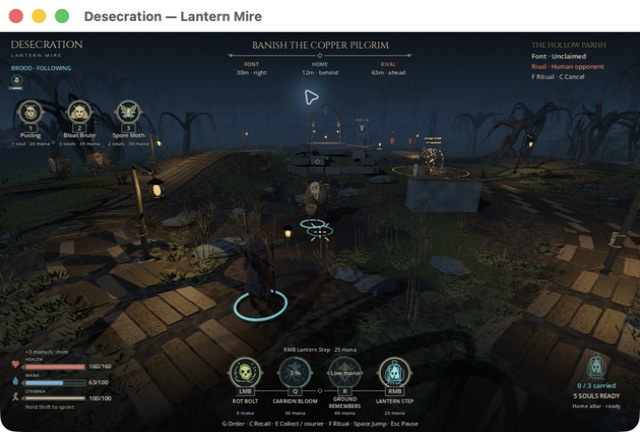
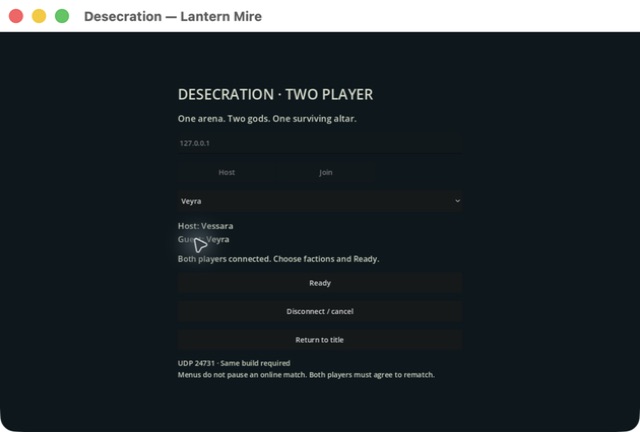
The request was simple: let two brothers fight each other. Desecration now has a Host and Join flow for two human players, followed by the existing altar battle and a rematch when both players agree. This increment adds the networked match; it does not replace the artwork or the offline game.
One arena. Two choices.
Each player can select Vessara, Ilveth, Veyra or Vorr, including the same faction as their opponent. Both ready up, then each app prepares the two selected factions before combat starts. The guest receives their own camera, spell bar, creature roster and friendly colours.
The soul still counts.
The host runs the battle and decides movement, spending, hits, summons, soul ownership, deaths and victory. The guest sends commands. The local camera and movement respond immediately, then reconcile with the host. There is no account service, matchmaking or rented server.
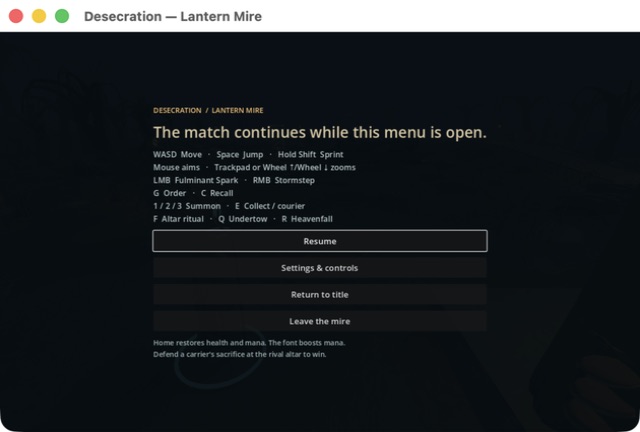
The existing contest remains: build a brood, recover fallen souls, fight over neutral camps and the mana font, then protect a carrier’s sacrifice at the opposing altar. Opening a menu does not stop the opponent. A lost connection ends this first version of the match.
Checked, and still to play.
Two real local network processes exercised commands, replicated armies and spells for all four factions, result handling and rematches. Host-rule fixtures covered death and recovery, finite souls, font contention and interrupted or completed sacrifices. Delayed and duplicated commands were checked against summons, damage and soul collection. Bounded traffic tests added delay, packet loss and duplicated packets.
Computer-use checks inspected the actual Mac Host/Join/Ready flow, arena entry, ordinary controls, menus and disconnect messages. Early loading and effect-lifetime failures were found and corrected; those attempts remain in the development evidence. The offline regression review also reproduced two existing quiet-camp assertions in the preserved earlier release, so the report does not claim an entirely green baseline.
One final guest preparation took about 71 seconds before combat began, so first loading is not yet a polished experience. The next acceptance check is a real match on two devices. Windows, another Mac, internet routing and how combat feels between two people have not been verified. The current delivery is a local Mac playtest candidate, with direct UDP connection instructions and those gaps explicitly recorded.