A vessel for the font.
Worn stone and carved roots now surround the mana font. Our first Meshy trial combines an original image brief, a generated model, Blender cleanup and water that responds to the match.
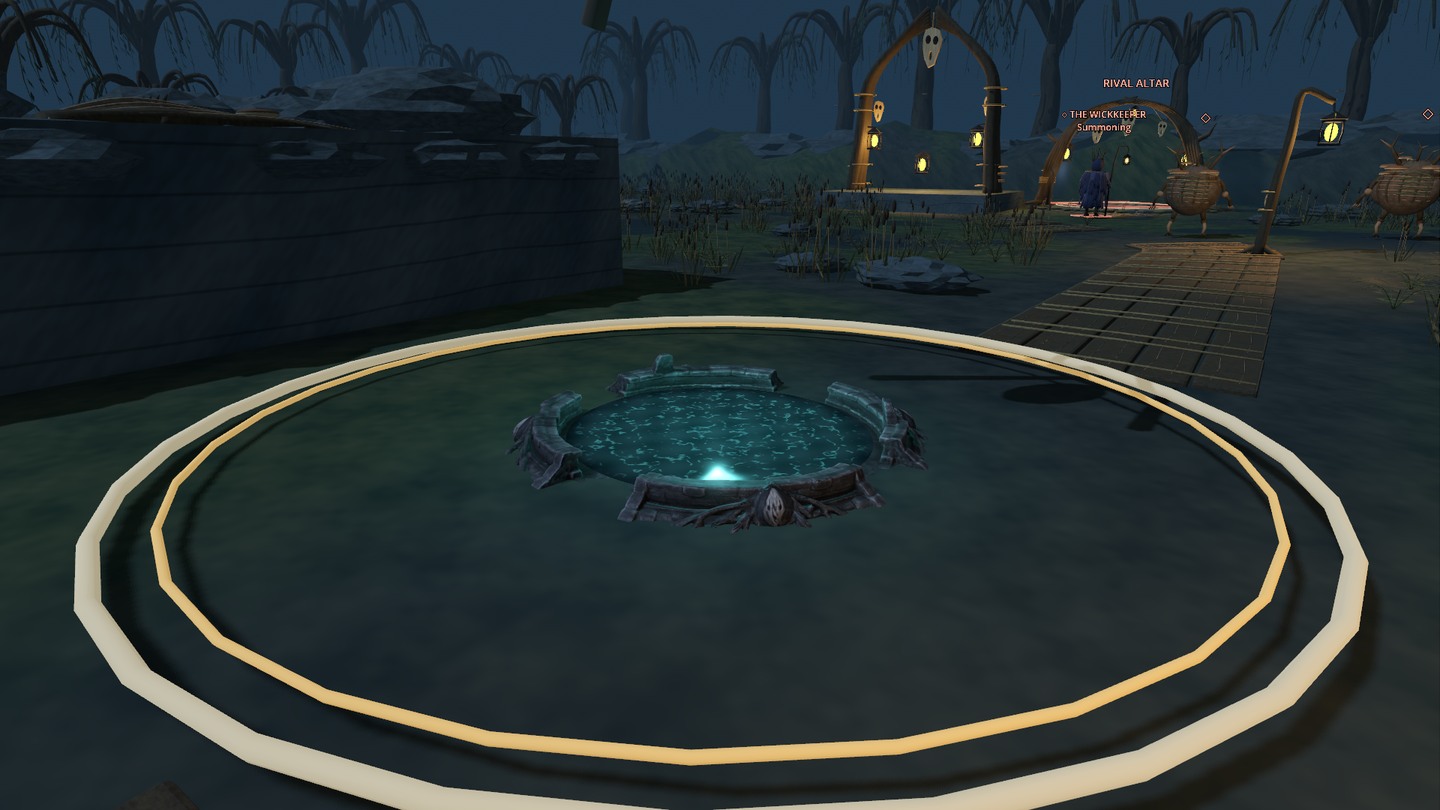
After the home-altar benchmark, Shaun wanted to try a service that could turn our own designs into meshes. We chose one small, static object to test the complete journey. Shaun brought back a textured Meshy model; Codex prepared it in Blender and fitted it to the existing font in Godot.
Begin with our own design
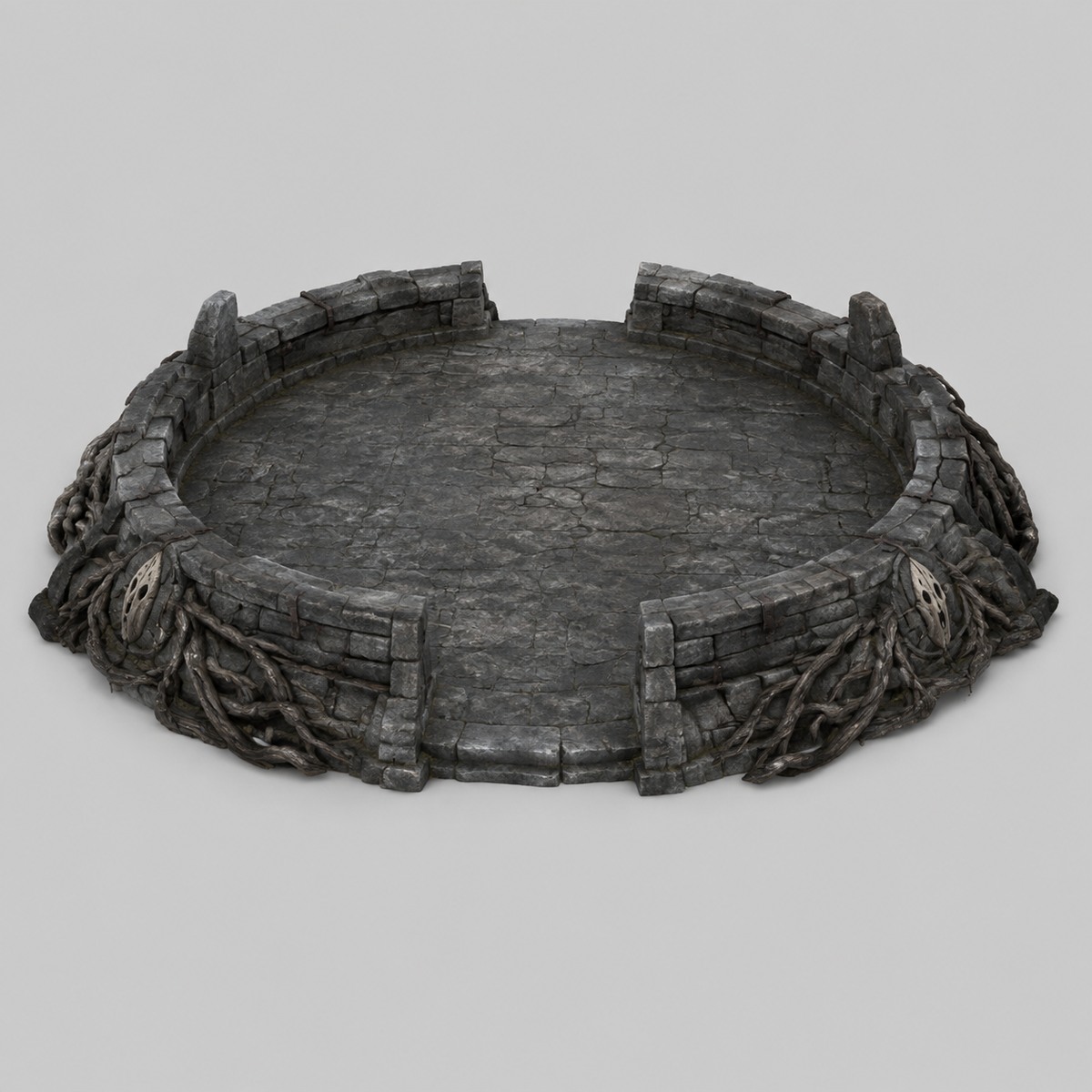
The brief called for a shallow, broken stone surround with tangled roots and pale carved faces. The original reference image uses neutral light and a plain background so its shapes and surfaces can be judged clearly. Magic and water were left for the game to supply.
Meshy returned a useful silhouette and real carved relief. It also interpreted the design: the result has four rim openings, repeated motifs and more uniformly grey surfaces. This is an externally generated model; the earlier Pusling, wizard and altar remain our original Blender work.
Make the mesh usable
The download contained 263,768 triangles. Codex inspected its front, back, underside and material maps, then reduced it to 28,000 triangles and fitted a low, 3.4-metre surround. The untouched download and editable high-detail source are retained locally.
The first reduction visibly stretched the paving texture. A new UV layout and texture reprojection fixed that defect before integration. Three 2K maps preserve colour, surface normals and roughness or metal response. The final mesh has one material and no new collision.
That cleanup is part of the cost of this workflow. The generated shape supplied useful detail, but scale, hidden surfaces, mapping, ground contact and game behaviour still needed deliberate work.
The same contested place
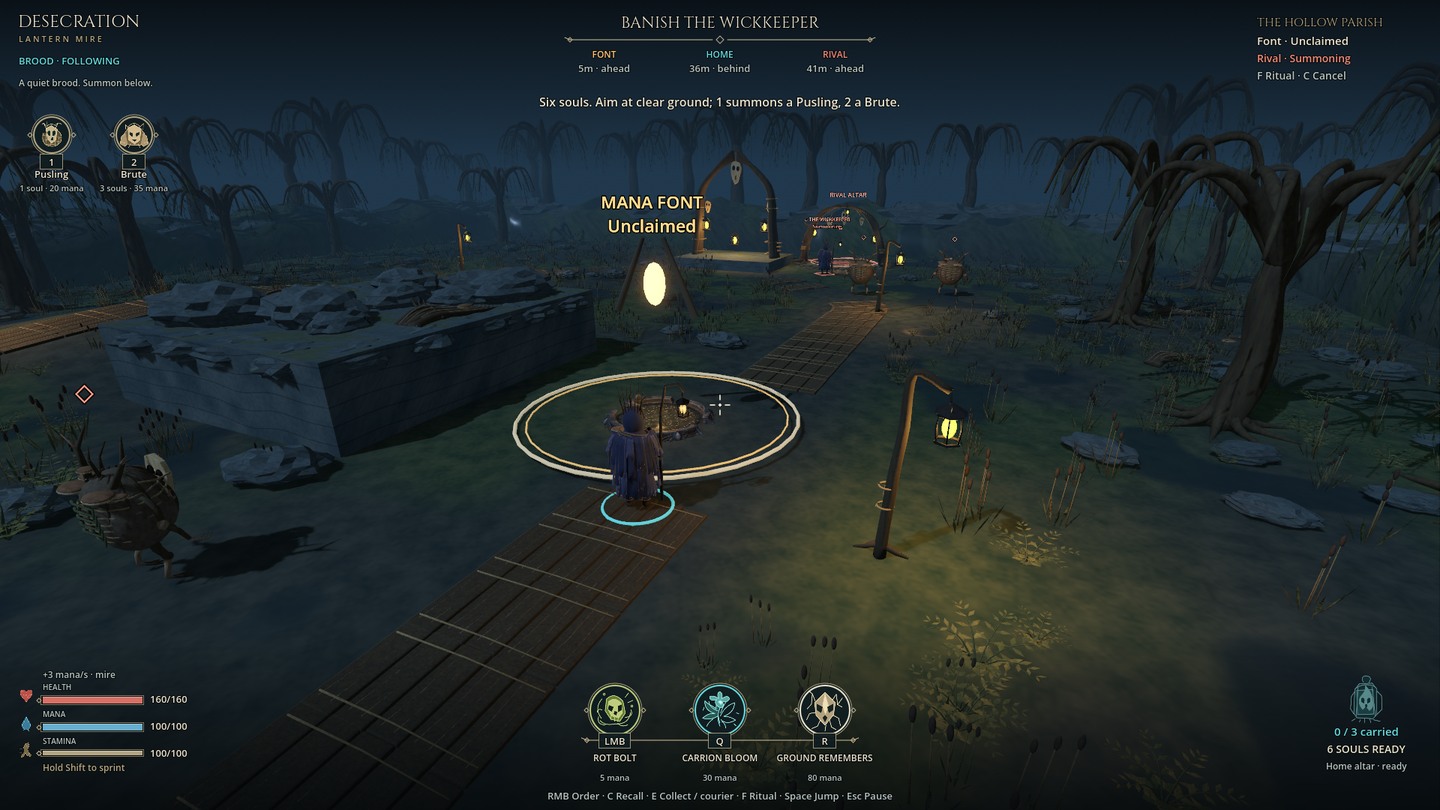
The floor follows the existing terrain, and the wizard can cross its centre. Water shimmers amber while unclaimed, cyan when held by the player and coral when held by the rival. Contesting dims the shimmer, while the existing status text explains what is happening. Pause freezes the water with the match.
Capture still takes four uninterrupted seconds within four metres. Owned-font mana recovery remains eight per second within eight metres; opposing living units still contest it. Navigation, the eighteen-soul economy, movement and the rest of the duel are unchanged.
What the trial established
The complete game passed 824 regression assertions and fourteen audio-file checks. The packaged build passed 155 asset checks and 22 font checks, including ownership, pause, restart and physical passage. Computer use checked the standalone app, settings, paid actions and a normal rival capture; close art views and traversal were also verified with native scripted fixtures.
Two matched twelve-second crowd samples around the font measured a 95th-percentile frame interval of 16.6 milliseconds before and 17.3 after on this Apple M5 Mac. Both samples included two frames above 33.3 milliseconds. The additional cost is recorded; this is not a sustained-performance or other-platform claim.
The new Mac playtest build and the complete preceding build are saved. Subjective art and combat feel still need Shaun’s judgement. The service’s generation-specific plan and settings remain unconfirmed in the asset record, and Meshy credit is retained.
This gives us a working route for selected static props. It does not yet establish the quality of generated creatures or animation. The next useful trial is a distinctive dead willow, judged beside our existing tree before spreading generated assets across the arena. The beacon, surrounding ground and wider scenery also need further refinement.