A place before the gods.
God audiences now centre the wizard in a wide shot. Limbo monuments block passage, and the Mire begins clear of the altar.
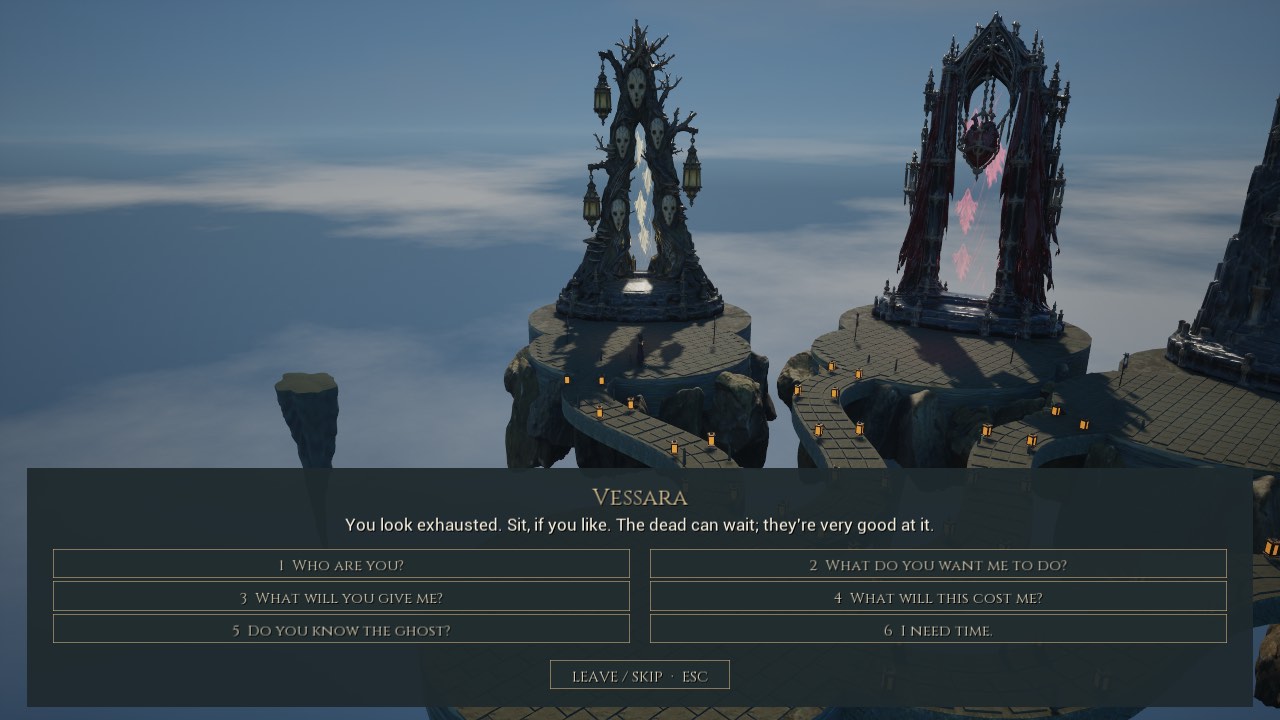
Speaking to a god previously turned the ordinary follow-camera from wherever the wizard happened to stand. Walking too close could put the view inside the monument. This pass gives the audience a deliberate position and keeps the start of battle readable.
Stand before the altar
Entering an audience stops the wizard, places them at the centre of the approach, and turns them toward the god. A short camera blend establishes a fixed wide view. Inspecting an offered spell returns to that same audience shot; leaving restores the previous viewing direction and zoom.
Simple boundaries now follow each Limbo monument’s bounds. They block the wizard, including at jump height, while leaving the court open and ignoring camera probes. The existing meshes, portal effects and map assets are unchanged.
Begin with a view of the battlefield
The default camera used to sit inside the home sanctuary because the wizard spawned only four metres from the altar interaction point. Both sides now start fourteen and a half metres toward the battlefield. The same mirrored positions are used for void recovery.
Altar interaction, recovery and sacrifice distances are unchanged. This is a position and camera correction; it does not grant a longer reach or change the combat rules.
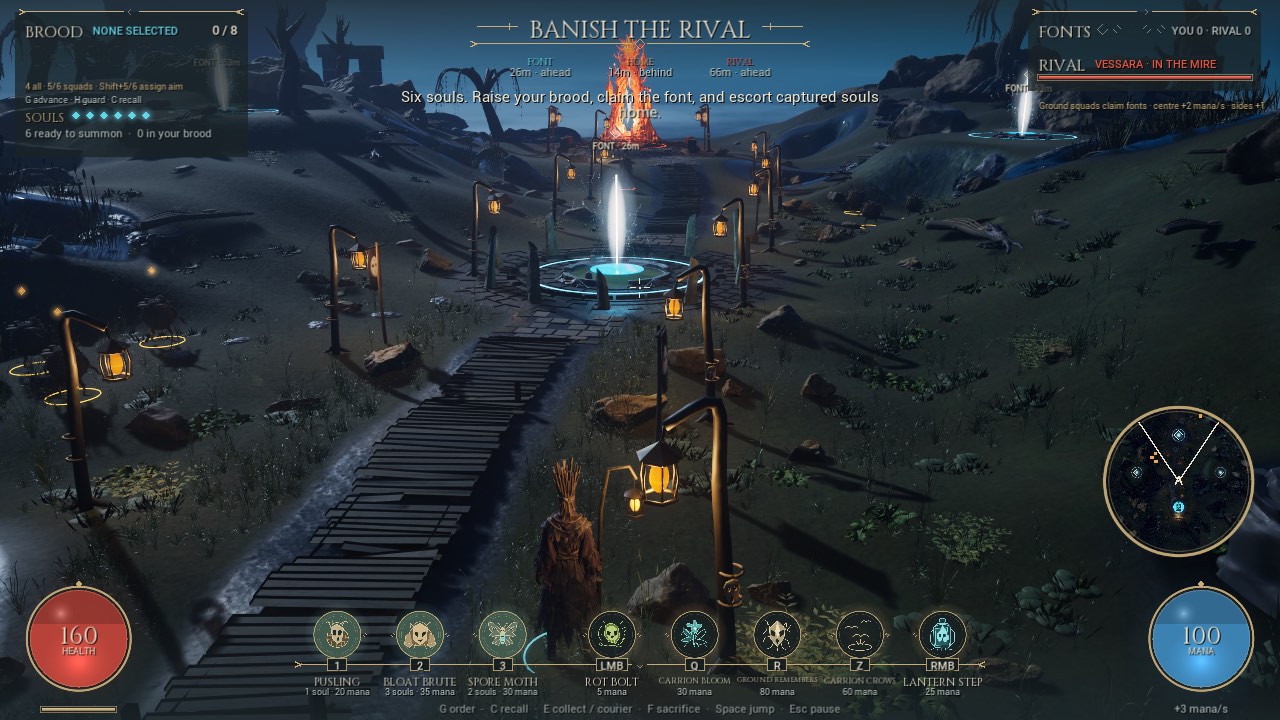
Checked in the separate Mac build
The exact packaged app passed 1,236 assertions: 1,033 existing campaign and skirmish rules, 105 rendered altar and spawn checks, 87 native input checks, and 11 checks across a real local host/guest match. Twenty-six presentation captures cover the four courts, both maps, mirrored spawn views and recovery.
The previous app is preserved. The source meshes, maps, animations and configuration are byte-identical to the pre-iteration snapshot. These are automated and staged observations; human camera-feel acceptance, other aspect ratios, remote multiplayer and a fresh performance measurement remain separate.
Next: let Vessara speak
The camera groundwork is complete, but the conversation still uses the current text and choices. The next proposed slice is one voiced Vessara scene: the god speaks with subtitles, choices appear after the line, and the wizard answers before the god replies.
The proposed audio workflow auditions consistent character voices, generates individual recordings, and ships accepted clips with the game. Unreal would handle playback, restrained god effects and subtitle timing. No speech has been generated or integrated in this iteration.