Current state of gameplay.
A complete duel against the Wickkeeper: raise a brood, fight over souls and mana, then defend the sacrifice that wins the match.
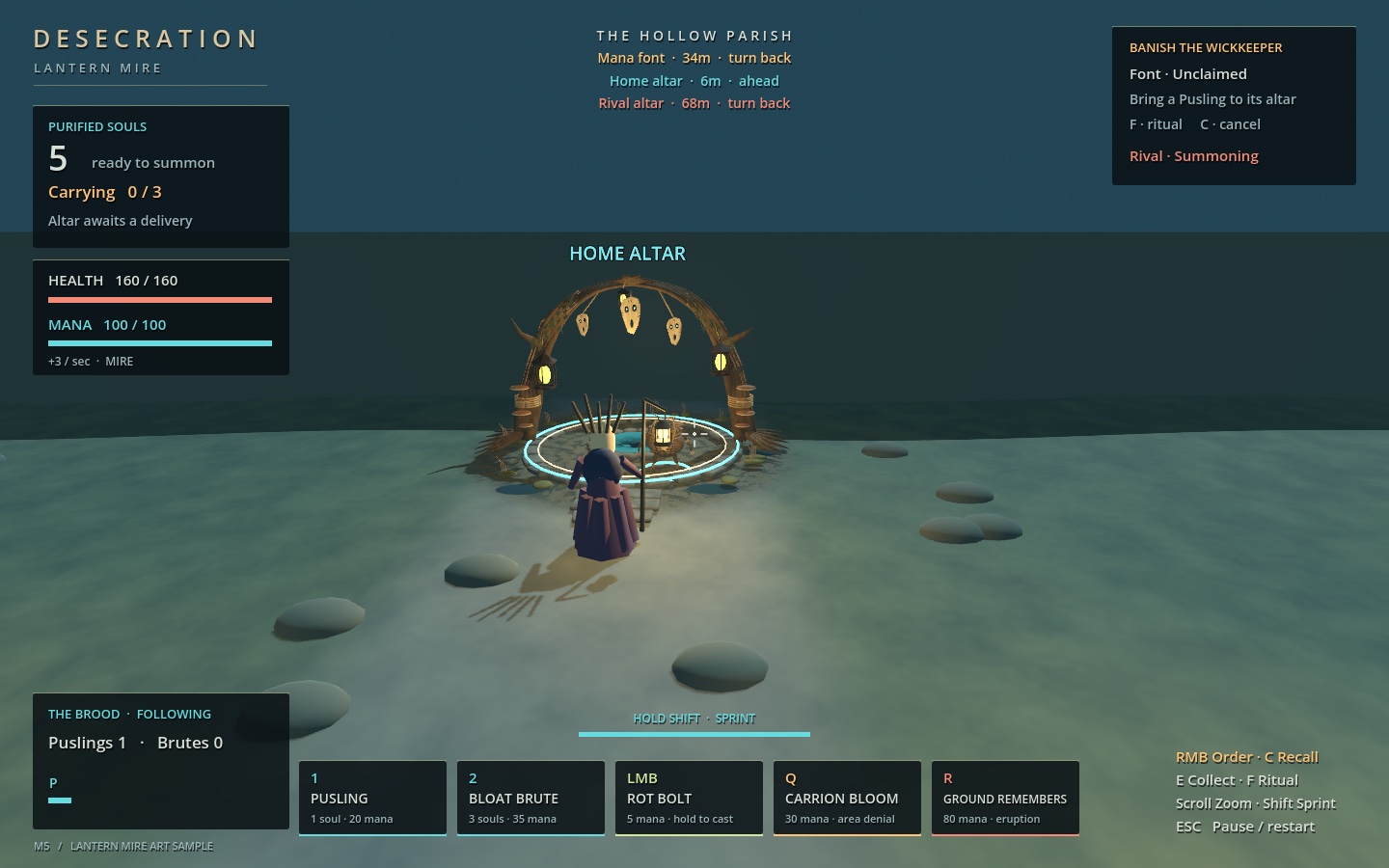
Before the next art pass, here is where the game stands on 6 September 2026. Version 0.5.0 is a playable, offline skirmish in Godot, with one arena, two creature roles, a rival wizard and a match that can be won, lost and restarted. The core loop is in place; the first original art is now part of it.
A wizard inside the battle
You move and aim from behind the wizard while giving orders to a small army. WASD moves, Space jumps, and holding Shift sprints using stamina. Two-finger trackpad scrolling or a mouse wheel adjusts the camera distance.
Right-click sends the brood to clear ground or orders an attack on an enemy; C recalls it. You can keep moving and casting while the creatures carry out those orders. Puslings are the small, fast fighters and couriers. The Bloat Brute is slower, tougher and more expensive.
Fight, recover, rebuild
Each side starts with six souls, with six more held by neutral husks. Those eighteen souls are the shared, finite resource behind the battle. A Pusling binds one soul; a Brute binds three. Summoning also costs mana, and each army is capped at eight creatures.
When a creature dies, the souls bound to it fall back into the world. Your own souls return directly to reserve when collected. Foreign souls must be carried home and purified at your altar before you can summon with them. The wizard can carry three, or you can send one Pusling courier for a single soul. If that courier dies, its cargo drops with its own soul.
That makes recovery part of the fight. Winning ground gives you a chance to reclaim losses or take the rival’s resources; overextending can leave valuable souls behind. A fallen wizard returns at its living home altar after six seconds, so losing a fight can lead to another attempt.
Mana, spells and a rival
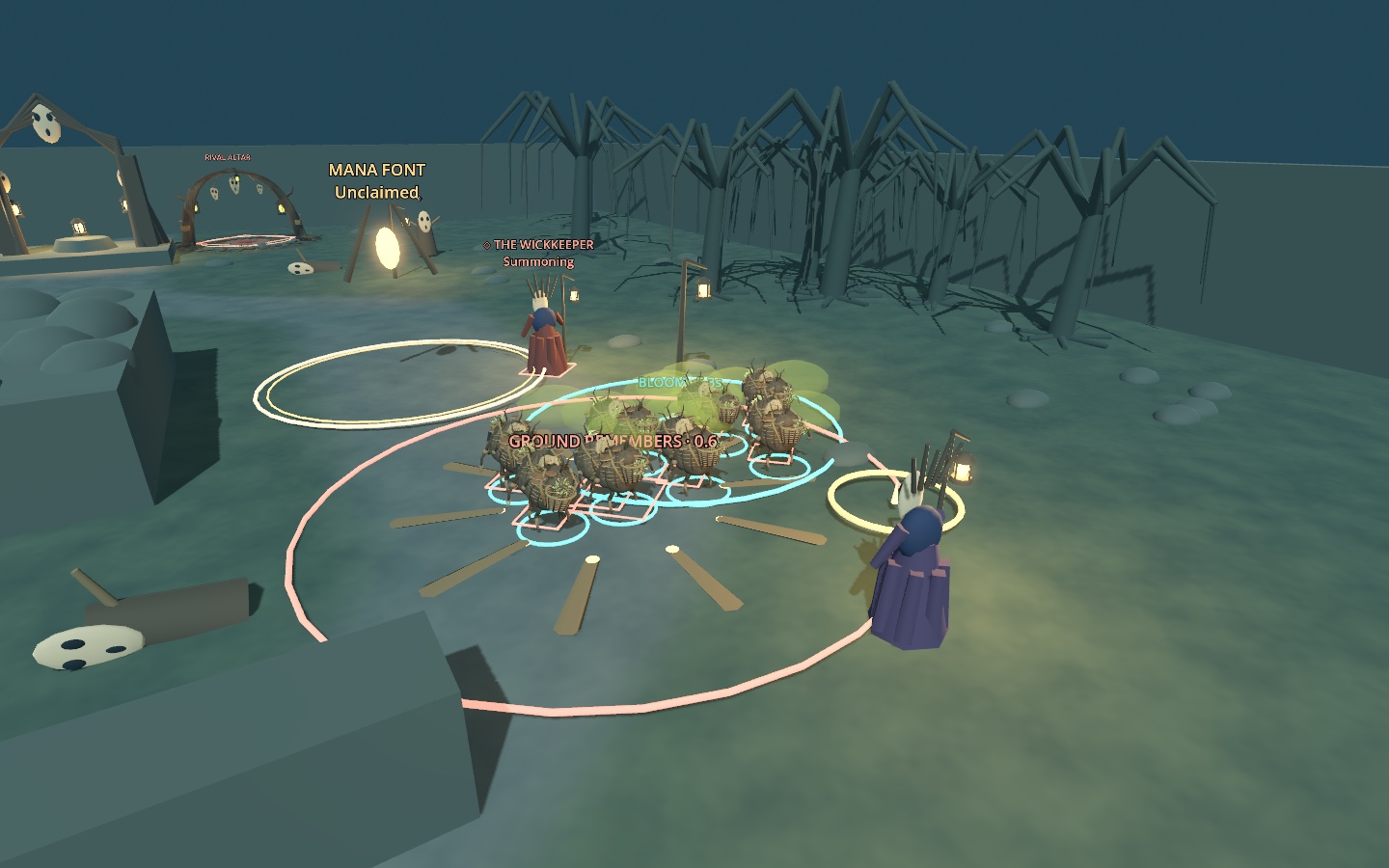
The Wickkeeper can summon, attack, retreat, recover souls, contest the mana font, push your altar and defend its own. It uses the same resource rules as the player. Holding the font gives faster mana recovery while you remain near it, making that patch of ground worth contesting.
Three spells support the army: Rot Bolt for direct attacks, Carrion Bloom for an area of sustained damage, and The Ground Remembers for a warned eruption that damages and slows enemies. The eruption leaves a visual scar while the walkable ground remains intact.
How a match ends
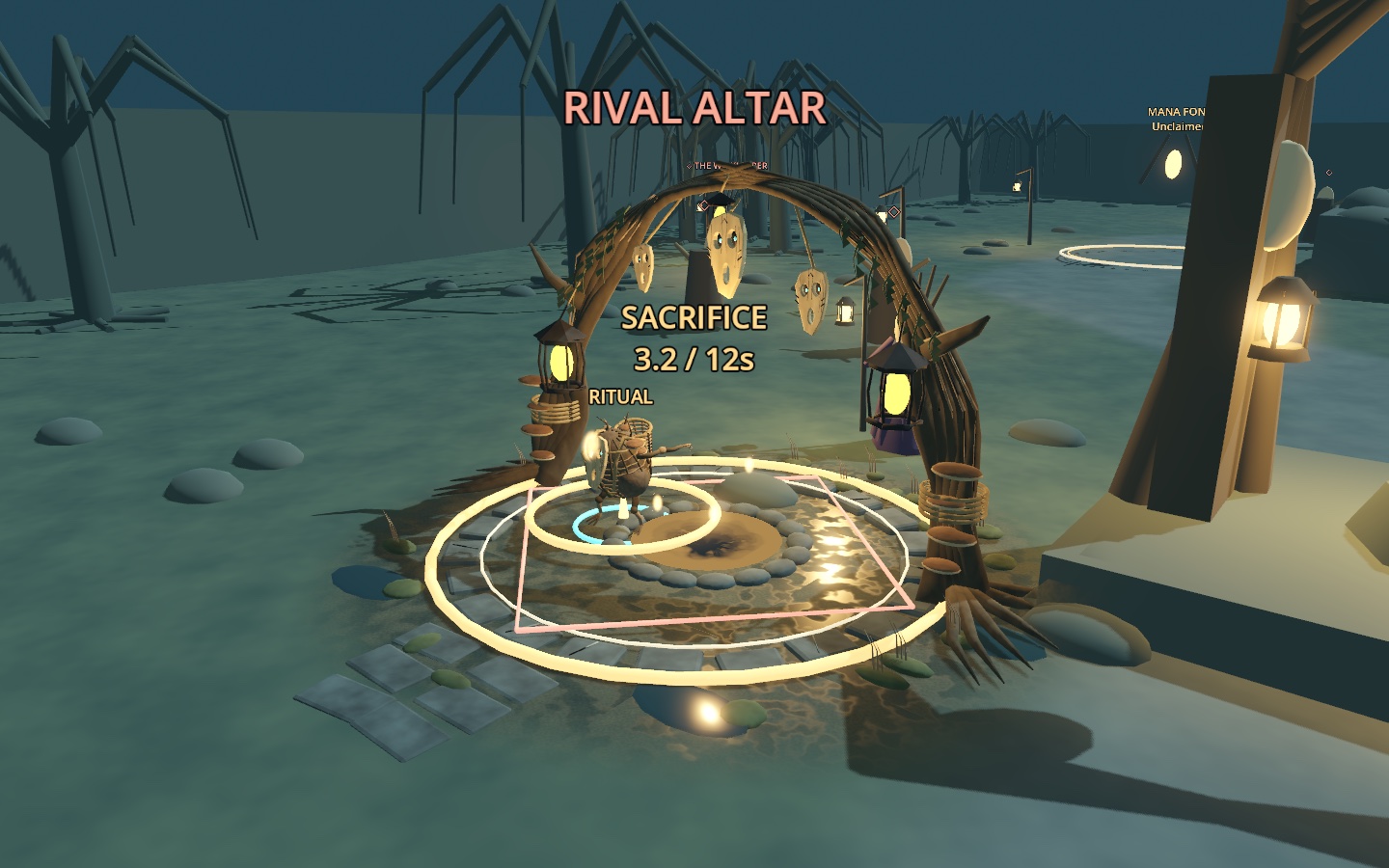
To win, bring an unladen Pusling into the rival altar’s ring, stay nearby with the wizard, and press F to begin a twelve-second sacrifice. You have to protect that channel: damage or defenders inside the ring interrupt its progress. C cancels your attempt.
A completed ritual consumes the Pusling and its soul, banishes the rival altar and ends the duel. The Wickkeeper can do the same to you. Your own altar warning is a reason to turn back, defend the ring or kill the channeling creature. The result screen offers a clean restart.
What is finished, and what comes next
Core milestones M0–M4 cover the complete gameplay loop. The latest art sample adds an original textured and animated Pusling, the root-and-lantern altar kit and adapted magic effects. The wizard, Brute, neutral husks and wider arena are still using earlier study art.
The 0.5.0 delivery recorded 454 passing automated checks, followed by a focused 53-check art rerun after the last effect adjustments. The exported pack, native startup and selected controls were also checked. These are recorded checks for this build, not a claim that every platform or a full night of play has been tested.
The local Mac build has been exercised on Apple silicon. Windows, Intel execution and sustained performance still need verification. Pause, restart, mouse sensitivity, vertical inversion and sound volume are available; broader remapping, accessibility and authored sound remain ahead.
Next we will extend the Lantern Mire art across the wizard, remaining creatures and arena, then finish the sound, controls and performance work. Each completed iteration will bring a new playable build and another field note showing what changed.