Copper, stone and rain.
Weathered raincloth, copper and dark stone give the Copper Pilgrim and his three creatures a more detailed presence in the mire.
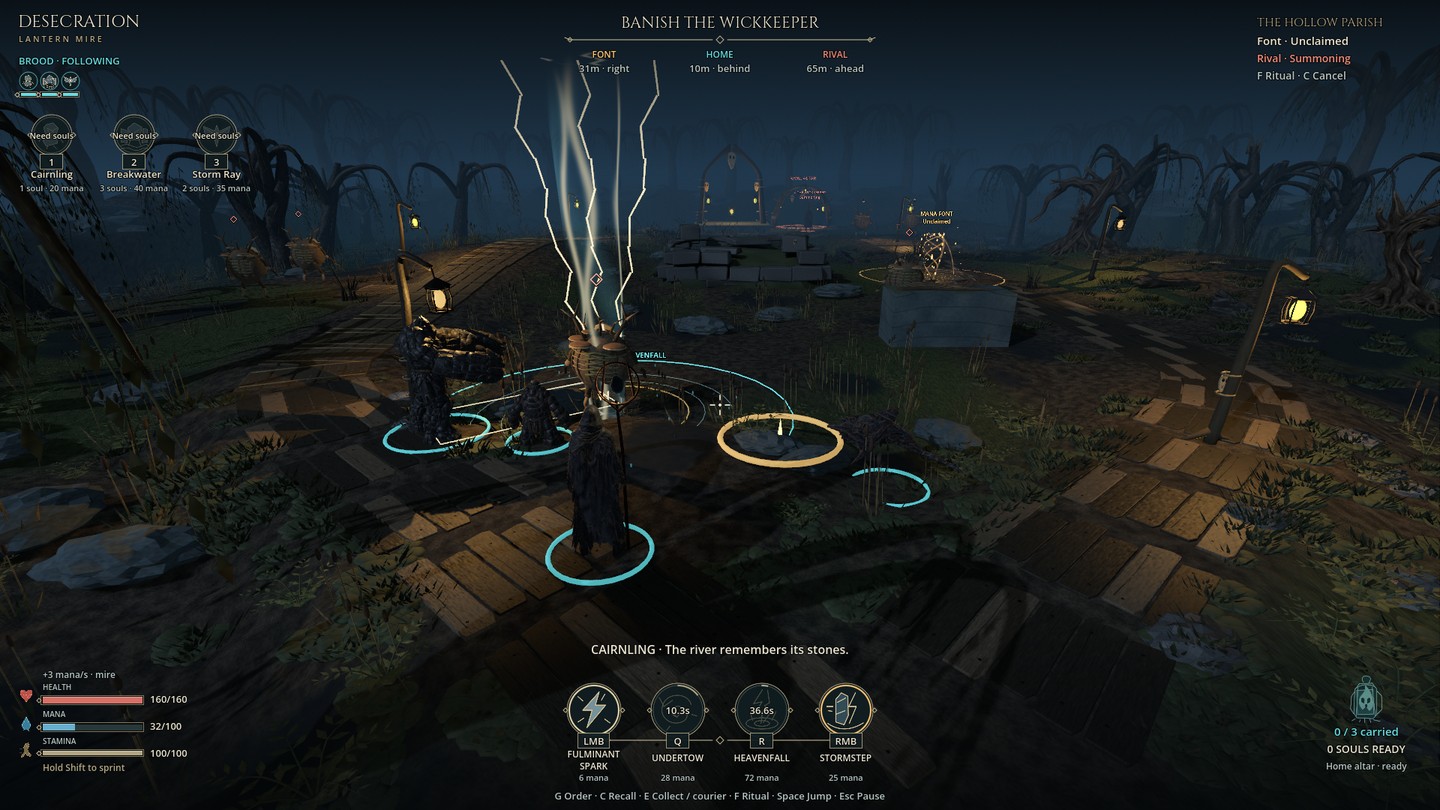
The Drowned Tempest now has four prepared Meshy bodies: the Copper Pilgrim, Cairnling, Breakwater and Storm Ray. Their modelling references follow the selected storm concept, with copper bindings, wet-looking stone and a narrow hooded silhouette. Blender work fits them to the actions already in the game.
The storm’s materials
The Pilgrim wears layered dark raincloth and keeps the original copper staff. Cairnling is a small, compact biped assembled from stone. Breakwater has broad shoulders and heavy arms. Storm Ray spreads a thin mineral body into two wide fins, giving the flying unit a silhouette distinct from the ground creatures.
All four bodies use standard Meshy generation. Runtime textures are capped at 2K; the original 4K inputs are retained locally. The dark body materials use their colour, surface and normal maps without making the whole creature glow.
Fitting the motion
The first stone-body tests stretched the hands and legs because the old rigs did not fit the new proportions. Fitted humanoid rigs gave the two bipeds better starting points. Local skin corrections then removed weights crossing between limbs and smoothed the transitions. The wizard’s staff arm was also steadied during casting.
Storm Ray keeps a local five-bone rig for its hovering body, fins and tail. All four retain the original animation durations and combat timing. Cairnling still strikes nearby targets, Breakwater still warns before its forward wave, and the Ray still fires two projectiles. Prices, damage, collision, audio and the eighteen-soul economy stay the same.
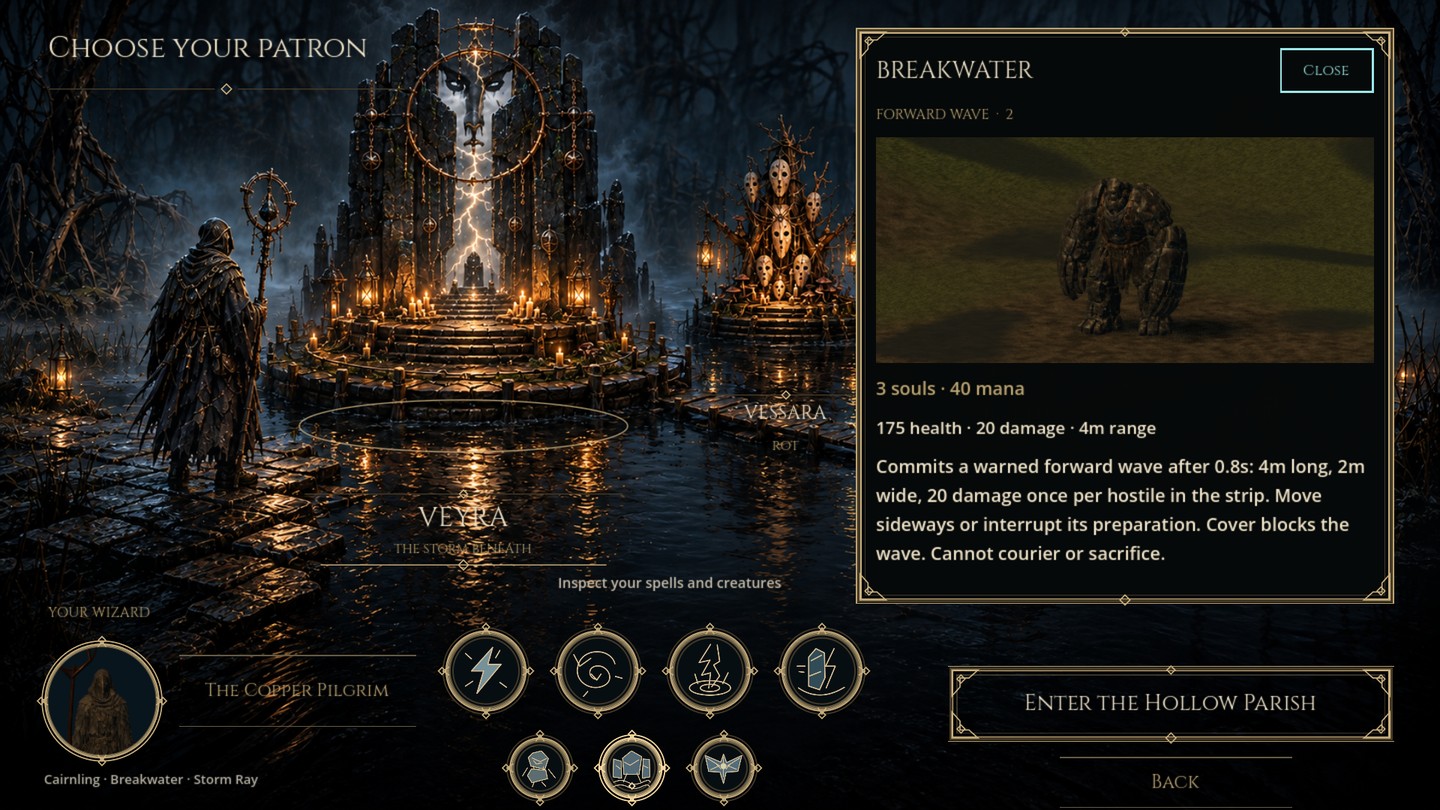
The Ray in flight
The new models appear for both the player and rival, and in the live creature inspectors. Eighty captured motion samples cover movement, real paid attacks and wizard casting at the ordinary game camera. Close human review of cloth, hands and creature motion remains useful.
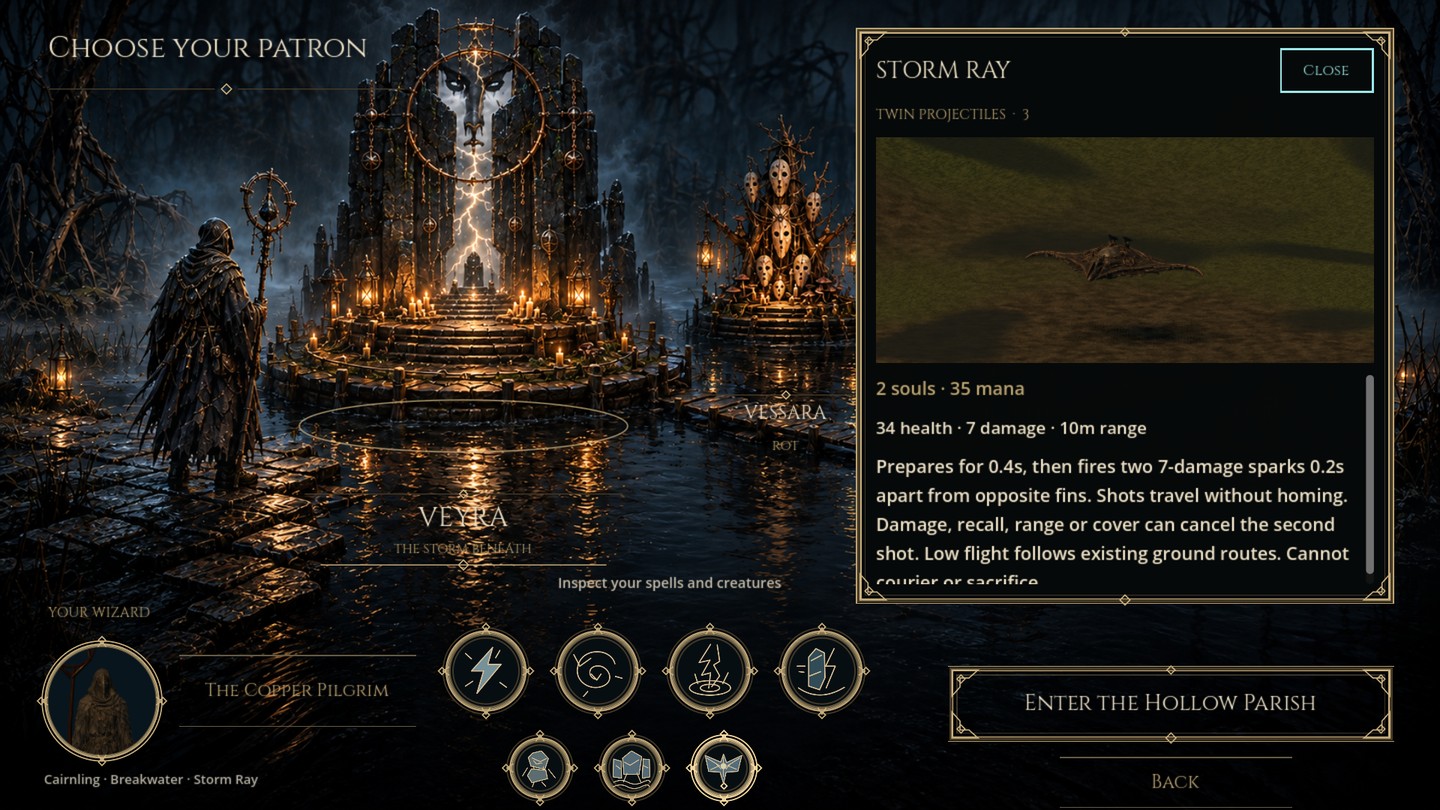
A checkpoint for the storm
The source passed 703 relevant assertions including two loading image saves. The exact export passed 615 asset checks and 663 behaviour and capture assertions, with one hundred saved frames. An older recovery test still fails at its fixed summon locations; the preserved previous build fails identically. The current faction and soul-accounting checks pass.
All sixteen first and repeated casts were accepted in a fresh native Mac process. The longest observed frame was 56 ms, with existing driver caches retained. That is one measured run, not a guarantee that every hitch is gone. The native app opened, but computer-use inputs did not visibly advance its welcome screen; OS gameplay input and human playtest acceptance remain unverified separately from the engine checks.
Four bodies and three fitted rigs consumed 135 Meshy credits. The campaign has used 435 of its 1,000-credit allowance. The Mac checkpoint is saved with its predecessor preserved; Vorr’s wizard, Knotling, Fracture Beast and Rift Eye are next.