Before the first spell.
A short preparation step moves spell resources and rendering work ahead of combat, with both wizards’ effects ready before the match starts.
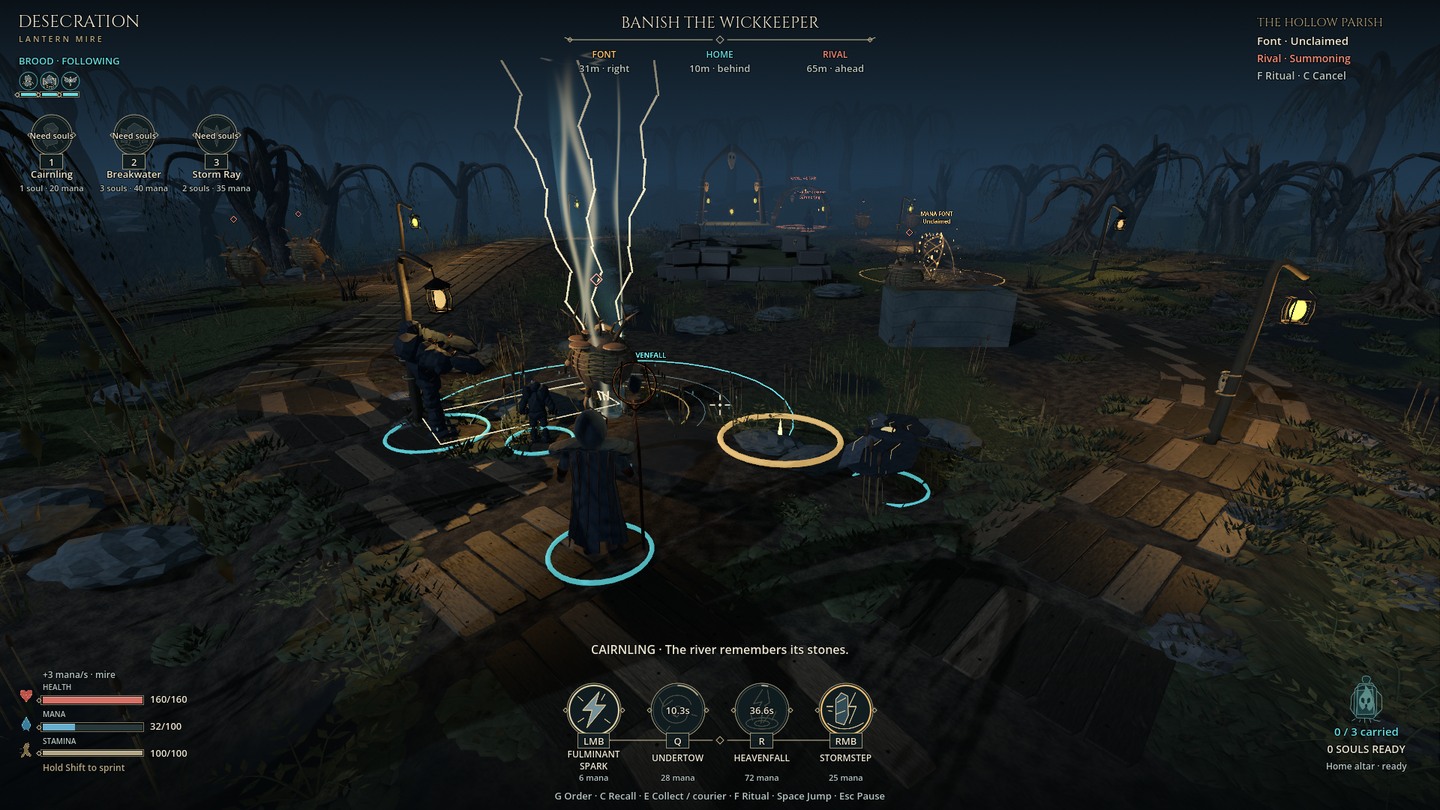
Shaun reported a severe pause when casting a spell for the first time. Smooth averages from a warmed-up match could not explain that experience, so this pass measured first and repeated casts in fresh Mac game processes.
Before the clock starts
The game now briefly shows “The mire is waking” while preparing the selected player and rival’s visual effects in the actual arena. Spell warnings, active effects, arrivals, hits, splinters, scorch and water responses are covered. The match clock, movement and combat stay frozen until preparation finishes.
Crimson’s heart and Tempest’s coil also remain loaded instead of being read again during ritual creation. The ability inspector uses the same antialiasing as the game. None of this changes spell prices, damage, cooldowns or the eighteen-soul economy.
What the measurements say
The original Crimson rituals commonly spent 35–54 milliseconds just constructing their effects. Retaining their resources reduced that work to a few milliseconds. In a separate Tempest comparison with initially empty Godot shader caches, first Heavenfall construction fell from 46.5 to 1.9 milliseconds. The largest frame in that cast’s observation window fell from 92.8 to 26.8 milliseconds.
Those comparisons do not promise a hitch-free game. An early baseline included a one-second frame that did not reproduce consistently, and occasional long frames also appeared in a no-cast control. Existing driver caches, desktop state and display pacing limit the comparison. The underlying first-use work is addressed; Shaun’s hands-on replay remains the next test of the reported experience.
A preserved checkpoint, then the bodies
Both sides of all four spell families passed first and repeated paid-cast probes. The exported build also passed loading, held-input isolation, menu and saved-control checks, terrain reactions, restart, asset inspection, standalone startup and archive verification. Loading is explicitly rendered so a window that stops drawing automatically cannot leave it waiting forever.
Direct desktop interaction remained unavailable while the Mac reported locked. Native Metal rendering and scripted input supplied the captures and checks; human art, audio and control acceptance remains separate.
The previous complete build is preserved. Next comes the agreed Crimson presentation polish, retaining the generated bodies, followed by Vessara, Drowned Tempest and Vorr actor upgrades within the existing Meshy budget. No additional Meshy credits were spent on this repair.