A willow in the right light.
One prepared willow, clearer lantern light and patches of peat and moss establish a small visual benchmark. Crowded-combat performance remains a gate before wider integration.
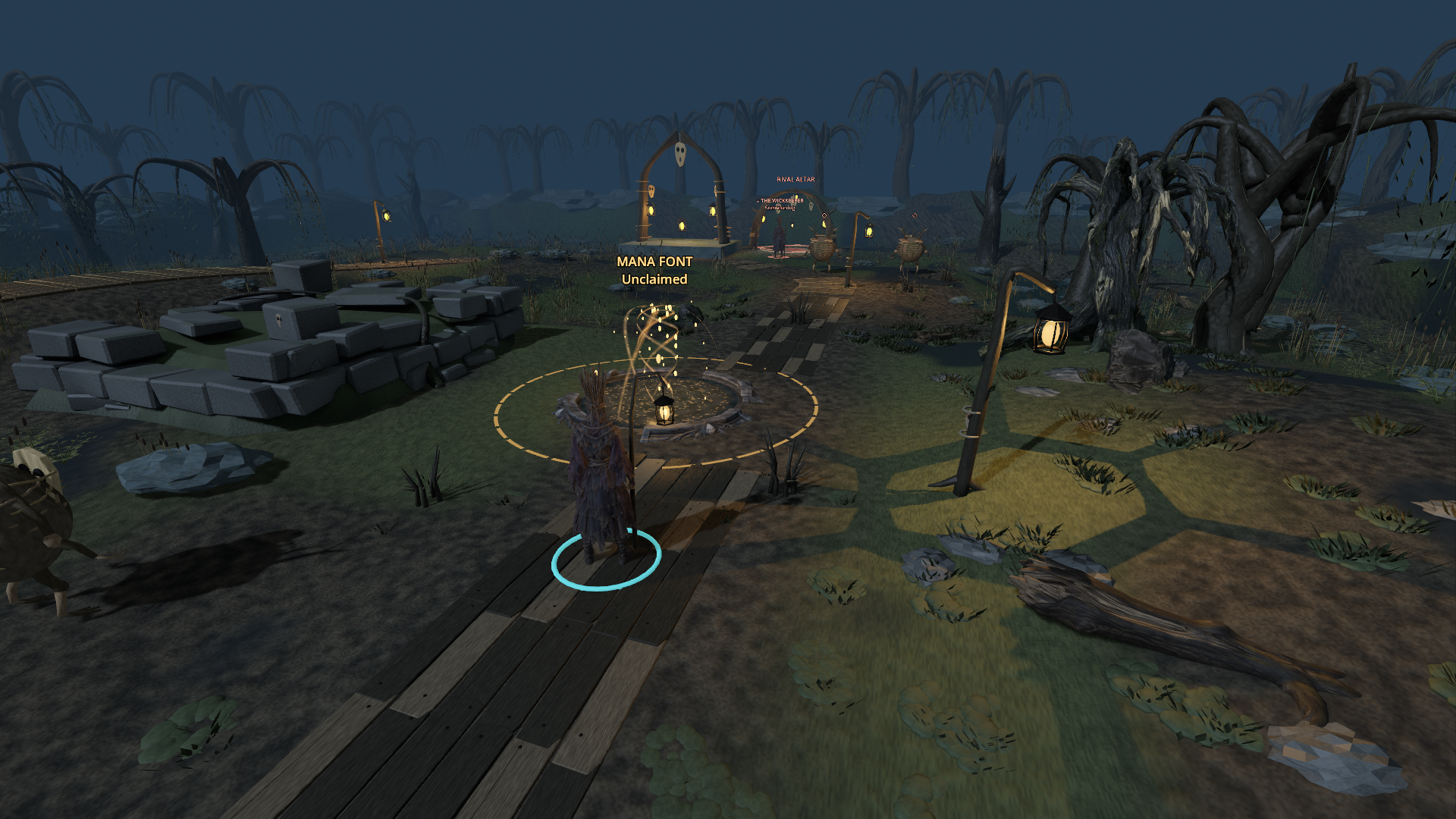
The original Lantern Mire painting has a stronger sense of depth and place than the current playable arena. The first response is deliberately small: improve one ordinary gameplay view around the mana font, then use that view to judge the next spell and environment changes. This is an independent offline comparison; the multiplayer release remains separate.
Start with a place to look.
The revised view raises cool fill and moonlight enough to reveal bark, stone and the route ahead. Warm lanterns still lead the eye. The first brighter candidate was pulled back after image review so the mire kept its darker atmosphere.
Local peat and olive moss patches help the ground read in larger areas. Nine low existing stones link the new tree to the bank. Terrain heights, collision, navigation, objective positions and combat rules stay as they were. This is a modest first step toward the painting.
Jutsu prepares the asset. Godot makes the scene.
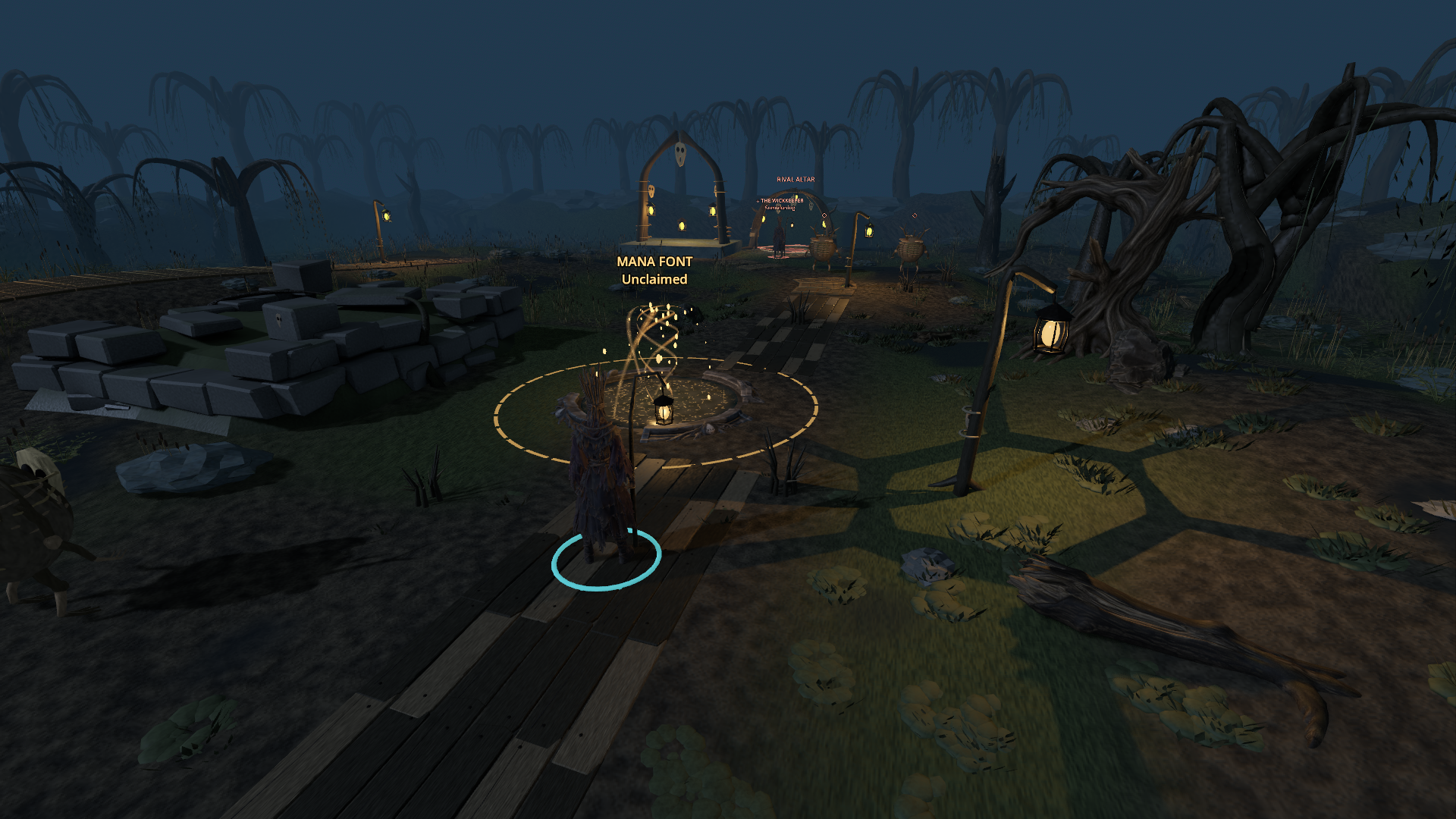
The willow was generated with Meshy through Higgsfield 3D Jutsu and prepared with GPT-6 Astra in Blender. This iteration reuses that accepted delivery. No additional generation credits were spent.
The reopened source keeps 23,900 triangles, a 2K colour map, a 1K normal map and its authored roughness value. It replaces one existing tree placement. The second font willow remains available as an in-game comparison.
Astra and Blender are useful for shape, scale, materials and export cleanup. Godot owns the lighting, placement, interactive animation and spell timing. The repeatable handoff now follows that separation, with source hashes, an intake audit, native checks and an independent playable build.
Keep the slower measurements.
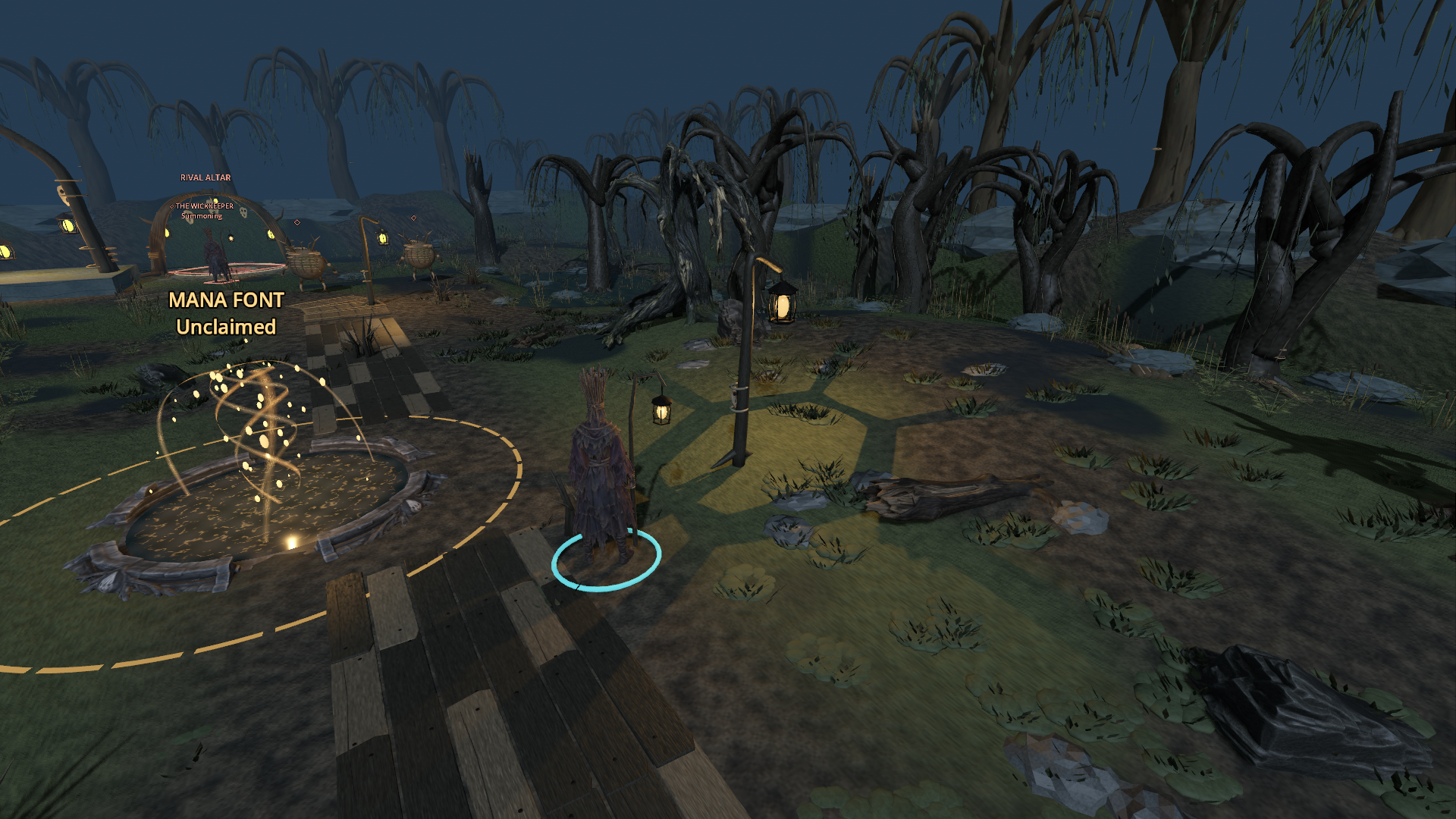
The selected source checks passed 178 assertions. The exported game passed 644 asset checks and 42 focused visual/font assertions, with seven captures including both camera zoom limits. These are scripted checks and staged images, not human playtest acceptance.
Two-minute M5 measurements gave mixed results. Normal play averaged 24.1 ms per frame in the baseline and 14.5 ms in the candidate. The crowded battle averaged 20.1 versus 28.9 ms; a repeated pair gave 26.0 versus 34.9 ms. Both candidate crowd samples were slower, and all of them are retained.
A fixed paused battle then measured the same candidate at 33.1 ms and later 13.1 ms. Its warmed old-tree/light comparison was 13.0 ms. That shows substantial variation over time, but it does not clear active combat. The desktop was shared, caches were retained and GPU timings were unavailable.
The result is a separate visual comparison, with sustained combat performance still an integration gate. No 60 FPS or performance-neutrality claim is made. Native app inspection was unavailable, so extended manual control and visual acceptance also remain for playtesting.
Give one spell the same attention.
The next art slice should be a single Ground Remembers / Lantern Pyre proof: an unmistakable warning, a large eruption, impact light and a lingering ash trace. Any sculpted roots or ritual pieces can go through Jutsu and Astra; their timing, particles, ground marks and lights must respond to the real game.
After that, build one deliberately sculpted arena with tested heights, routes and sightlines. Seeded dressing can vary its vegetation and small debris once the competitive structure works. Expand the accepted look one asset or spell family at a time.