The spine follows the stride.
The first motion pass left the torso too rigid. The hips now lead, the spine flexes and the chest follows through each step.
The feedback was clear: movement was better, but the torso still felt rigid. The previous pass had improved the limbs while leaving almost no changing bend through the spine. This revision addresses that weakness directly in the existing wizard rigs.
The hips lead; the chest follows
The pelvis turns with the advancing leg. Rotation travels through the lower spine and chest with small delays, while the shoulders counter-turn and the head keeps a steadier gaze. The body compresses over the supporting foot and rises through the next step. Sprint has a stronger forward drive.
The hands now follow the moving ribcage instead of resisting it. The same correction covers all four wizards and their directional travel clips. The already-improved staff-casting animation is preserved.
Back in the game
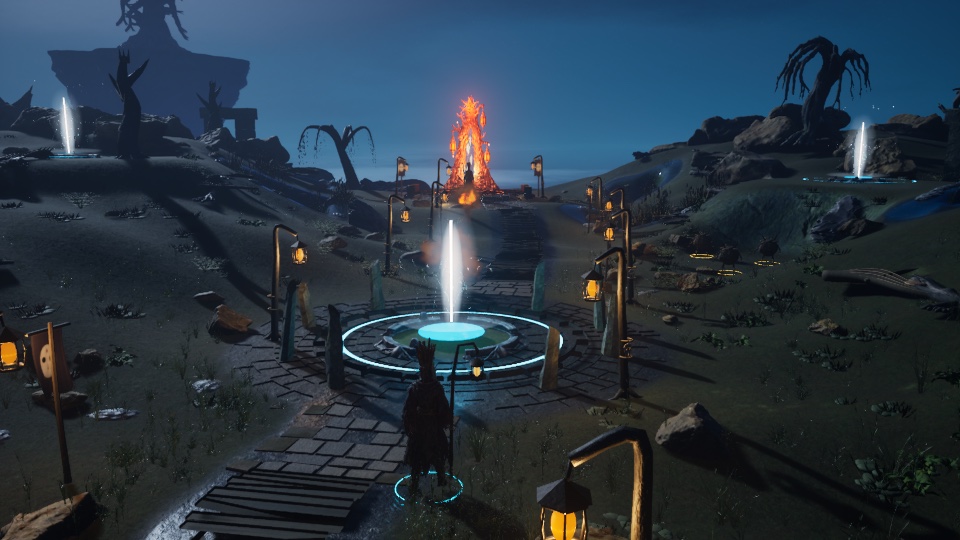
The separate playable build carries the revised locomotion. Its fourteen-second recording shows side views of travel, sprint and casting, then six seconds of travel and sprint from the normal camera with no casting pose masking the torso.
The recording uses thirty fixed simulation steps per second. It demonstrates animation playback and framing; it is not a real-time performance measurement.
What the checks establish
The final app passes 1,003 relevant gameplay, motion and native-input assertions, alongside eighty separate baked animation checks. The evaluated game skeleton now shows changing spine flex and opposing shoulder/pelvis rotation. Those measurements confirm the motion reaches the character; they do not decide whether it feels good.
Four inherited cost-fixture failures for each non-default patron still match the previous build. Existing fast-speed foot sliding and scanned robe/boot deformation remain. The next judgement is the feel in play, especially at the normal camera distance. This iteration needed no new model, downloaded animation or paid generation.