A brood of bark and cloth.
The Wickkeeper, Pusling, Bloat Brute and Spore Moth gain detailed bodies while keeping their familiar roles and timing.
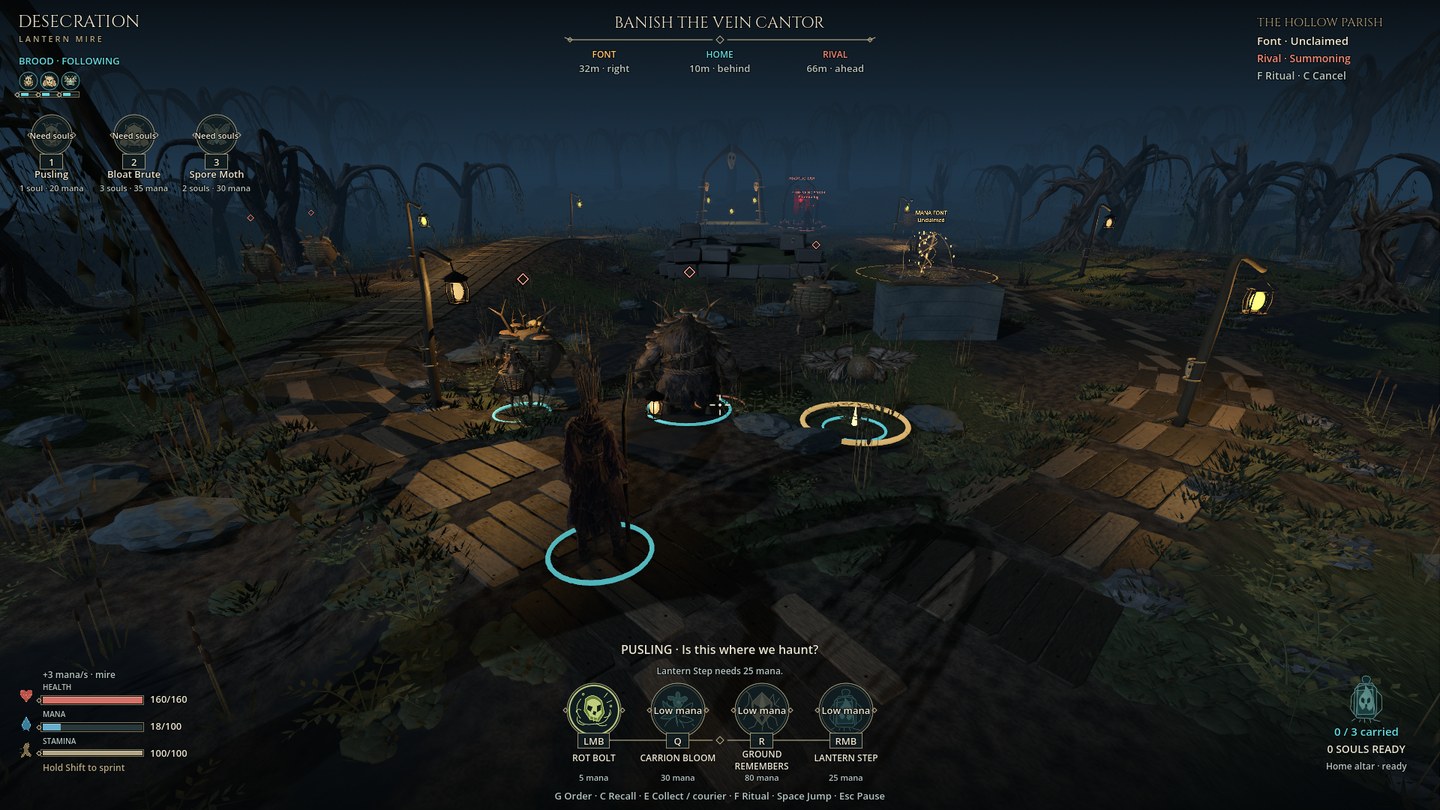
Vessara was our first playable faction. Her new bodies return to the Lantern Mire materials: frayed cloth, carved wood, wicker, roots and layered fungi. Meshy supplied the geometry and textures from our modelling references; Blender work made those bodies usable in the existing game.
The materials return
The Wickkeeper keeps a narrow wooden mask and reed crown above a layered robe. The Pusling is a small wicker carrier with a carved face; the Brute has a broad root body under a heavy fungal roof. Four ragged leaf wings distinguish the Spore Moth in flight.
All four use standard Meshy generation. The wizard’s original staff and lantern and the Pusling’s courier basket remain part of the finished assets. Earlier source models and playable checkpoints are preserved.
Making them move
The generated bodies needed more than an import. Early motion review caught a splitting Pusling mask and sharp Brute shoulder deformation. Local weighting keeps the wooden faces rigid, smooths the shoulder transition and gives the hanging robe its own movement. Supporting feet were checked against the floor.
The three creatures retain their original rigs. The wizard uses a fitted humanoid rig with the existing movement and casting vocabulary. Original clip durations, damage and spell clocks, prices, collision, sounds and the eighteen-soul economy are unchanged.
Runtime textures are capped at 2K, with the original 4K maps retained locally. The wizard’s rigged output needed its original PBR material restored; UV correspondence was checked before that transfer.
The actual models
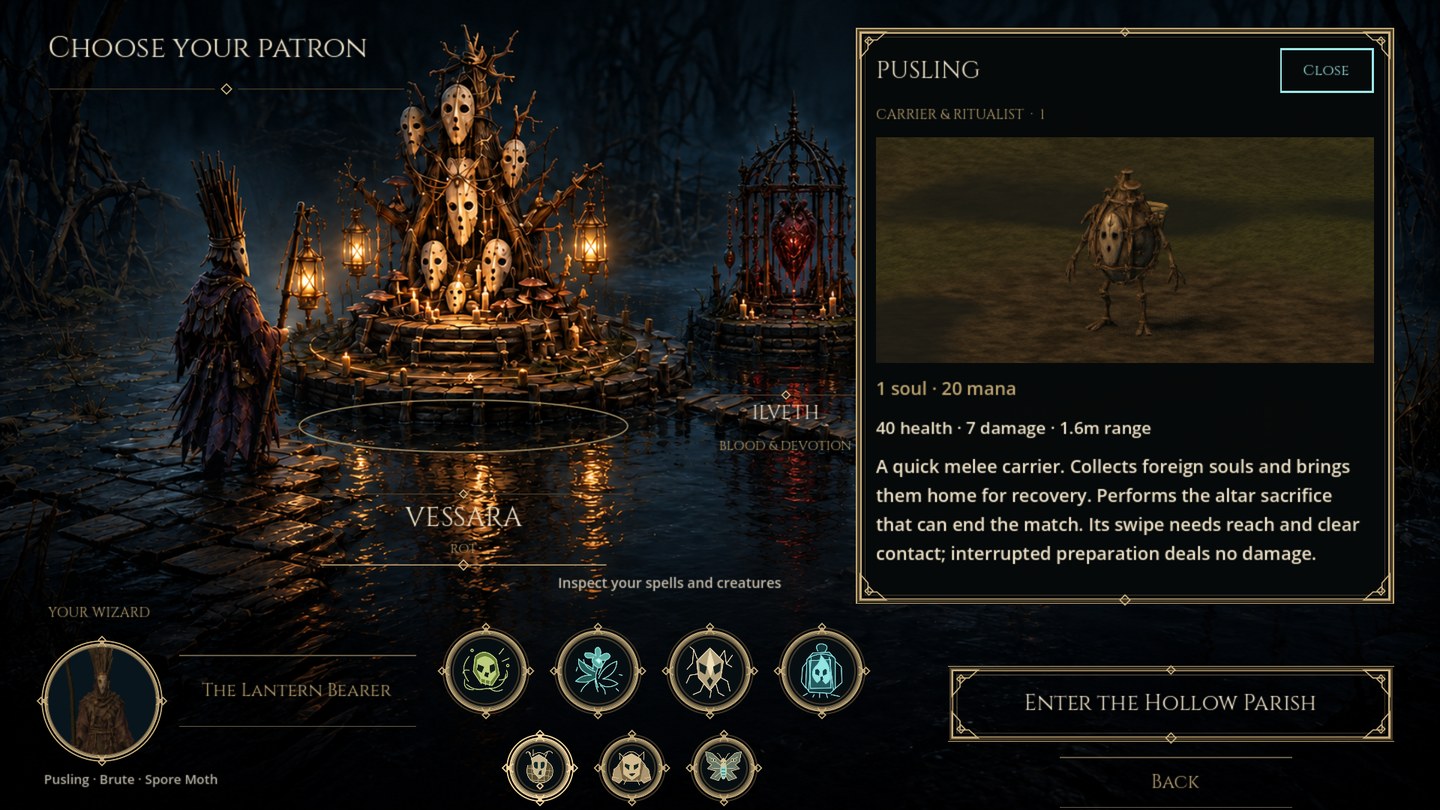
The new bodies appear on both sides of a match and in the live portrait and creature inspectors. Native Mac inspection confirmed Vessara selection and all three minion tiles. The illustrated courtyard remains concept imagery; the small moving model in each inspector is the actual game asset.
Checked, with limits
The source passed 702 checks including two loading capture saves. The exact export passed 593 asset checks and 588 behaviour and capture assertions. Ninety exported frames include the picker, loading screen and eighty motion samples; combat, courier, ritual, tactics and soul accounting were checked.
All sixteen first/repeated casts were accepted in a fresh native Mac process. The worst observed frame was 148 ms, with the existing driver caches retained. That does not establish universally hitch-free play. Computer use lost the window during match entry, so native gameplay input remains unverified separately from the successful engine rendering and input fixtures. Human art, audio and gameplay judgement is still needed.
This faction consumed 125 Meshy credits, bringing the campaign to 300 of its 1,000-credit ceiling. Drowned Tempest’s four actors are next, followed by Vorr. Existing spells and faction identities stay in place.