Wings over the parish.
An original masked moth joins the Pusling and Brute. It hovers over the mire, prepares a slow spore shot and backs away briefly when rushed.
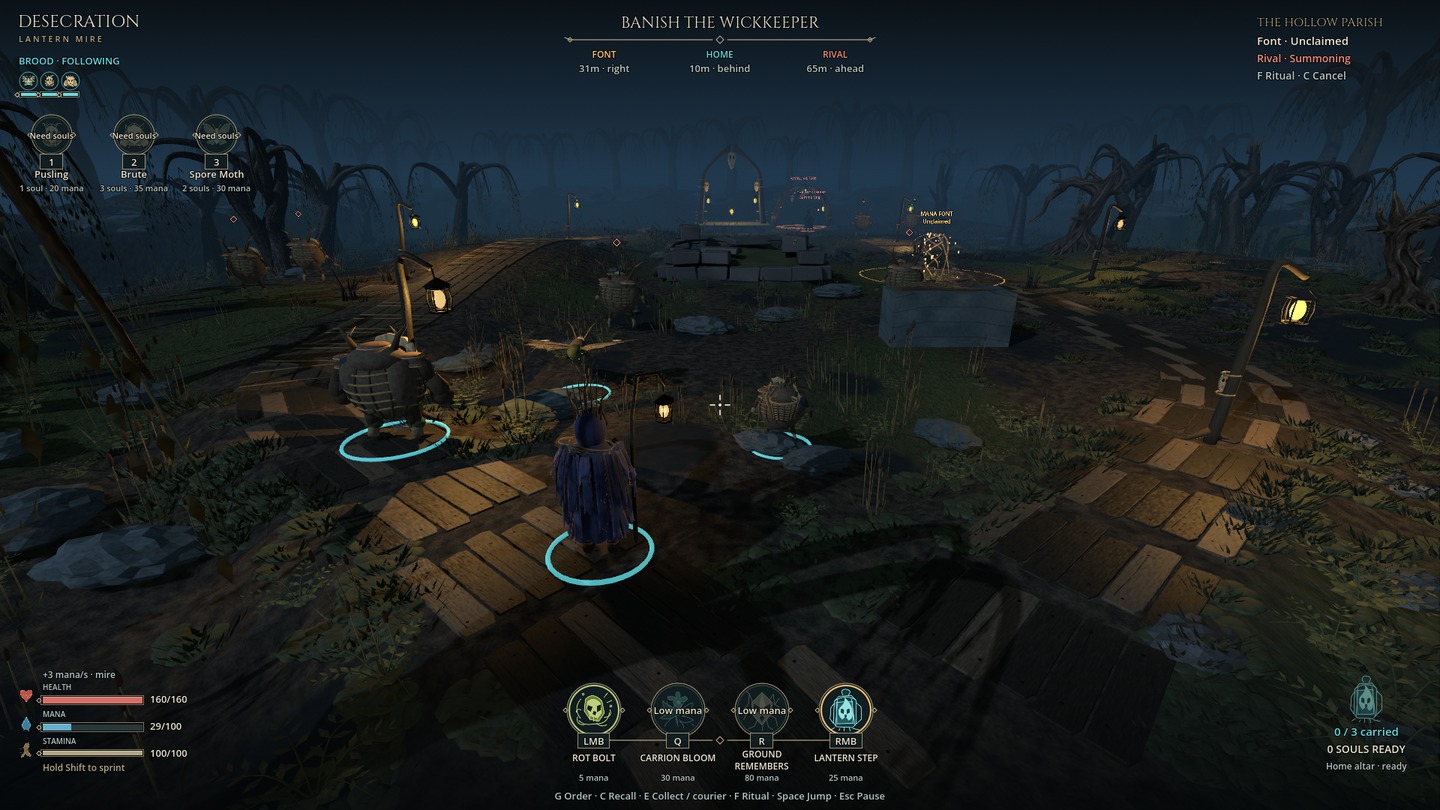
Shaun asked for a flying ranged summon after the creature-tactics pass. The Spore Moth gives the brood a fragile support role: keep it behind the melee, protect its preparation and recover its two souls if it falls.
Parchment, wood and a little light
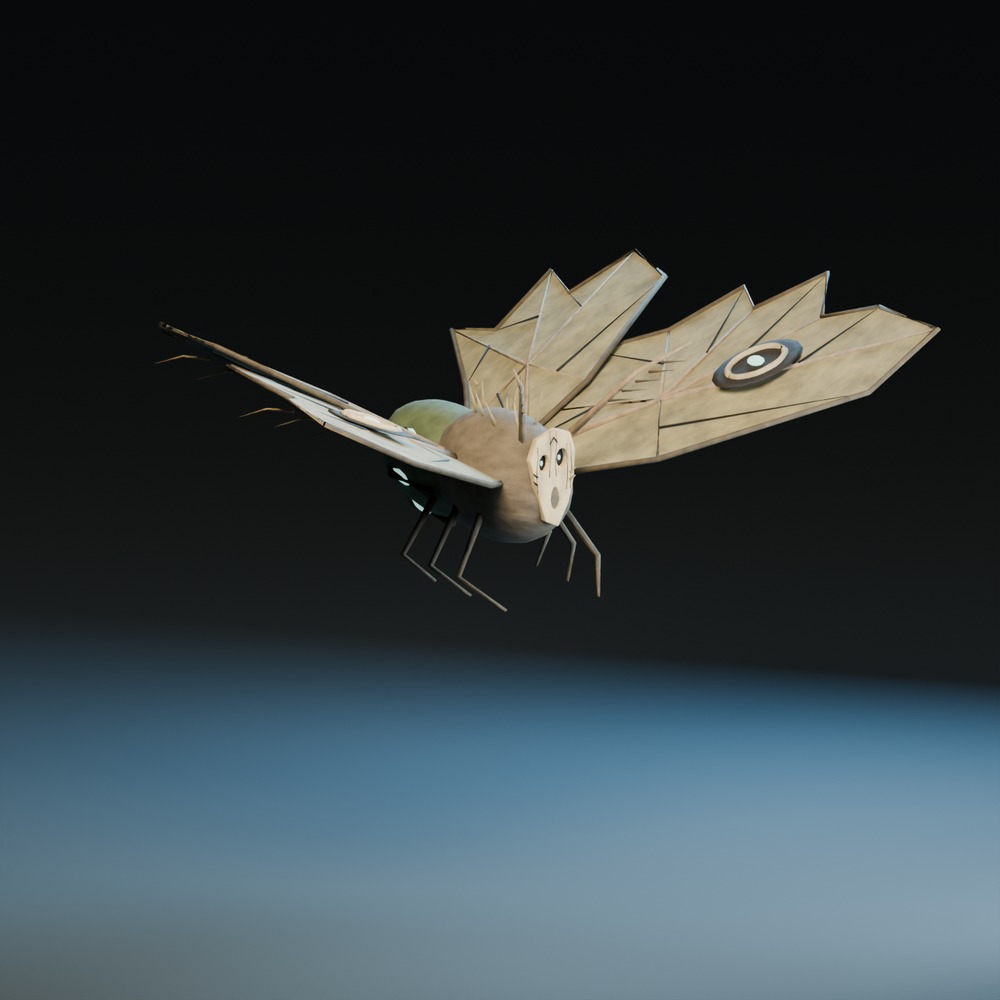
We made this creature from scratch in Blender: a small carved mask, ribbed seed pod, root legs and four ragged wings. Baked colour and grain give the opaque parchment its worn surface; wood veins and dim eye markings keep it in the same family as the Pusling.
The original rig has separate hover, flight, preparation, fire, hit, death and summon animations. The two short sounds and the little spore projectile were also made locally. No new Meshy generation or downloaded creature was needed.
Give it room to fire
The initial playtest cost is two souls and thirty mana. The Moth has thirty-six health and fires a sixteen-damage spore after visible preparation. The shot takes time to travel: it can miss a moving enemy, strike another hostile or stop at a wall.
It seeks a useful firing distance and backs off briefly when a visible enemy gets close. That retreat has a recovery period, so faster melee can catch it. Low flight follows the existing navigable routes and remains vulnerable to the existing spells and melee; it does not cross walls.
A new role, the same souls

Default key 3 summons the Moth. Saved controls migrate without replacing custom bindings; Settings shows the actual key when 3 was already taken. Its card and brood portrait join the existing HUD.
The rival can buy the same creature under the same rules. Only a Pusling can courier or perform the altar sacrifice, and a dead Moth releases its two bound souls exactly once. The match still contains eighteen souls.
The next judgement is in the fight
The full source regression passed 1,572 assertions and twenty-six sound-file checks. The exact export passed its asset, Moth, controls, tactics and combat checks. Native app inspection confirmed the menu flow, paid key-3 summon, pause, restart and recall with a living Moth. The Mac package and its independent checkpoint are saved, and the previous complete build is preserved. Human judgement of art, sound and combat feel remains the next acceptance check.
This completes the approved menu, teleport, creature-tactics and flying-summon sequence. The next step is Shaun’s playtest of the combined build: does the Moth stay useful behind the melee, read clearly in the swamp and feel worth protecting? Extra wild creature families remain a separate pass.